
 Search

Ford.com
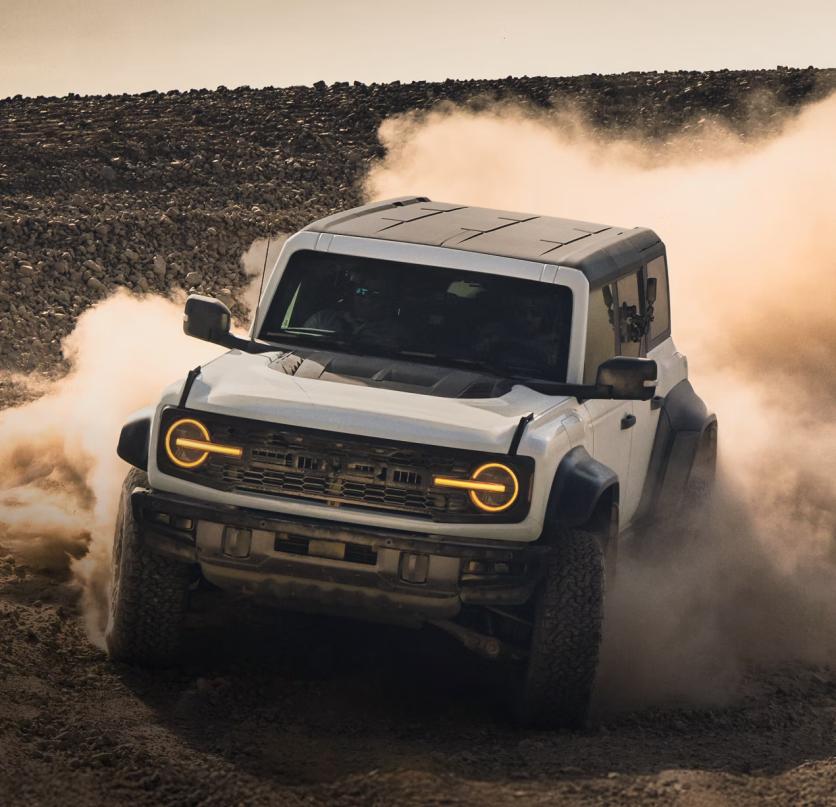
Ford Motor Company issued a mandatory safety recall covering every 2021–2026 Ford Bronco and Bronco Raptor built since the nameplate's 2021 relaunch — all 565,691 of them — after its own engineers confirmed that an under-protected engine compartment wiring harness chafed through its insulation in at least 15 vehicles, each time producing conditions capable of starting a fire while the driver was behind the wheel, according to the NHTSA recall filing 26V468. The recall, designated NHTSA campaign number 26V468 and Ford internal number 26S55, was made public on July 24, 2026.
If you own any 2021–2026 Bronco or Bronco Raptor, your vehicle identification number is already searchable at NHTSA.gov/recalls. The free dealer repair — installation of convolute sheathing and abrasion tape over the affected wiring — is available now, a full month before Ford's formal owner notification letters are scheduled to begin on August 24, 2026.
Bronco Raptor Owners Face a Structurally Higher Risk
Not every vehicle in the 565,691-unit recall population carries the same level of exposure, and Ford's own engineering analysis makes this explicit. The Critical Concern Review Group (CCRG) used Computer-Aided Engineering simulation and vibration testing to evaluate how the underhood environment differs between the base Bronco and the Bronco Raptor, findings documented in the NHTSA recall filing's chronology section. The finding: the Raptor's more aggressive suspension architecture — designed for high-speed off-road performance — produces greater relative movement between the engine compartment wiring harness and surrounding components than the base Bronco does.
That movement is exactly what strips the protective covering off the wiring harness. Among the 15 documented fire incidents Ford investigated before approving the recall, seven involved Bronco Raptors and eight involved base Broncos. Given that the Raptor represents a fraction of total Bronco production, this split signals a proportionally higher incidence rate in the performance variant. Raptor owners should treat this recall as urgent.
Read more: Ford Issues Recall for 43,000 SUVs Due to Leaky Fuel Injectors That Could Cause Fires
How Wiring Harness Chafing Starts an Engine Fire
The failure sequence documented in the NHTSA filing is sequential and, once begun, rapid. Engine bay vibration causes relative movement between the wiring harness and surrounding components. Because the harness lacked adequate abrasion protection at the point where it contacts those components, repeated rubbing wore through the outer covering. With internal wires exposed, intermittent electrical shorts to ground produced arcing — brief bursts of heat and spark sufficient to ignite flammable materials in the engine compartment.
Ford's CCRG inspected more than 80 Broncos and found evidence of rubbing or chafing on harness coverings in a subset of those vehicles. Vibration testing on the base model confirmed wear levels that indicate "opportunity for eventual exposure of internal circuits" even on vehicles that showed no chafing during inspection — meaning the absence of visible damage does not mean a vehicle is safe. The defect reveals itself in a specific sequence that NHTSA's consumer advisory describes: smoke entering through the air vents, followed by a warning message on the instrument cluster, followed by visible flames from the passenger side of the engine bay, while the vehicle is being driven.
The wiring harness involved is a Tier 1 OEM component supplied by Versigent, based in Guadalupe, Mexico. Ford's filing identifies six distinct part-number families covering the 2021 through 2026 model years, confirming the insufficient protection specification carried through the entire production run. Ford has since introduced enhanced protective covering on Broncos now coming off the production line — accounting for the gap between the recall population of 565,691 and the total Bronco production volume since the 2021 relaunch.
What Owners Need to Do Right Now
Ford estimates approximately one percent of the 565,691 recalled vehicles — roughly 5,600 units — actually carry the defect. That means the overwhelming majority of recalled Broncos and Raptors will pass inspection without requiring a repair. But there is no reliable way to know from the outside which vehicles have experienced harness wear without a dealer inspection. Ford's CCRG found chafing evidence in inspected vehicles that had no prior fire events, and vibration testing showed wear on vehicles that had not yet reached the point of circuit exposure.
The repair is free and requires a dealer visit. Technicians add convolute sheathing — a ribbed, corrugated wire loom cover widely used in automotive wiring protection applications — along with abrasion tape to the affected engine compartment harness section, providing a barrier against future contact wear. Ford dealers were notified on July 23, 2026, and the repair is already available at service centers.
Do not wait for the mailed letter. Owner notification letters are scheduled to begin going out August 24, 2026 and will be completed by August 28, 2026. Given the fire risk and the NHTSA advisory language recommending owners park affected vehicles outside and away from structures, the free repair should be scheduled as soon as possible.
To act now:
- Check your VIN at NHTSA.gov/recalls, referencing recall number 26S55
- Call Ford customer service at 1-866-436-7332, referencing recall number 26S55
- Call NHTSA's Vehicle Safety Hotline at 1-888-327-4236 (TTY: 1-888-275-9171)
Does the Recall Cover Every Trim and Powertrain?
Yes. The recall covers all 2021–2026 Bronco configurations regardless of engine type, transmission, or trim level. Both the four-cylinder and six-cylinder EcoBoost powertrains are included, as are vehicles with manual and automatic transmissions. All trim levels — from base Big Bend to the performance Wildtrak and Raptor — fall within the recall population.
The Bronco Sport is not part of this campaign. The Bronco Sport is a mechanically distinct vehicle built on a different platform. Owners of a Bronco Sport should check for their own open recalls separately at NHTSA.gov/recalls, where multiple prior campaigns affecting the Bronco Sport for different defects remain on record.
A Bronco Nameplate With a Deep Recall History
This recall is the 60th Ford has issued in 2026, bringing the total number of Ford vehicles recalled so far this year to more than 11 million. That figure comes in the wake of an even heavier 2025, when Ford set an industry record with 153 separate recall campaigns covering approximately 12.92 million vehicles — earning the company the industry's highest recall volume for the third consecutive year. Ford's high recall pace follows a November 2024 consent order with NHTSA, in which Ford agreed to pay up to $165 million — the second-largest civil penalty in NHTSA's 54-year history — for failing to recall defective rearview cameras in a timely manner and submitting inaccurate recall information. The consent order required Ford to expand its recall review process and invest $45 million in compliance systems.
Ford has characterized its elevated recall volume as a strategic shift toward proactive safety identification. Under CEO Jim Farley, the company expanded its safety and technical expert teams and expanded testing of critical vehicle systems. Automotive analysts at iSeeCars.com, examining data from April 2025 through March 2026, identified Ford as having the highest number of recalled vehicles and 12 of the 25 vehicles projected to have the most recalls over a 30-year lifespan, including four of the top five.
For the Bronco nameplate specifically, the pattern is more concentrated. NHTSA data shows the 2021 Bronco now carries more than 30 separate recall campaigns in its first five model years, spanning issues from fuel injector fire risk and rear shock absorber corrosion to steering components and door hardware. The wiring harness fire recall is among the most serious given its direct confirmed fire events and the rapid escalation sequence described in NHTSA's filing. Ten legal claims had already been filed against Ford related to the wiring harness fires at the time the Field Review Committee approved the recall on July 13, 2026.
Key Recall Details
| Detail | Information |
|---|---|
Vehicles affected | 2021–2026 Ford Bronco and Bronco Raptor |
Total recall population | 565,691 |
Estimated defective units | ~1% (~5,600 vehicles) |
Confirmed fire incidents | 15 (Oct. 15, 2024 – Jun. 20, 2026) |
Raptor fires / Base fires | 7 Raptor / 8 base Bronco |
Known injuries | None reported |
Wiring supplier | Versigent (Guadalupe, Mexico) |
NHTSA recall number | 26V468 |
Ford recall number | 26S55 |
Remedy | Free dealer installation of convolute sheathing + abrasion tape |
VINs searchable | Now (as of July 23, 2026) at NHTSA.gov |
Dealer notifications sent | July 23, 2026 |
Owner letters scheduled | August 24–28, 2026 |
Ford customer service | 1-866-436-7332 |
NHTSA hotline | 1-888-327-4236 |
Frequently Asked Questions
Is my Ford Bronco included in the 2026 engine fire recall?
Every 2021–2026 Ford Bronco and Bronco Raptor built between September 23, 2020, and June 28, 2026, is in the recall population. The Bronco Sport is not included. Enter your 17-character VIN at NHTSA.gov/recalls to confirm whether your specific vehicle is covered.
Can I still drive my recalled Ford Bronco?
Ford's NHTSA filing includes a consumer advisory recommending that owners not drive affected vehicles and park outside, away from structures and other vehicles. This is standard language for recalls involving fire risk, and it is worth taking seriously given the 15 documented incidents and the rapid escalation sequence described in the filing. Schedule the free dealer repair as soon as possible rather than waiting for the owner letter in late August.
Why are Bronco Raptor owners at higher risk than base Bronco owners?
Ford's own Computer-Aided Engineering analysis, conducted as part of the CCRG investigation, found that the Raptor's more aggressive off-road suspension architecture produces greater relative movement between the engine compartment wiring harness and surrounding components compared to the base Bronco. That additional movement accelerates the chafing that wears through the harness insulation. The NHTSA filing documents seven Raptor fires and eight base Bronco fires — and since the Raptor represents a much smaller share of total Bronco production than the base model, the per-vehicle fire rate is proportionally higher for Raptor owners.
Why did Ford recall all 565,691 Broncos if only about 5,600 are estimated to have the defect?
Because Ford cannot reliably identify in advance which vehicles have already experienced harness wear without physically inspecting them. The CCRG found chafing evidence on harnesses of Broncos that had not yet experienced a fire, and vibration testing confirmed that wear occurs on base model harnesses even without visible chafing. There is no external indicator that distinguishes a defective vehicle from a non-defective one until the short occurs. The broad recall scope reflects an inability to trace the defect to a specific supplier lot or production date — making a full-nameplate recall the only responsible action.

-
 C114 Communication Network
 -
 Communication Home
