
 Search

Cheryinternational.com
Emta, the Chery-backed kei EV brand that launched in May, has formally opened a research and development center in Yokohama, setting a September start date for prototype driving tests on Japanese roads. The milestone sounds like corporate routine. It is not. The same software-defined vehicle architecture that makes Emta's technology proposition compelling — over-the-air updates to driving performance, end-to-end AI driver assistance, smartphone integration that remembers your seat position — is also the architecture through which China's National Intelligence Law travels from Wuhu to a Japanese consumer's driveway. The law does not stop at the Singapore holding company's door.
Emta is the brand name under which Electric Mobility Technology (EMT), a Singapore-registered joint venture, plans to sell four electric kei cars in Japan by 2029. Five shareholders created the consortium: Chery Automobile and Jiangsu Yueda Automobile Group each hold 27.27%, with Autobacs Seven — Japan's largest automotive aftermarket chain with roughly 1,200 outlets — at 18.18%, Chinese battery maker Gotion High-Tech at 18.18%, and industrial equipment firm Anest Iwata at 9.09% (EMT joint venture structure). Chery is the technology provider: it supplies the vehicle architecture, the electric drivetrain, and the Falcon-branded ADAS that EMT will market as "Magic Drive."
Falcon ADAS Was Trained on Chinese Roads — Japan's Type Approval Will Test What That Means
Chery describes Falcon as an "end-to-end large model" system — meaning its decision logic is generated by neural networks trained directly on raw camera and sensor inputs, rather than explicit rules written by engineers. For a highway lane-change, the model outputs a steering angle; no intermediate step translates the camera feed into a symbolic representation and then applies a rule. That architecture is what makes modern Chinese ADAS capable enough to challenge Tesla's Full Self-Driving claims in China. It is also what makes Japan's certification process a genuine obstacle.
Read more: BYD Canada Confirms Late 2026 Retail Push: Chinese Intelligence Law Applies to Owners
Japan's vehicle type-approval framework — the Technical Requirements for Inspection of Automobile Standards, or TRIAS — was built around deterministic safety validation. An engineer can demonstrate why a rule-based system will behave within bounds under defined conditions. A neural network's decision logic cannot be stated explicitly, which means validating it under TRIAS requires extensive empirical testing on Japanese roads, across Japanese road conditions, with Japanese traffic patterns and signage. Chery's Falcon system has accumulated over 4.5 billion kilometers of intelligent driving mileage in overseas markets, including EU cybersecurity and software-update certification — but those kilometers are not Japanese kilometers, and EU approval does not equal Japanese type approval.
The September prototype program is explicitly designed to identify this gap. EMT's Yokohama center will benchmark the Emta platform against the Nissan Sakura and other electric kei competitors on Japanese roads, running the Magic Drive system through conditions it has not yet encountered. Eighteen months remain between September and the planned second-half 2027 launch. That is tight for a novel AI driving platform in a country that has not approved any end-to-end ADAS system from a Chinese manufacturer.
What the SDV Architecture Actually Does — and What It Costs You
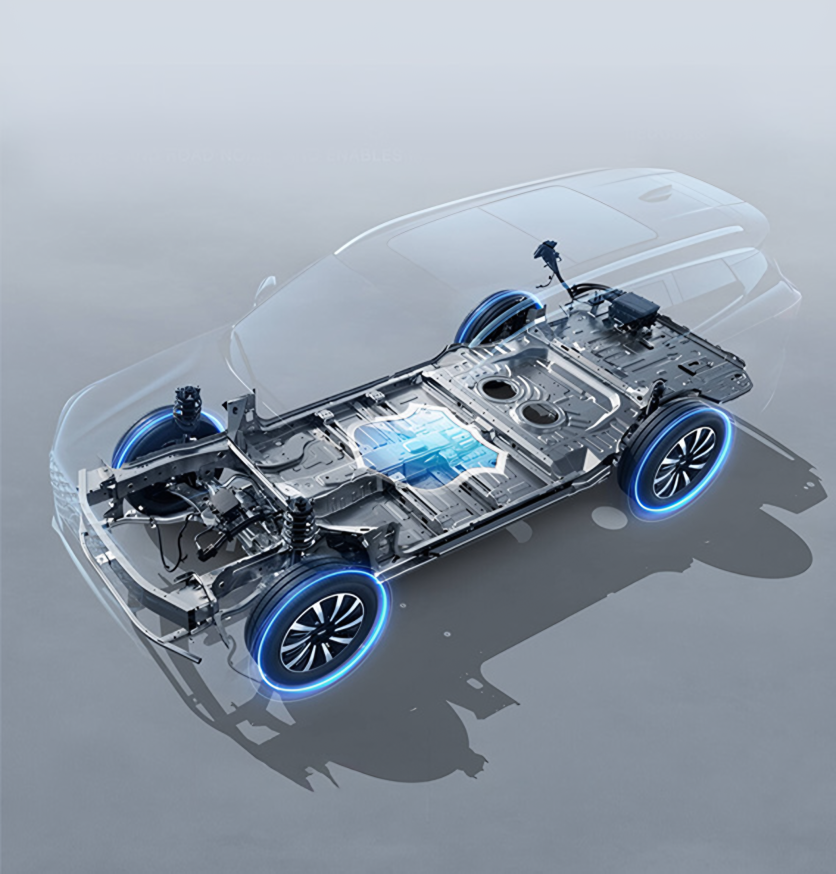
Emta's "Magic" system is built on four linked technologies:
Magic SDV is a full software-defined vehicle platform enabling over-the-air updates that reach beyond infotainment to driving performance — acceleration curves, regenerative braking calibration, range optimization. This is a genuine departure from the kei segment's current standard. A Nissan Sakura does not receive software that changes how it drives six months after delivery. An Emta would.
Magic Sync handles smartphone integration — proximity unlocking, per-driver seat and climate profiles — and creates an ongoing connection between the vehicle and the owner's mobile device. Every contact synced to the Emta's system is data that now lives within Chery's connected car ecosystem.
Magic EV is the kei-specific hardware platform, engineered to satisfy Japan's 3.4-meter-by-1.48-meter dimensional box while including vehicle-to-home (V2H) and vehicle-to-load (V2L) bidirectional charging. The V2H capability — practical for powering household loads from the battery during a grid outage — resonates specifically in Japan, which has experienced multiple disaster events requiring off-grid power resilience.
Magic Drive is the end-to-end Level 2 ADAS described above. EMT says it targets "the highest standards in Japan" — language that positions it against Tesla's Full Self-Driving — but provides no published specification for sensor count, compute chip, or training data origin.
The economic logic behind offering this technology at a kei-competitive price is worth understanding. Chery's Falcon ADAS development cost is amortized across the company's entire global lineup: the Emta does not bear the cost of building an ADAS system from scratch. Gotion's LFP battery cells are supplied at Chinese manufacturing cost, which is currently the world's lowest. The architecture that makes the price possible is also the architecture that creates the data question — the OTA update channel is not a separate product; it is the feature.
What Chinese Law Requires — and What 'Privacy Policy' Cannot Change
China's National Intelligence Law, adopted in June 2017, states in Article 7 that "all organizations and citizens shall support, assist, and cooperate with national intelligence work." This obligation applies to every Chinese company, including Chery Automobile. It is not waived by corporate structure, privacy policy, or the physical location of servers. Chery's technology is the engine of the Emta; Chery is legally compelled to cooperate with Chinese intelligence demands.
Three additional laws form the relevant framework:
China's Cybersecurity Law (2017, substantially amended effective January 2026) establishes government data-access provisions and requires network operators to cooperate with cybersecurity and crime investigations. The Data Security Law (2021) covers important data categories and mandates security assessments for cross-border transfers. The Personal Information Protection Law (2021) and the Several Provisions on Automotive Data Security Management specifically address the categories of data that connected vehicles collect.
What data does the Emta collect that falls under these laws? Based on the Magic system's published features: GPS location history and route data (Magic Drive); driving behavior telemetry (acceleration, braking, energy usage) transmitted to support OTA optimization; contacts and usage patterns synced from the driver's smartphone via Magic Sync; potentially cabin audio if Emta's AI assistant features are voice-activated (not yet confirmed); and software telemetry sent for model improvement.
No independent security audit of the Emta exists — the vehicle has not launched. A prior PlaxidityX security study found that a 2023 BYD Atto 3 stored GPS location history, contacts, and app preferences unencrypted, accessible without network intrusion after a factory reset. BYD holds R155 cybersecurity and R156 software update management certification from international regulators — the same certifications Chery holds for its European market vehicles. As prior TechTimes coverage noted, those certifications govern how the company manages its own cybersecurity practices. They do not and cannot override an obligation imposed by Chinese national law.
Practical steps a reader can take to limit exposure include keeping the vehicle on a separate network segment from home systems, minimizing the data synced through Magic Sync, and treating any audio command features as potentially logged. No mitigation fully addresses the structural legal obligation, because that obligation is not a technical vulnerability — it is a condition of operating under Chinese law.
Japan's Subsidy System Has Already Answered the Chinese Supply Chain Question
EMT has not yet applied for Japan's Clean Energy Vehicle purchase subsidy, but the April 2026 revision of METI's CEV Subsidy framework offers a preview of the likely outcome. Under criteria that now incorporate battery supply chain stability under Japan's Economic Security Promotion Act and compliance with US-Japan rare earth agreements, BYD's per-vehicle subsidy was cut from ¥350,000–¥450,000 to a flat ¥150,000 — while Toyota's bZ4X retained the ¥1.3 million maximum. The gap is ¥1.15 million per vehicle.
EMT's consortium includes two Chinese manufacturers whose supply chains are structurally similar to BYD's: Gotion High-Tech supplies the LFP battery cells, and Yueda manufactures the vehicles at its Yancheng factory in China. If METI applies the same evaluation criteria to Emta — and the published criteria apply to all applicants, not only BYD — the subsidy EMT can offer buyers will likely reflect a similar penalty. The draft's suggestion that a Gotion-battery, Yueda-manufactured vehicle could qualify for a full ¥1.3 million subsidy is not supported by METI's stated scoring logic.
Autobacs Seven's Japanese ownership and service network, and Anest Iwata's quality support role, may earn some scoring credit in the infrastructure and reliability categories. Whether that credit closes the gap with Toyota is unverified. EMT has not disclosed a subsidy application timeline.
Read more: Dongfeng Debuts in Montreal: State Ownership Puts Canadian EV Data Under Chinese Law
Performance and Engineering Gaps the Marketing Doesn't Cover
Emta's first model, the boxy hatchback internally coded #01, will measure 3.4 meters in length with a 1.96-meter wheelbase — matching the Chery QQ Ice Cream's footprint, and compliant with kei class dimensions (Emta #01 specifications). The Gotion LFP battery is expected to deliver 155–220 km of WLTC-cycle range, which matches the Nissan Sakura's 180 km rating but remains below the Honda N-One e:'s 295 km, launched in September 2025.
BYD's Racco kei EV — the first non-Japanese electric kei car — is launching in Japan in summer or autumn 2026 at approximately ¥2.5 million. EMT is targeting a price comparable to gasoline-powered kei cars; the Honda N-Box ranges from ¥1.74 million to ¥2.48 million. The subsidy environment may significantly affect the effective price at point of sale — if Emta receives the same ¥150,000 subsidy treatment as BYD, its sticker price advantage over domestically manufactured kei EVs narrows considerably.
On ADAS, the gap between Chery's Falcon architecture and what has been approved in Japan is real and unquantified. No Chinese manufacturer has received Japanese type approval for an end-to-end neural-network ADAS system. The September 2026 prototype program will generate the validation data needed for certification; how much recalibration Falcon requires for Japanese road conditions is an open engineering question.
On connectivity and ecosystem maturity, international users of Chinese connected car platforms have reported friction with documentation availability in Japanese and with manufacturer support responsiveness outside of China. EMT's Yokohama center is specifically structured to address this — localization, Japanese-language documentation, and Japanese-standard quality assurance are part of the center's remit — but the infrastructure is new and untested at scale.
EMT CEO He Xiaoqing, a veteran of more than four decades in the automotive industry including a stint as president of Changan Ford, told reporters at the brand launch in May: "This is a new brand aimed at Japanese consumers. It will make life easier and more comfortable." That ambition is genuine. The engineering timeline between a September prototype drive and a second-half 2027 market launch will determine how much of it is achievable on schedule.
Koji Yamamoto, EMT's chief technology officer and confirmed head of EMT's R&D operations, brings specific institutional knowledge of how Japanese automakers evaluate technology before committing it to production. His prior roles at Nissan included leading the company's electric vehicle programs and its connected car and autonomous drive division — a background directly relevant to bridging Chery's Chinese ADAS heritage with Japan's approval demands.
Decision Framework for Buyers Considering Emta
Any Japanese consumer evaluating an Emta purchase in 2027 is navigating four dimensions that the headline price alone cannot resolve:
What Emta does better than existing kei EVs: OTA-updateable driving performance, end-to-end AI driver assistance (if certified), V2H/V2L bidirectional power, and smartphone-native connectivity — features that simply do not exist in the current Nissan Sakura or Mitsubishi eK X.
What Emta does not yet match: A WLTC range floor that meets the Honda N-One e:'s 295 km, Japanese type-approval for its ADAS platform, a proven after-sales service record in Japan, and a confirmed subsidy eligibility at competitive rates.
What the ecosystem costs you: An ongoing data relationship with Chery's connected car infrastructure, which operates under Chinese law mandating government cooperation on intelligence requests. That obligation applies regardless of whether you use Magic Sync's contacts feature and regardless of whether you believe Chery's privacy policy.
What mitigates some of that cost: Autobacs Seven's 1,200-location service network is a genuine infrastructure advantage over BYD's smaller dealer footprint, reducing the operational friction of owning a non-domestic brand. The Singapore holding structure is not a data law shield but it does mean Japanese legal channels apply to commercial disputes. And the vehicle's Anest Iwata quality support partnership — while unusual for a car company — suggests genuine attention to manufacturing quality assurance.
The September prototype tests are the next real decision point. If the Magic Drive ADAS validates cleanly on Japanese roads and METI type-approval proceeds on schedule, the Emta #01's 2027 launch becomes credible. If the validation process reveals gaps requiring significant Falcon retraining, the timeline slips — and with it the competitive window before Honda's electric N-Box, expected in 2028, arrives to close the native-brand gap.
Frequently Asked Questions
Will the Emta kei EV qualify for Japan's full EV purchase subsidy?
It almost certainly will not qualify for the maximum ¥1.3 million national subsidy that Toyota's bZ4X receives. Japan's revised CEV Subsidy framework, effective April 2026, adds battery supply chain stability under the Economic Security Promotion Act and US-Japan rare earth compliance as evaluation criteria. EMT's Gotion battery supplier and Yueda manufacturing base are both Chinese — structurally similar to the supply chain that led METI to cut BYD's subsidy to a flat ¥150,000 from a previous ¥350,000–¥450,000. EMT has not announced a subsidy application, and the outcome will depend on scoring in service infrastructure and quality categories where Autobacs Seven's network may earn partial credit. Buyers should not assume subsidy parity with domestically manufactured vehicles when calculating total cost of ownership.
Does Chinese law give the government access to data from an Emta vehicle?
Yes, structurally. China's National Intelligence Law (2017) requires all Chinese organizations to "support, assist, and cooperate with national intelligence work." Chery Automobile — the technology provider and 27.27% shareholder — is a Chinese company subject to this law. The Emta's Magic SDV architecture creates an ongoing OTA update channel between the vehicle and Chery's connected car infrastructure. The Data Security Law and Cybersecurity Law (both amended as recently as January 2026) add further data-access obligations for Chinese companies. These obligations are not overridden by Chery's privacy policy, by EMT's Singapore incorporation, or by international cybersecurity certifications (R155/R156) that govern how Chery manages its own security practices but do not waive national legal obligations. No independent security audit of the Emta has yet been conducted.
How does Emta's end-to-end ADAS differ from systems already approved in Japan?
Emta's Magic Drive is an end-to-end neural-network system — trained on raw sensor inputs to generate control commands without explicit rules — based on Chery's Falcon architecture. Approved ADAS systems in Japan's kei segment (Nissan Sakura, Honda N-One e:) use conventional rule-based ADAS pipelines that can be validated deterministically under Japan's TRIAS type-approval framework. End-to-end neural-network ADAS is harder to certify because its decision logic cannot be stated explicitly; validation requires extensive empirical road testing. Chery's system has accumulated billions of kilometers of overseas validated mileage including EU approval, but no end-to-end Chinese ADAS system has received Japanese type approval. EMT's September 2026 prototype program on Japanese roads is the first step in generating that certification evidence.
When is the Emta available and how does it compare in range to competitors?
EMT targets a second-half 2027 launch for the Emta #01 hatchback — the first of four models planned through 2029. The vehicle's Gotion LFP battery is expected to deliver 155–220 km of WLTC-cycle range, broadly comparable to the Nissan Sakura (180 km) but below the Honda N-One e: (295 km, launched September 2025). BYD's Racco kei EV, the first non-Japanese electric kei car, is launching in Japan in summer or autumn 2026 at approximately ¥2.5 million. EMT is targeting a price comparable to gasoline-powered kei cars — the Honda N-Box ranges from ¥1.74 million to ¥2.48 million — though the subsidy environment may affect the effective price at the point of sale.

-
 C114 Communication Network
 -
 Communication Home
