
 Search

Polestar.com
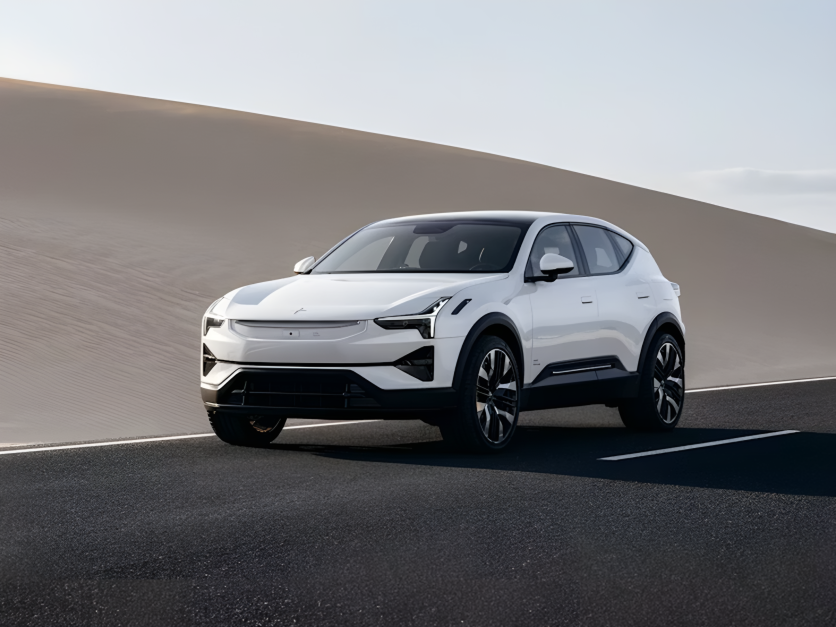
The U.S. Commerce Department barred Polestar from selling 2027-model-year vehicles in the United States on Thursday, invoking a national security regulation that targets connected vehicles with links to Chinese or Russian ownership — a ruling that applies regardless of where the car is physically built. The Bureau of Industry and Security denied Polestar the authorization it needed to continue U.S. sales, delivering the first high-profile case in which a non-Chinese brand assembled partly on American soil has been pushed out of the market by the Connected Vehicle Rule.
The decision is consequential not only for Polestar but for every automaker operating with Chinese capital, Chinese-sourced software, or Chinese-connected supply chain components. Ford is seeking authorization for its China-built Lincoln Nautilus. General Motors is restructuring production of the Buick Envision to move it out of China by 2028. Neither company has received a ruling yet.
What the Connected Vehicle Rule Actually Prohibits — and Why Assembly Address Does Not Matter
The Connected Vehicle Rule, finalized in January 2025 and effective since March 17, 2025, bans two categories of Chinese- or Russian-linked vehicle technology from the U.S. market. Software prohibitions begin with model year 2027. Hardware prohibitions follow in model year 2030.
The regulated technology centers on the Vehicle Connectivity System, or VCS — the set of components that allow a modern vehicle to communicate with the outside world. That system includes the telematics control unit, or TCU, which is the most significant regulated component. A TCU is a cellular-connected computer that acts as the gateway between the vehicle's internal data networks — its Controller Area Network bus, GPS receivers, accelerometers, Bluetooth and Wi-Fi modules — and external servers, apps, and services. It is the system that enables remote start, over-the-air software updates, real-time location tracking, and advanced driver assistance functions. Every connected vehicle built after roughly 2015 has one.
The rule targets not just hardware sourced from China but manufacturers whose corporate control traces to Chinese or Russian entities. This ownership-nexus standard is the provision that caught Polestar. Polestar is majority-owned by Geely Holding, the Chinese automotive conglomerate that controls Volvo Cars, Lotus, Zeekr, and more than a dozen other brands. Under China's National Intelligence Law of 2017, Article 7, all organizations subject to Chinese jurisdiction must support, assist, and cooperate with state intelligence work. The same legal framework underpins China's Data Security Law of 2021 and Cybersecurity Law of 2017. A manufacturer operating under that legal structure can be compelled to facilitate access to vehicle data pipelines regardless of where the vehicle was assembled or where the TCU was installed.
That is the engineering-law intersection that makes factory location irrelevant: the TCU remains an active cellular data channel, and the legal obligation to open that channel travels with the manufacturer's corporate ownership — not with the vehicle's birth certificate.
Volvo In, Polestar Out: The Asymmetry BIS Has Not Explained
Read more: Polestar Plans Aggressive EV Push With Four New Electric Models, Including Redesigned Polestar 2 and Compact Polestar 7 SUV by 2028
The ruling split two brands that share the same Chinese parent. Volvo Cars was granted authorization to sell its 2027 model-year lineup, a decision Volvo confirmed in late May 2026, following what it described as discussions with U.S. officials regarding its governance, technology, and data security practices. Polestar's application was rejected. The Commerce Department has not publicly published the criteria that produced the divergent outcomes.
Industry analysts point to structural differences between the two companies. Volvo operates as a separately listed, more established global automaker with a longer and larger U.S. footprint. Polestar is more tightly integrated with Geely's broader corporate and technological architecture, sharing vehicle platforms and software with other Geely brands. Whatever the precise reasoning, the result is that one Geely brand stays and the other goes.
The asymmetry matters for the wider industry because it signals that the authorization process is case-by-case and, at least publicly, opaque. Researchers at the Rhodium Group noted in a study that hardware restrictions arriving in 2030 are "likely to be more cumbersome and require more time for automakers to adapt" than the current software provisions — a challenge that will apply to a much broader set of companies than Polestar alone.
Polestar's Pivot: A European Strategy That Predates the Ruling
For Polestar, the loss of the U.S. market is real but not catastrophic given where the company's actual business lives. Europe accounts for close to 80% of its global retail volumes, and 94% of Q1 2026 retail sales came from outside the United States. The company posted record global sales of more than 60,000 vehicles in 2025 and delivered 13,126 vehicles in Q1 2026, up 7% year-over-year.
CEO Michael Lohscheller framed the ruling as a catalyst for a regional restructuring the company was already executing. "The automotive industry is entering a new phase, based on regional dynamics," Lohscheller said. "Our strategy reflects that, with Europe being our largest growth engine and our plan to manufacture Polestar 7 in Europe."
The company said it will sell through existing U.S. inventory of the Polestar 3 and Polestar 4 and continue servicing current American customers. But four planned models — the Polestar 5 performance sedan (deliveries beginning summer 2026), a new Polestar 4 variant, the next-generation Polestar 2 (planned for 2027), and the Polestar 7 compact SUV (planned for 2028) — will now reach European and other markets without ever appearing at a U.S. dealership.
Polestar stock (Nasdaq: PSNY) dropped more than 13% on the announcement. The company's gross margins have deteriorated sharply, swinging to negative 3.2% in Q1 2026 from a positive 10.3% a year earlier, under pressure from pricing competition and tariff headwinds — signals that the European pivot will need to produce better margins to sustain the company's long-term health.
Which Brands Could Face the Same Outcome: Ford, GM, and the 2030 Hardware Deadline
Polestar is the first brand to exit the U.S. market under the Connected Vehicle Rule, but it is unlikely to be the last. Ford confirmed to Reuters that it has applied for authorization to continue importing the China-built Lincoln Nautilus. The SUV's software was developed in the United States but installed during assembly in China, a distinction that still requires government clearance under the rule. Ford expects to begin importing 2027-model-year Nautilus vehicles in early 2027, giving it months to secure an authorization.
GM's Buick Envision, built in China, faces similar scrutiny. GM has already announced it will move Envision production to a Kansas plant by 2028, treating the coming hardware restrictions as the operative deadline.
The software restrictions now active are only the first phase. The 2030 hardware provisions will require decoupling VCS hardware — telematics units, cellular modems, Bluetooth and Wi-Fi modules, satellite systems, and field-programmable gate arrays — from Chinese suppliers across the entire industry. The Rhodium Group assessed this as a supply chain challenge that dwarfs the current software compliance burden. Every automaker that has grown accustomed to sourcing connectivity components from the world's most cost-efficient hardware ecosystem will need an alternative by the end of the decade.
What Existing Polestar Owners in the US Need to Know
Existing U.S. Polestar customers retain full service and warranty access. The company confirmed that all existing warranties remain in effect and will be honored, and that service access will continue through its network. Inventory of the Polestar 3 and Polestar 4 will remain on sale until stock is depleted. Buyers who act before inventory is exhausted will be acquiring the final U.S.-sold examples of both models.
Frequently Asked Questions
Why did the U.S. ban Polestar but not Volvo, if both are owned by Geely?
Volvo was granted a specific authorization from the Bureau of Industry and Security after discussions focused on governance, technology practices, and data security. Polestar's application was denied. The Commerce Department has not published the criteria that produced the split outcome. Analysts believe Polestar's closer integration with Geely's broader software and platform architecture — and its smaller, less-established U.S. footprint — may have played a role. The case-by-case nature of the authorization process means the criteria remain effectively opaque.
What is the Connected Vehicle Rule and why does it target Chinese ownership?
The Connected Vehicle Rule, finalized in January 2025, prohibits the sale of connected vehicles in the U.S. if the manufacturer is owned by, controlled by, or subject to the direction of China or Russia — even if the vehicle is assembled in the United States. The rule targets the telematics control unit, or TCU: a cellular-connected computer in every modern vehicle that collects location data, sensor data, and behavioral information, and that can receive remote commands. Under China's National Intelligence Law of 2017, companies subject to Chinese jurisdiction can be legally compelled to cooperate with state intelligence work. That legal obligation travels with corporate ownership, not factory location, which is why a vehicle built in South Carolina can still be treated as a national security risk if its manufacturer is controlled from Beijing.
Will existing Polestar owners in the U.S. lose access to service and software updates?
Polestar has committed to continued service access and confirmed that all existing warranties remain in effect. Over-the-air software updates are expected to continue for the existing fleet. The more practical concern is long-term parts availability and dealer network viability as Polestar winds down its U.S. commercial operations — a question that will become sharper over a multi-year horizon as the dealer network contracts.
Which other car brands could face the same ban?
Ford has applied for authorization to continue importing the China-built Lincoln Nautilus. General Motors is restructuring Buick Envision production to move it out of China by 2028. Any automaker whose vehicles use software designed, developed, or maintained by Chinese entities — or whose parent company is majority-owned from China — faces potential exposure under the Connected Vehicle Rule. The 2030 hardware provisions will extend the compliance burden further, requiring decoupling of cellular modems, Bluetooth modules, GPS units, and other connectivity hardware from Chinese suppliers across the entire industry.

-
 C114 Communication Network
 -
 Communication Home
