
 Search

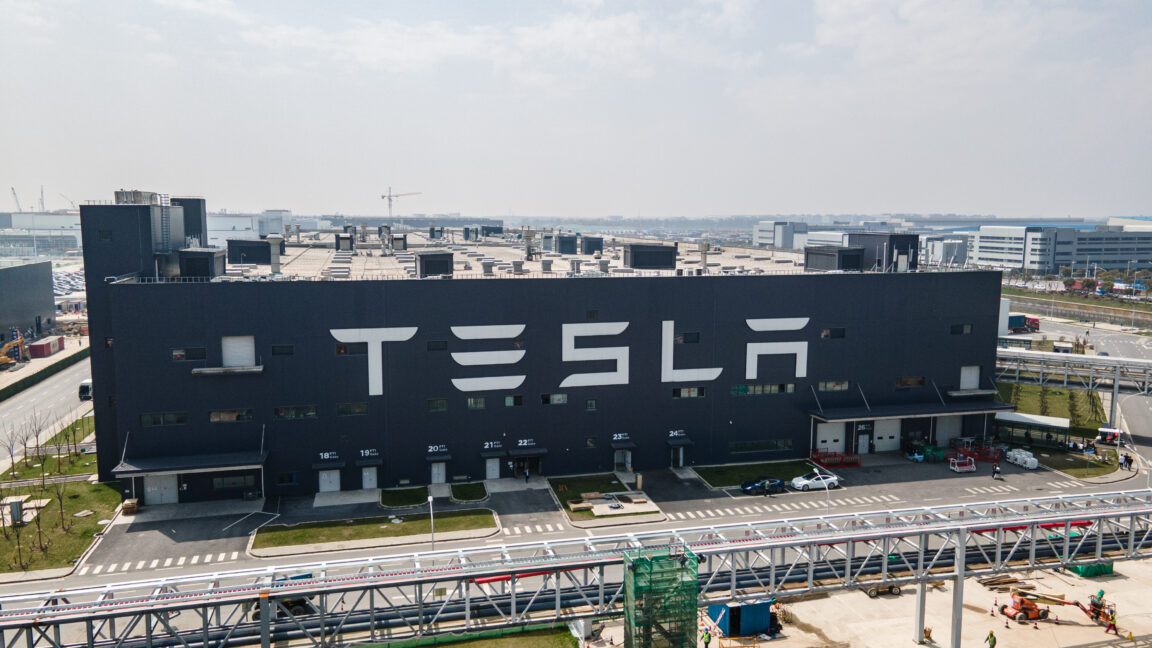
Credit: Xiaolu Chu/Getty Images
One of life’s abiding mysteries—at least to this writer—has been Tesla’s enduring success over recent years despite offering so few choices for customers. With the death of the low-volume and antiquated Models S and X to free factory space for CEO Elon Musk’s stated desire to build billions of humanoid robots, the car company now sells just two models outside the US (and effectively in the US, given languishing Cybertruck sales). That could be changing, though. According to a Reuters report this morning, Tesla is working on a smaller, cheaper EV.
The claim is based on accounts from four anonymous sources, all of whom work for companies that supply Tesla. They say Tesla is developing a new, smaller EV, an all-new design rather than something based on the Model 3 or Model Y. Reuters claims the under-development EV is 168 inches (4.3 m) long, significantly shorter than either a Model 3 (185.8 inches/4.7 m) or a Model Y (188.7 inches/4.8 m).
But before anyone gets too excited, it’s possible that this new small EV—should it ever happen—won’t go on sale here in the US, at least not at first or without complications. Three of Reuters’ sources claim the new EV will be built in China, which means any imports to the US would be subject to a 100 percent tariff, one of the few Biden administration policies that has met muster with the Trump administration. The other source told the news agency that adding production to Tesla’s factories in the US and Germany could be possible at a later date.
Tesla is really bad at this
It is important to note that, according to Reuters’ sources, Tesla has not yet greenlit this new EV for production. And while the idea of a smaller, cheaper EV will appeal to many, the person who has to be convinced is CEO Musk, who in recent years has seemed nothing but bored by the idea of running a functioning car company.
At one stage, building an affordable small EV was a core component of Tesla’s planning. The Model 2 was supposed to be built in “very high volume,” Musk said in 2023, but by April of the following year, the Model 2 was dead, despite Musk’s claims that such reports were lies. Instead, Tesla has created a stripped-down two-seater meant for robotaxi use, based on the Model 3.
Since then, Musk has told anyone who will listen that Tesla is no longer a car company but one that specializes in robotics and AI, something that has helped keep the company’s valuation somewhere near the Sun-Earth Lagrange point, despite collapsing sales across the world and a growing excess inventory issue.
The company has something of a cash-flow problem, too: yesterday, Bloomberg reported that Tesla’s free cash flow is expected to drop from $6.2 billion at the end of 2025 to -$5.8 billion, a swing of $12 billion.
Even if Tesla does have the money to develop this new model, its track record suggests the process will be long and laborious. The Model X, Model 3, Model Y, and Cybertruck each faced significant problems in development, both during design and as Tesla tried to establish production lines. And that was when Musk’s attention was fully focused on the company and not on his SpaceX IPO.

-
 C114 Communication Network
 -
 Communication Home
