
 Search

Credit: SSPL/Getty Images
One point in favor of the sprawling Linux ecosystem is its broad hardware support—the kernel officially supports everything from ’90s-era PC hardware to Arm-based Apple Silicon chips, thanks to decades of combined effort from hardware manufacturers and motivated community members.
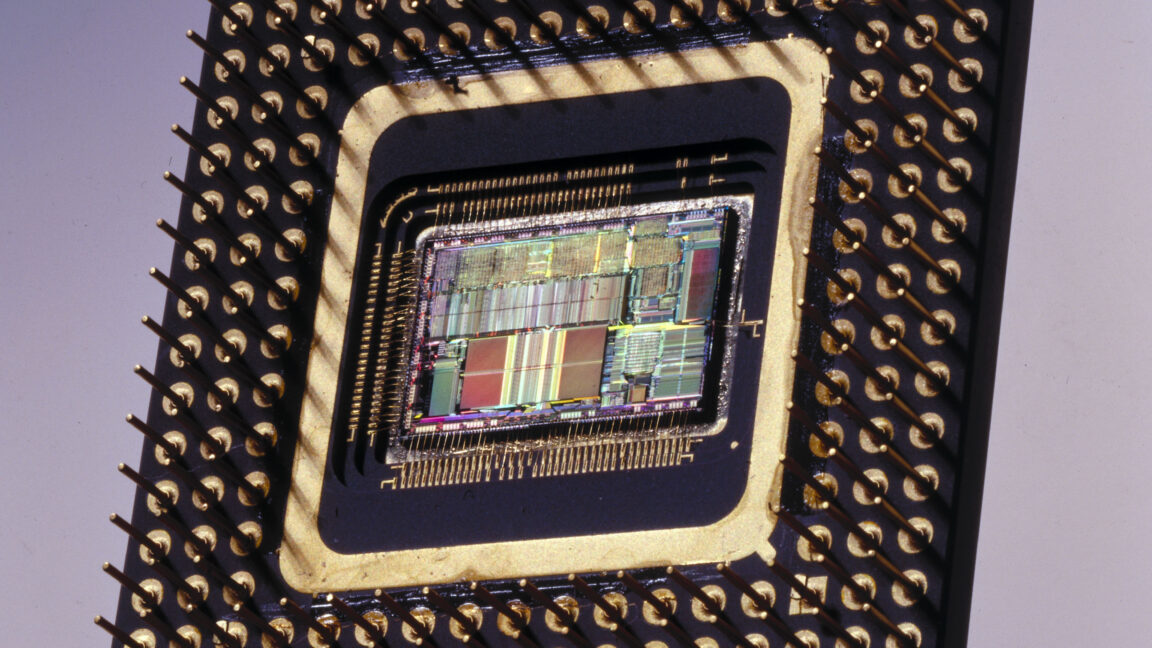
But nothing can last forever, and for a few years now, Linux maintainers (including Linus Torvalds) have been pushing to drop kernel support for Intel’s 80486 processor. This chip was originally introduced in 1989, was replaced by the first Intel Pentium in 1993, and was fully discontinued in 2007. Code commits suggest that Linux kernel version 7.1 will be the first to follow through, making it impossible to build a version of the kernel that will support the 486; Phoronix says that additional kernel changes to remove 486-related code will follow in subsequent kernel versions.
Although these chips haven’t changed in decades, maintaining support for them in modern software isn’t free.
“In the x86 architecture we have various complicated hardware emulation facilities on x86-32 to support ancient 32-bit CPUs that very, very few people are using with modern kernels,” writes Linux kernel contributor Ingo Molnar in his initial patch removing 486 support from the kernel. “This compatibility glue is sometimes even causing problems that people spend time to resolve, which time could be spent on other things.”
This echoes comments from Linus Torvalds in 2022, suggesting there was “zero real reason for anybody to waste one second of development effort” on 486-related problems. The removal of 486 support would also likely affect a handful of 486-compatible chips from other companies, including the Cyrix 5×86 and the Am5x86 from AMD. Molnar was also a driving force the last time Linux dropped support for an older Intel chip—support for the 80386 processor family was removed in kernel version 3.8 back in early 2013.
“Unfortunately there’s a nostalgic cost: your old original 386 DX33 system from early 1991 won’t be able to boot modern Linux kernels anymore,” Molnar wrote. “Sniff.”
A tree falling in a forest
The practical impact of the end of 486 support will be negligible; the number of modern Linux distributions that use the kernel’s 486 support is negligible.
Many of the consumer-focused Linux distros have more Windows-like minimum system requirements, an acknowledgment of how CPU and RAM-intensive modern web browsers and browser-based apps have become; Ubuntu raised its minimum RAM requirement from 4GB to 6GB for the 26.04 LTS release. Even lightweight distros like Xubuntu or AntiX recommend 512MB to 1GB of RAM, amounts far in excess of what any 486-based PC ever shipped with (or could reasonably work with, using actual hardware).
One of the few actively maintained distros that explicitly mentions 486 support is Tiny Core Linux (and its GUI-less counterpart, Micro Core Linux). These OSes can run on a 486DX chip as long as it’s paired with at least 48MB or 28MB of RAM, respectively, though a Pentium 2 with at least 128MB of RAM is the recommended configuration. But even on the Tiny Core forums, few users are mourning the loss of 486 support.
“I get the nostalgia, like classic cars, but a car you’ve spent a year’s worth of weekends fixing up isn’t a daily driver,” writes user andyj. “Some of the extensions I maintain, like rsyslog and mariadb, require that the CPU be set to i586 as they will no longer compile for i486. The end is already here.”
Those still using a 486 for one reason or another will still be able to run older Linux kernels and vintage operating systems—running old software without emulation or virtualization is one of the few reasons to keep booting up hardware this old. If you demand an actively maintained OS, you still have options, though—the FreeDOS project isn’t Linux, but it does still run on PCs going all the way back to the original IBM Personal Computer and its 8-bit Intel 8088.

-
 C114 Communication Network
 -
 Communication Home
