
 Search

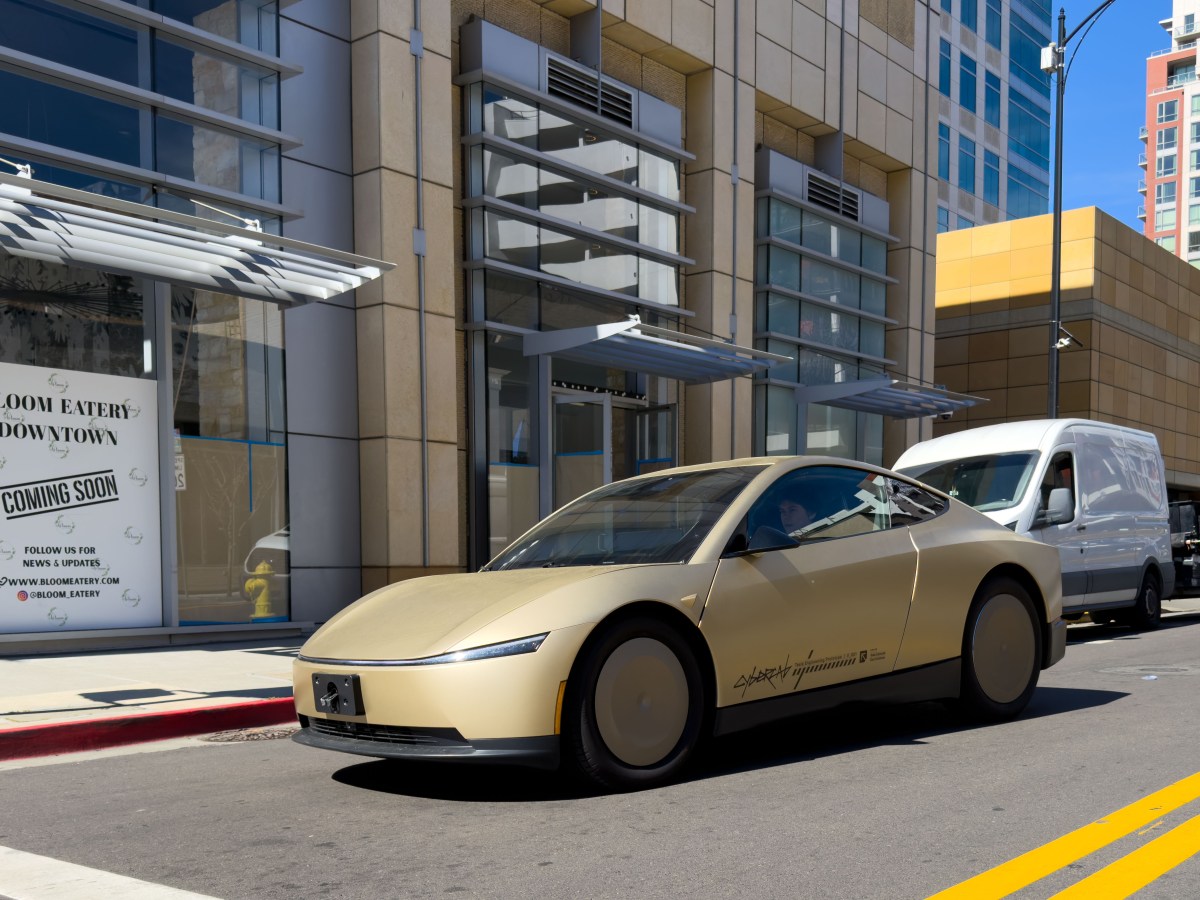
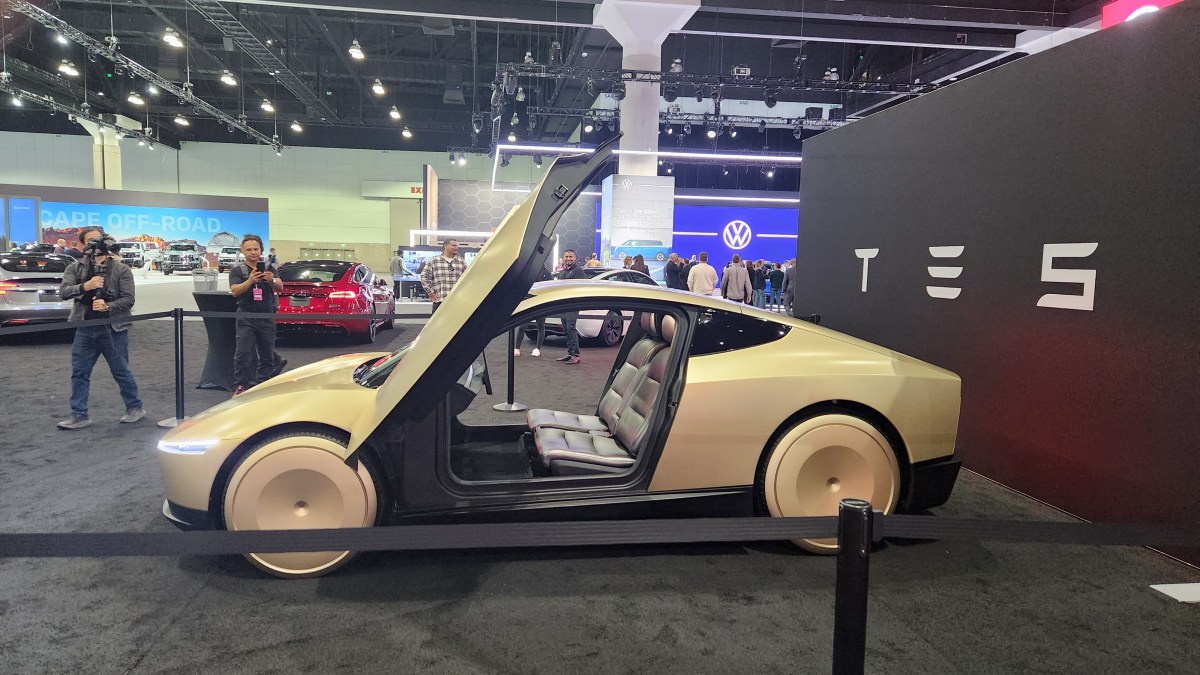
When Tesla revealed the Cybercab in 2024, many people were baffled by the automaker’s decision to make it a two-seater. I had similar thoughts when I first saw it at the LA Auto Show later that year: What kind of taxi has only two seats? Once you get above a tuktuk, that’s an asinine idea no one will ever want.
For 18 months, that seems to have been the prevailing attitude. On Reddit and other social media platforms, users have weighed in on the utility, or lack thereof, of a two-seat robotaxi. “You could strap a few people to the roof for a special discount,” quipped one commenter. Nevertheless, the first Tesla Cybercab was put into production last month, and now prototypes have been spotted testing both on public roads and on the grounds of Tesla’s assembly plant in Austin, Texas.
But in case you thought the Cybercab would be alone in absorbing all the anti-two seater vitriol, now there are two such vehicles.
The Lunar eclipse
At Lucid Motors’ Investor Day in New York City this month, its executive team laid out the EV maker’s plan to reach profitability. It includes three new models on a less expensive midsize platform — the first will arrive next year — an all-new electric powertrain, and a continuing focus on semi-autonomous driving functions and robotaxi partnerships.
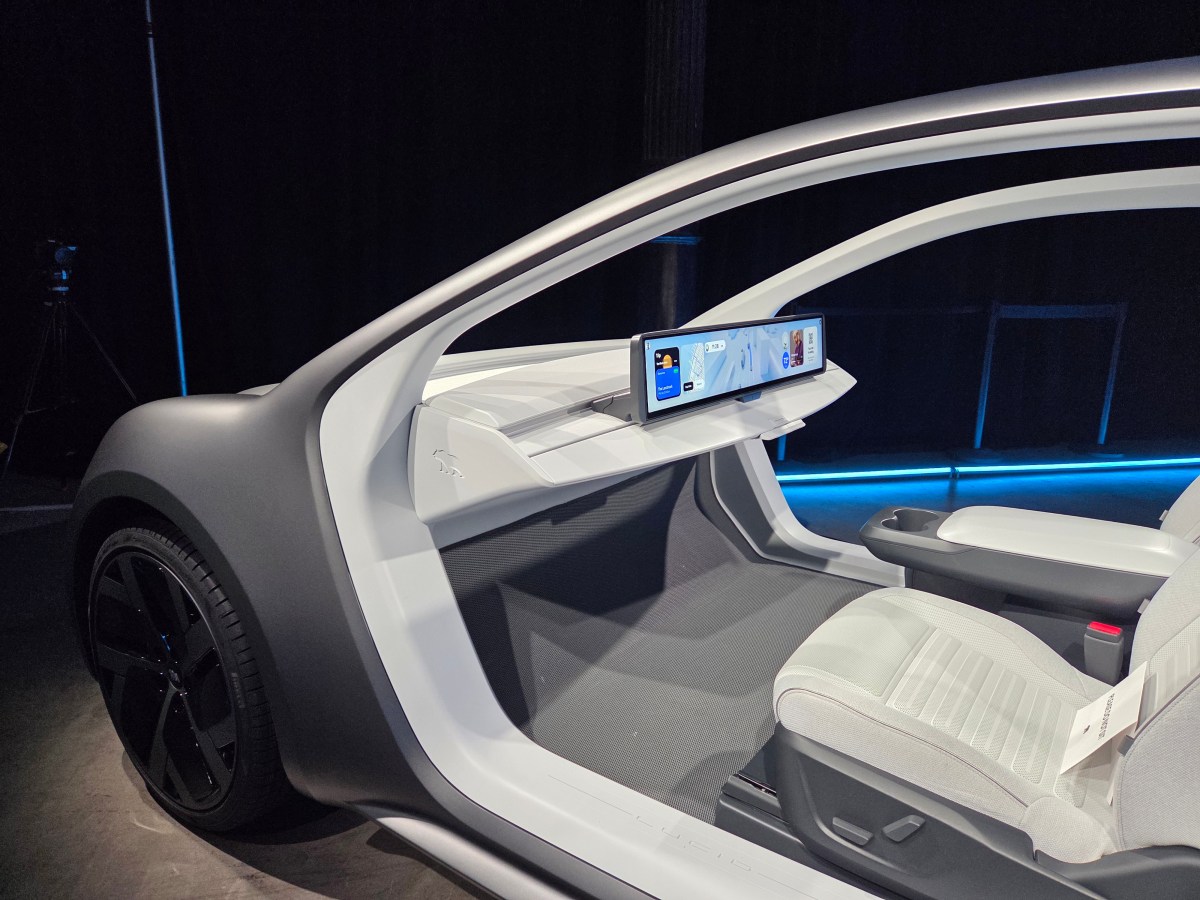
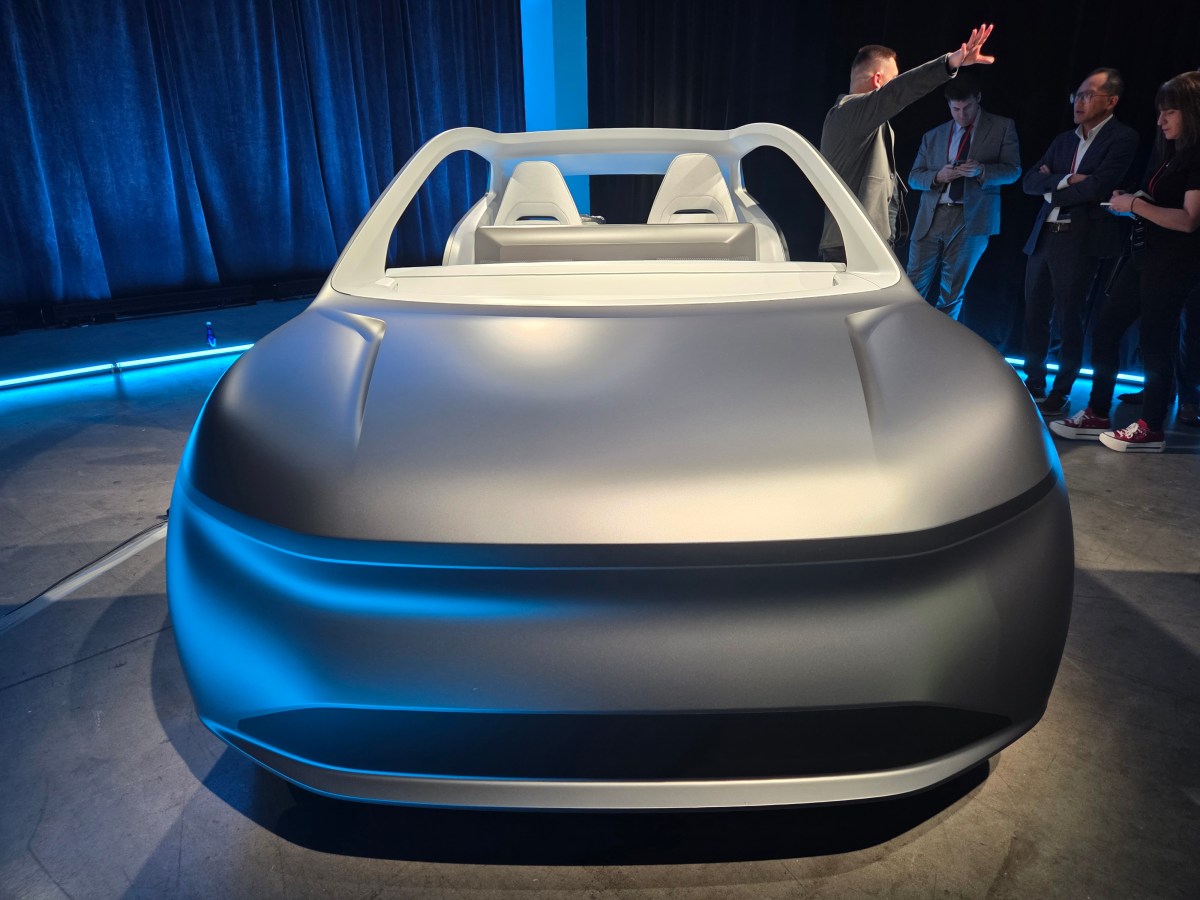
Then, in a “just one more thing” moment, Lucid’s acting CEO Marc Winterhoff revealed a concept car hidden behind a curtain at one end of the hall. The two-seat robotaxi concept, dubbed the Lucid Lunar, was displayed without doors to show off its interior space and large luggage bay. Visions of the Tesla Cybercab, different but the same, flashed through my mind.
In a “fireside chat” with Uber’s Andrew Macdonald, Winterhoff revealed the rideshare company has pledged to buy 20,000 Gravitys fitted with robotaxi sensors and software from Nuro. The two firms plan a similar deal with an upcoming Lucid midsize EV model as well.
It took a few hours with Lucid Motors executives for me to understand why, in fact, I was wrong about two-seat robotaxis. And why ridehailing services the world over might buy giant fleets of them. Presuming, of course, that robotaxis prove to be safe, reliable, not a major contributor to urban congestion, and notably cheaper for ridehail fleets than are today’s human drivers using a wide variety of EV and internal combustion models.
At minimum, deploying two-seat robotaxis would require an added step during the hail process: Every user would have to say how many people were traveling, to ensure a vehicle arrived with a sufficient number of seats. Users would most likely accept this added friction in the process, especially if two-seaters were cheaper than other alternatives.
The Lucid Lunar concept uses the same wide horizontal display on the dash as the Lucid Cosmos, but no steering wheel. It would be built on a shortened version of the midsize platform that will underpin the Cosmos and its two siblings, which would deliver major cost savings on the basic architecture. The Lunar is both lower to the ground and smaller than the Cosmos, and — my “aha!” moment — it was designed to be as energy-efficient and low-cost as possible for buyers.
Smaller, lighter, CHEAPER!
In their fireside chat, Winterhoff and Macdonald noted that more than 90 percent of the rides Uber provides today have just one or two passengers. Other studies put the proportion slightly lower — though still a strong majority. The logic of the vehicle, Lucid chief engineer Zach Walker later explained, was that the needs of ridehail fleet operators differ substantially from those of individual drivers.
Physics dictates a two-seat EV will be smaller and lighter than one with more seats. That will make it cheaper to buy and to operate, primarily because it can provide the necessary range from a battery with lower capacity — which will cost less and recharge faster for the same range added. Ridehail companies will need robotaxis with the absolutely lowest possible lifetime cost, to make the expensive tech practical versus human-driven vehicles.
According to chief engineer Walker, every 1-kWh reduction in battery size will save a robotaxi operator $1,000 per year in recharging costs, presuming it covers 100,000 miles a year. How efficient could that two-seat robotaxi be versus a four-seat compact EV? Walker said Lucid projects efficiencies of 5.5 miles per kilowatt-hour, perhaps as high as 6 mi/kWh, in typical use. (For comparison, the most energy-efficient EV sold in the US today is the rear-wheel-drive Lucid Air Pure, with an EPA efficiency rating of 146 MPGe, which translates to 4.4 mi/kWh.)
Beyond that, he added, there’s a “virtuous circle” of not just size and weight reduction, but engineering to purpose. Walker noted Lucids sold to individual buyers must have stellar roadholding and handling capabilities; it’s part of the brand. But the preset behavior of a robotaxis’ driving algorithm, and the limits of the performance it will demand, are known in advance, and won’t impose handling loads as extreme as a few private owners will. That means suspension structures can be tuned for comfort, using softer and less complex bushings. It could even let Lucid reduce or eliminate certain reinforcements and braces required to keep the structure stiff during extreme handling maneuvers, Walker said.
Does lower drag matter?
Both the Tesla and Lucid two-seaters are low and sleek, which minimizes aerodynamic drag. That further boosts efficiency at speeds of 30 mph and above, when the energy required to overcome wind resistance exceeds the energy required to move the vehicle itself. That’s an advantage for airport runs that require travel on highways, less so in trips predominantly based in urban environments, as Reilly Brennan of Trucks VC notes in his weekly newsletter.
Brennan questioned why the form factor of robotaxis mimicked the shape of a two-door coupe, despite the limitations it imposes on entry and exit. He proposed as an alternative a famous study by designer Giorgetto Giugiaro for a modern New York City taxi, created fully 50 years ago. It’s still crisp, modern, upright — and easier to get into and out of than a coupe.
But Giugiaro’s tall, square, upright design would present a challenge for wind resistance. Still, Brennan is convinced it’s the right approach. “Most of the trips for these will be low-speed and urban, which will make the Cd [drag coefficient] issues largely moot,” he said in an email.
After seeing the Lucid Lunar, every reporter at Lucid Investor Day had the same second thought I did 18 months earlier, when I saw the Tesla Cybercab: If you just added a steering wheel, that would make an awesome small, fast EV sports coupe.
Asked directly about such a possibility, Walker laughed. “Oh, I have lots of ideas in my spare time,” he said. “But this [the Lunar robotaxi] is the one we’re talking about today.”

-
 C114 Communication Network
 -
 Communication Home
