
 Search

In-wheel motors have been around since the very beginning of electric motoring. Ferdinand Porsche developed one way back in 1900, and the US sent them to the moon in our Lunar Roving Vehicles in the early ‘70s. But, outside of e-bikes, they’ve never really gone mainstream. It looked like Lordstown Motors would be their time to shine, but that never came to pass.
Lordstown’s truck, the Endurance, is now dead, doomed to haunt the ever-growing graveyard of failed EV startups. But the source of its motors, a Slovenian company called Elaphe, is still very much alive, refining its technology and installing it into all sorts of interesting projects.
Elaphe is promising EVs with better performance, greater control, more range, and a long list of other improvements. It’s hype I’ve been hearing for years, but after a day spent sliding around in the company’s prototypes, I’m beginning to believe.
Origins and Struggles
“It was a big blow,” Elaphe CEO Gorazd Gotovac says, of the Lordstown failure. “We set up all of the structures within the company to be able to support them.” The motors had gone through the full legal homologation process, a massive and expensive undertaking that didn’t entirely come to naught.
“Now we are building all of our future products on top of that. So I’m still very grateful that this project happened,” Gotovac says.
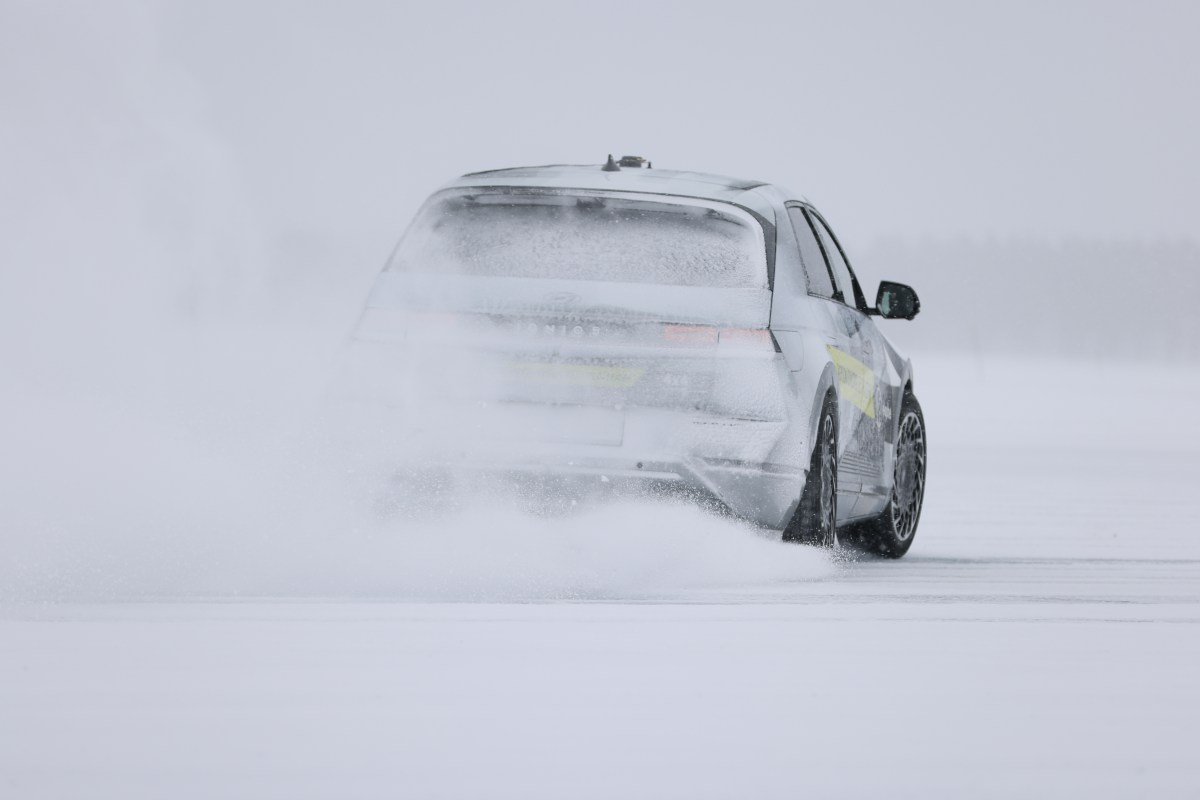
My time testing those products all happened on the ice, a stellar challenge for both car and driver. I started, though, with the fruit of someone else’s engineering: an Ioniq 5. Hyundai’s retrofuturistic EV is a great machine, but not exactly what I would choose for a day of sliding around.
Indeed, with the car’s stability control systems activated, the Ioniq 5 was safe and controlled, but far from fun. When I tried to start a slide, the car cut power dramatically and abruptly, resulting in a jerky, unsatisfying lap around a twisty handling course that had been plowed on the lake.
With those systems off, I could spin up the wheels without worrying about the car shutting down every time I went into a slip. But, in this mode, the car’s handling was unpredictable, its tail often coming around with little warning. When I tried to power out of a slide, the nose often just pushed forward, trying to usher me straight into the snowbank.
Quad Motor
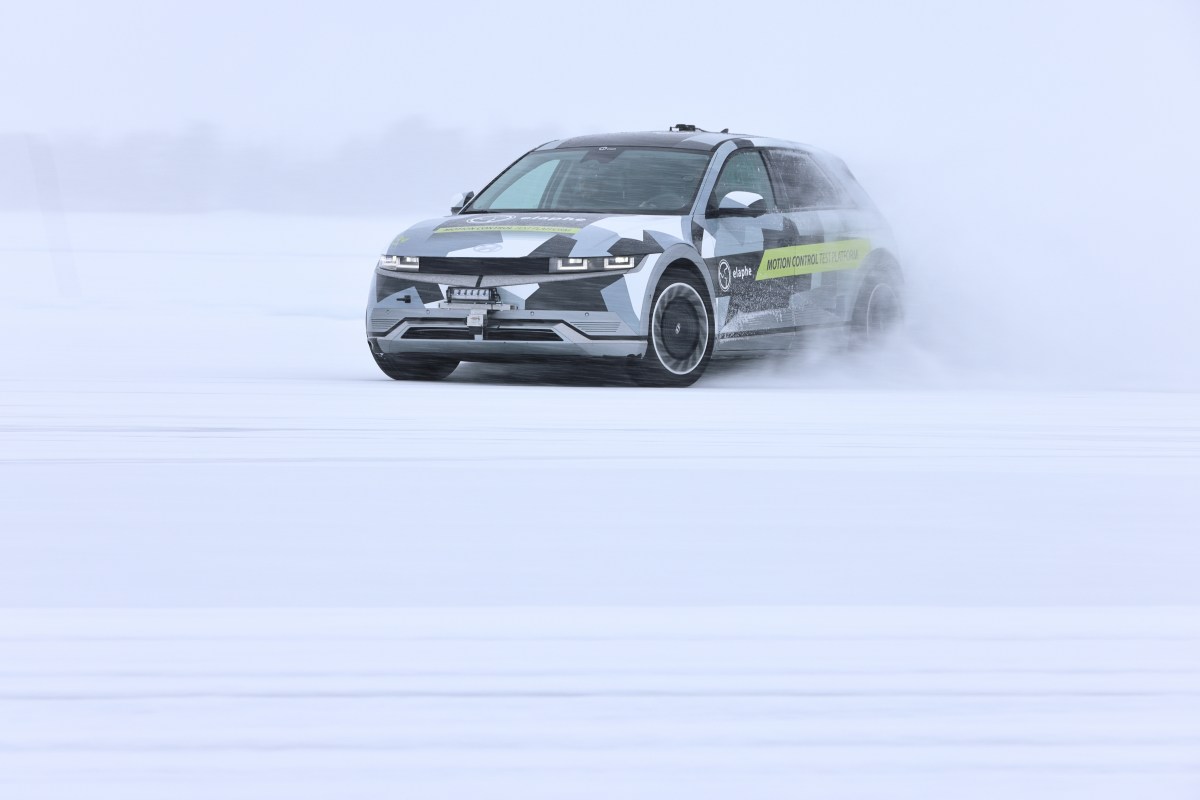
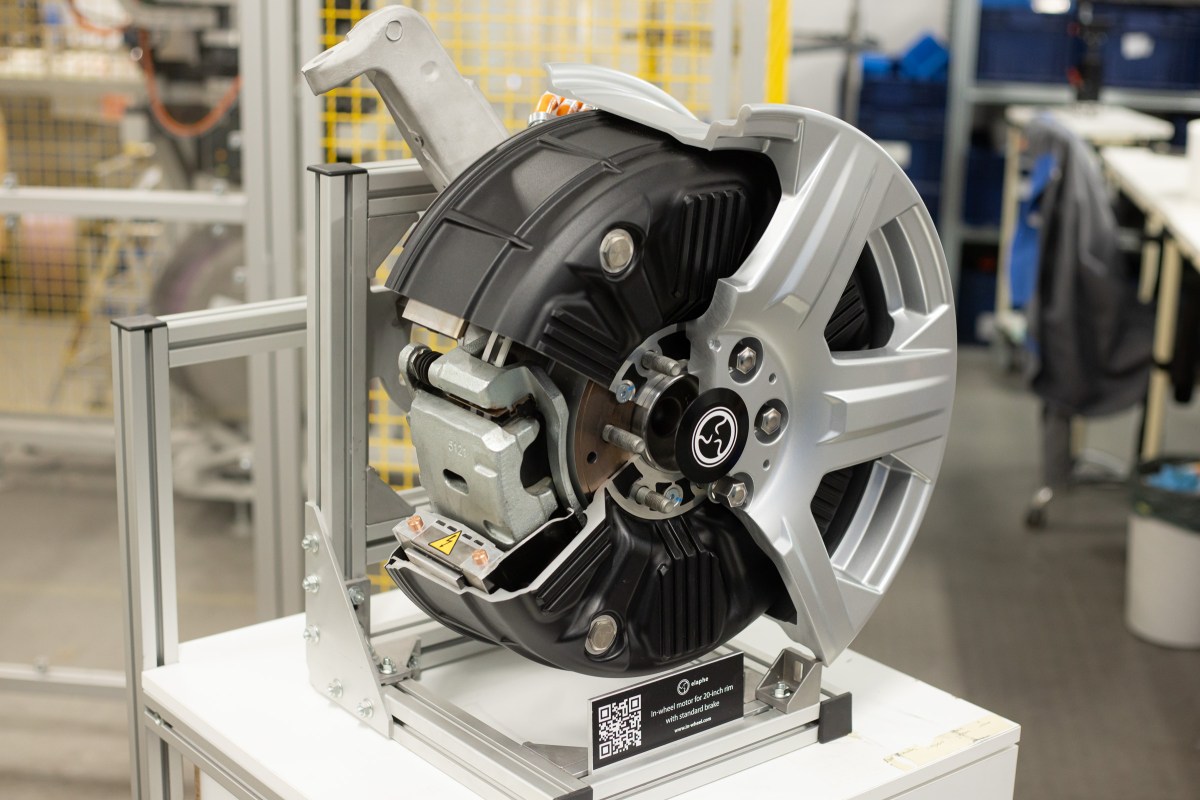
Elaphe’s version of the same car evicts the car’s standard motors, differentials, and other accessories, replacing them with not two but four in-wheel motors measuring 188 hp and 1,254 pound-feet of torque each. This required little modification to the car itself, though a custom suspension setup from German tuners KW was needed to handle the extra weight at the wheels.
The overall weight of the vehicle, though, is within 30 pounds of the stock one, but it felt much more nimble. In Elaphe’s standard mode, the Ioniq 5 was still not particularly fun to hustle around the track. It was still reluctant to go fast, but now instead of jerkily cutting power at any sign of wheelspin, it gradually reduced the output of the four motors based on what I was trying to do.
As I tried to turn into a corner when going too fast, the car gradually cut power and even began applying recuperative braking on the inside wheels to pull the nose through. As I unwound the steering wheel coming out of the corner, the car smoothly added more power.
This smoothness is in part thanks to the ability to sample grip near instantaneously since the motors are right there in the wheel, with no driveshafts or differentials in the way. And since there’s one at every corner, Elaphe’s software can leverage that to dramatically change the car’s handling.
After a few laps of proving I knew my stuff on the ice, I was given clearance to try Elaphe’s drift mode. Here, the motors still provided some assistance to help the vehicle turn, again modulating power and regen from left to right. But, I had full access to the torque of the four motors, which was more than enough to light up the tires coming out of the turns. The car was a joy, pivoting and sliding and cleanly transitioning from one corner to the next.
Hybrid Pony Power
To get a taste for what a hub-motor hybrid might feel like, Elaphe brought out its latest prototype, a piece of American muscle with a 5.0-liter, 500-hp V8 augmented by a pair of Elaphe’s in-wheel motors. The car’s rear seat was replaced by a 9.0-kilowatt-hour battery pack and all the necessary electronics to control those front motors. Add in some complex vehicle dynamics software and you have a recipe for a very good time.
With those motors disabled, the thing struggled even to accelerate on polished ice, spinning its rear tires with wild abandon. Trying to execute a series of slow corners was a monumental challenge. With the front motors enabled, everything changed. Now, the car pulled cleanly away on that same stretch of shiny ice, and I was able to turn left and right without issue, front motors applying power or regen as needed.
On the handling circuit, the car was a handful, but a lot of fun. I again sampled all the various drive modes, and it just got progressively wilder but never uncontrollable.
Future Potential
In the case of the big American coupe, there’s a considerable increase in the car’s weight, since a battery had to be brought in. But Gotovac says EVs designed from the ground up for these motors could be smaller, lighter, and cheaper by removing the inboard motors and related drivetrain components.
While the overall vehicle would get lighter, there’s one area where weight will increase: the wheels themselves. Weight out there, called unsprung mass, makes the car’s suspension work doubly hard. This can have a negative impact on everything from handling to ride quality.
Interestingly, though, the precise control in wheelspeed enabled by placing those motors in the wheels means that Elaphe-powered cars could actually mitigate that problem themselves. “I can dampen my vibration with the in-wheel motor instead of the active damper,” Gotovac says, again cutting cost and weight.
But the big question, though, is when might we see this technology in something mass-market? Gotovac says Elaphe is working on projects with multiple OEMs, especially those focused on performance, and that we’ll see the first vehicles within a few years.
Some of the first Elaphe-powered cars will be hybrids, with bigger projects to come after 2030, including performance-oriented EVs. Unfortunately, the details of those are locked up tight in a web of NDAs.
I’ll need many more details before I can be bullish on the company, but I was certainly impressed by what I saw and experienced in Sweden. The performance of both cars was well beyond my expectations, and while there’s still the question of on-road ride quality, in terms of grip and handling, these things feel supernatural.

-
 C114 Communication Network
 -
 Communication Home
