
 Search

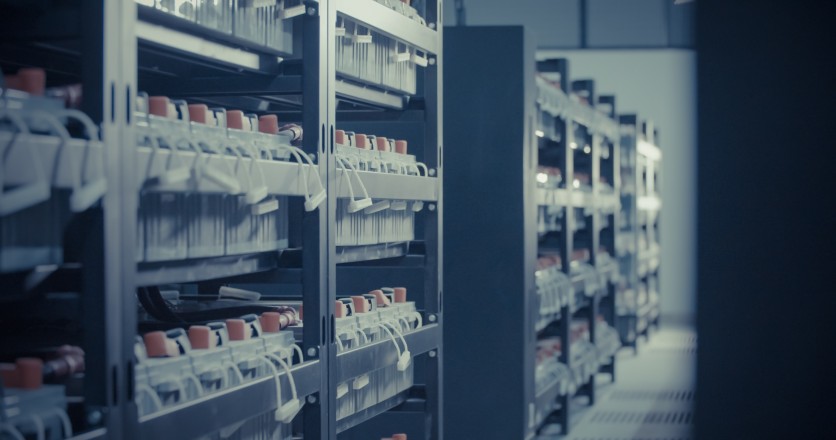
Discover how Big Tech is investing billions in AI data centers to power next-generation tech infrastructure, driving innovation, sustainability, and the future of artificial intelligence. Pixabay, Akela999
Big Tech is in a global race to build the most advanced AI data centers, the backbone of modern tech infrastructure. These facilities power everything from chatbots and generative AI tools to large-scale cloud services.
Companies like Google, Microsoft, Amazon, and Meta are investing billions of dollars to expand capacity and efficiency. Fueled by rapid advances in artificial intelligence, this infrastructure arms race is redefining how data is processed, stored, and deployed worldwide.
What Is an AI Data Center?
An AI data center is a specialized facility built to support the intense computing demands of artificial intelligence. Unlike traditional data centers used for storage or basic cloud applications, AI centers are equipped with high-performance hardware such as GPUs, TPUs, and advanced networking systems.
These components allow massive amounts of data to be analyzed and processed simultaneously. Advanced cooling and energy systems keep temperatures stable despite extreme workloads. Such technology is essential for training deep learning models that drive applications in language processing, computer vision, and automation.
Google uses custom TPU chips for efficient AI training, while Nvidia's H100 GPUs dominate the market for large-scale processing. Together, these tools make AI innovation possible at an unprecedented speed and scale.
Why Are Big Tech Companies Investing in AI Data Centers?
Generative AI is the main driver of this infrastructure boom. Models that create text, art, or code depend on vast computing power. Building a high-performance network of AI data centers allows companies to manage training and deployment in-house, improving both speed and control.
Owning this infrastructure also secures a strategic business edge. Cloud providers like Microsoft Azure, Amazon Web Services, and Google Cloud can host AI models for enterprises, developers, and research groups while maintaining data privacy and performance standards.
These facilities aren't just operational assets, they're competitive differentiators. The more advanced the data center, the more efficiently companies can scale their AI products and cloud services.
Which Companies Lead the AI Data Center Race?
Several companies are setting the pace in this sector.
- Google continues to deploy its TPU-powered facilities designed specifically for AI and machine learning workloads.
- Microsoft's collaboration with OpenAI has driven massive investments in GPU-based infrastructure optimized for generative AI.
- Amazon Web Services (AWS) leads in offering customizable AI infrastructure through homegrown Trainium and Inferentia chips.
- Meta is expanding its research data centers to enhance its AI capabilities in vision, language, and the metaverse.
- Nvidia, meanwhile, remains the crucial supplier powering nearly every major company's AI operations.
This competition has turned infrastructure itself into a key element of technological leadership.
How AI Data Centers Work
At their core, AI data centers operate through a process of data ingestion, training, and inference. Massive amounts of data are collected and processed during training to fine-tune billions of parameters. Once the model is trained, it runs inference, using those parameters to make predictions or generate responses in real-time applications.
Both stages consume enormous energy. A large-scale training session can take weeks and require thousands of interconnected GPUs. To manage energy costs, many companies are emphasizing sustainability by powering their facilities with renewable energy and using advanced cooling systems to reduce waste heat.
As a result, energy efficiency is now a primary design goal, not just for cost management but for ecological responsibility.
Read more: Green Data Centers Power Sustainable Tech Infrastructure and Cut Energy Use
The Challenges of Scaling AI Infrastructure
Building and maintaining AI data centers comes with significant challenges. The most pressing include:
- Energy consumption – Many facilities consume as much electricity as small cities, prompting sustainability concerns.
- Chip shortages – Demand for GPUs and specialized processors continues to outpace supply, driving up costs.
- Data privacy and security – AI models rely on large datasets, raising compliance issues under international privacy laws.
- Environmental impact – Even with improvements in renewable energy use, the carbon footprint remains under scrutiny.
Balancing these technological and ethical challenges will determine how quickly AI infrastructure can continue to grow globally.
Innovations in Tech Infrastructure
The race to improve tech infrastructure has led to major innovations in AI hardware and facility design. Liquid cooling systems now manage heat more effectively, enabling tighter GPU clustering and higher computing density.
Tech giants are also shifting toward renewable energy partnerships, sourcing wind and solar power to meet growing energy needs sustainably.
Advances in chip design are another turning point. New processors by Nvidia, AMD, and Intel offer higher performance per watt, reducing energy consumption while maintaining computing strength. Edge computing, placing smaller AI nodes closer to end users, adds another layer of efficiency by reducing latency and data transfer costs.
Through these strategies, companies are not only scaling performance but also addressing the global push for greener technological growth.
The Future of AI Data Centers and Global Tech Infrastructure
The future of AI data centers is deeply tied to the evolution of global tech infrastructure. As AI models continue to grow more sophisticated, the need for computing capacity and sustainable operations will only increase.
Big Tech's investment in next-generation infrastructure sets the stage for the next wave of digital transformation. Future centers could integrate quantum processors, AI-driven maintenance systems, and self-optimizing energy grids.
These facilities have become more than support frameworks, they're the engines of modern computing. The companies that master scalability, speed, and sustainability in AI data centers will shape the direction of global tech infrastructure, driving innovation across industries and redefining what's possible in the age of artificial intelligence.
Frequently Asked Questions
1. How long does it take to build an AI data center?
Construction typically takes 18 to 36 months, depending on scale, location, and availability of specialized equipment like GPUs and cooling systems.
2. Are AI data centers only used by large technology companies?
No. While Big Tech dominates the market, smaller organizations and research institutions increasingly use rented AI computing power through cloud-based services.
3. How do AI data centers impact local economies?
They create jobs in engineering, construction, and maintenance, while also prompting infrastructure upgrades such as improved power grids and internet connectivity.
4. Can AI data centers run entirely on renewable energy?
Not yet. Many are shifting toward solar, wind, and hydro sources, but high energy demands still require supplemental power from traditional grids.
Read more: Cloud Infrastructure Comparison: AWS vs Azure vs Google Cloud

-
 C114 Communication Network
 -
 Communication Home
