
 Search

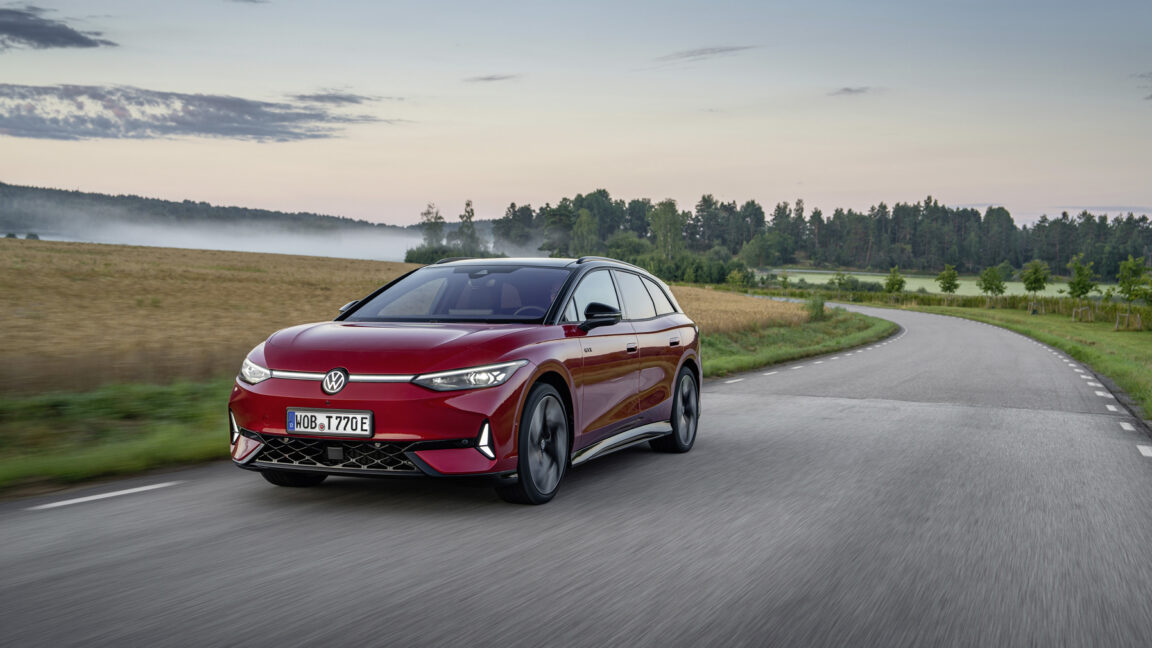
Credit: Volkswagen
Electric vehicle enthusiasts are probably right to feel a little disheartened about the state of the United States’ transition to EVs. But they should take heart that our region is an outlier. The other side of the Atlantic still seems relatively positive about the whole idea, even as Europe’s car market recovers more slowly from the pandemic than the rest of the world. Last year, overall vehicle sales in Europe barely ticked up, rising 2.2 percent from 2024. EV sales, meanwhile, increased by 29 percent, bringing market share to an impressive 19.5 percent.
That’s according to data from automotive analyst JATO Dynamics, which finds that the big winner has been Volkswagen. Last year, its EVs outsold those from Tesla for the first time as sales of VW’s electric offering grew by 56 percent, while Tesla’s shrank by 27 percent.
To put that into concrete numbers, VW sold 274,278 EVs to Tesla’s 236,357. And that’s just the VW brand itself—the automaker also owns Skoda (in 4th place, with 171,703 sales), Audi (5th place, 153,845 sales), Cupra (15th place, 79,269 sales), and Porsche (21st place, 32,715 sales). Not a bad effort, considering just over a decade has passed since VW’s Dieselgate scandal.
Tesla can console itself with the fact that the Model Y remains Europe’s most-registered car, though that task is much easier when you essentially give consumers only two models to choose from. 149,805 Models Y found European homes in 2025, 28 percent fewer than last year. The Model 3 also proved unpopular, falling by 24 percent to 85,393 units sold.
Volvo’s EX30 stands out as doing even worse—this small and affordable EV saw its sales decline by 37 percent (to 49,110). Among the car’s challenges were recalls, along with Volvo switching production from China to Belgium due to the international tariff war.
What about other powertrains?
Although Europe’s battery EV sales grew by 29 percent in 2025, buyers actually purchased more mild hybrids—cars with conventional internal combustion engines but more powerful 48 V starter motors that reduce emissions by a few percent. The total came to 2,974,089 mild hybrids, in fact, 16 percent more than in 2024. Sales of vehicles we think of as actual hybrids, where there’s a traction motor and battery (like a Toyota Prius, for example), grew by 10 percent to 1,692,711 units, and plug-in hybrid sales increased by 34 percent to 1,272,463 units.
All of this came at the expense of unelectrified vehicle sales, which fell by 20 percent, to 4,528,181. By next year, it’s likely that more than two in three new cars sold in Europe will be electrified to some degree.

-
 C114 Communication Network
 -
 Communication Home
