
 Search

Credit: Sony Honda Mobility
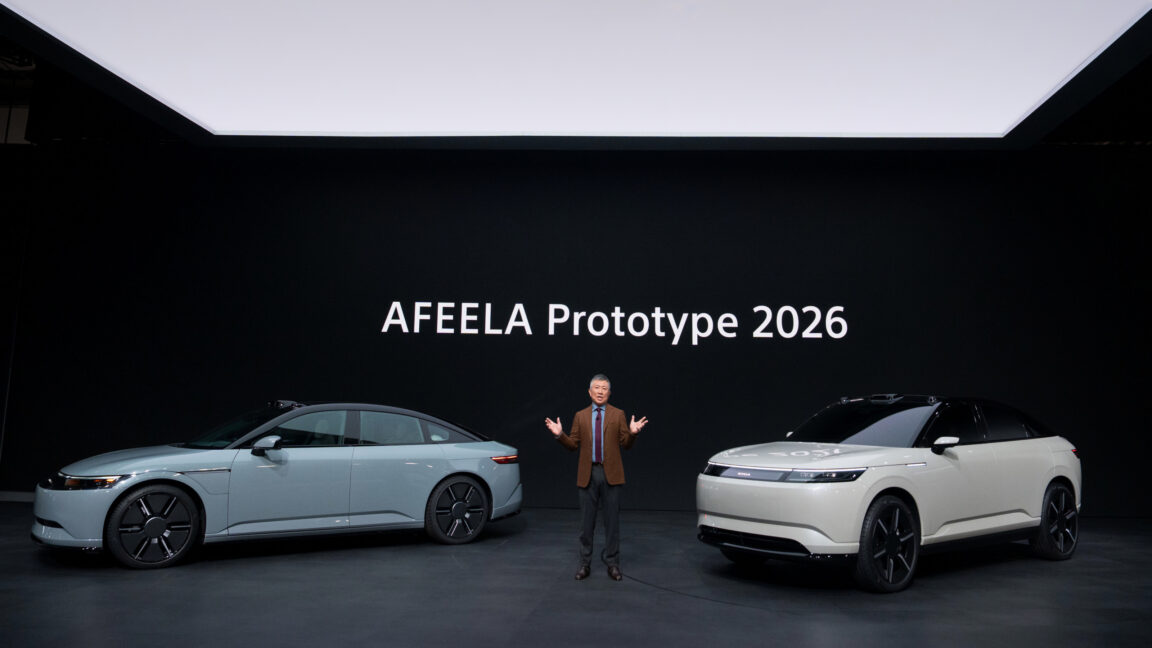
Six years after Sony first announced its automotive ambitions, everything is looking a lot more concrete. Production of the Afeela 1, the electric sedan that has been developed by Sony Honda Mobility, is already underway in Ohio. Deliveries will begin later this year in California, expanding to Arizona and Japan in 2027. And last night, on the eve of this year’s Consumer Electronics Show, it even showed off a crossover version.
“The way we are fusing diverse technologies to deliver a completely novel mobility experience is not limited to a single model type,” said Sony Honda Mobility CEO Yasuhide Mizuno.
We first saw a Sony electric vehicle back at CES in 2020 when the consumer electronics company showed off the Vision-S, telling the world it was mostly just a showcase for things like sensors and infotainment. Then the world caught a hot case of electric vehicle fever. Tesla’s stock price went vertical, and the auto industry focused on EV optimism, even as a pandemic rewrote everyone’s working rules.
That optimism feels very thin on the ground here in the United States of late, but it continues apace in the rest of the world. And in China particularly, we’re seeing how tech companies can make highly competitive EVs with infotainment experiences that, I’m told, far outstrip anything we’re seeing here from more traditional OEMs.
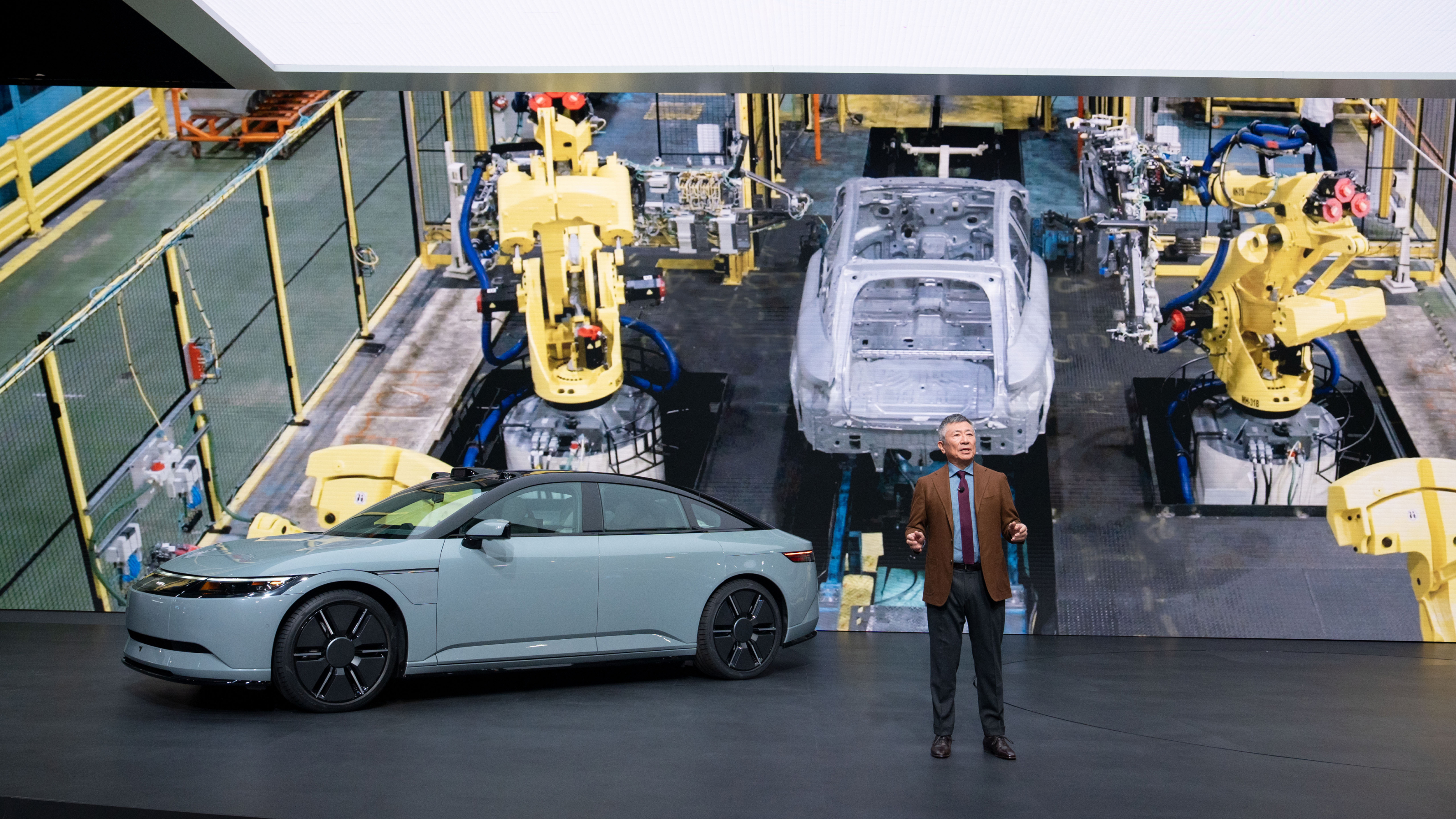
The Afeela 1 is already going into production in East Liberty, Ohio.
Credit: Sony Honda Mobility
So it makes sense that Sony decided to pursue the idea enough to form a joint venture with Honda in 2022, surprising those of us who expected the tech company to contract with Magna, which helped on the development of the Vision-S. At that year’s CES, Sony also showed an SUV version of the Vision-S.
Sony Honda Mobility isn’t going to build the Vision-S, though. Its first car is called the Afeela 1, and if you live in California and can afford the $89,900 starting price, you can already order one. It’s a little more anonymous to look at than the old Vision-S, and that applies to the new crossover prototype that Sony Honda Mobility unveiled yesterday; according to friends on the ground, other than the height it’s hard to tell the two EVs apart.
It’s all about AI
The big news, at least in terms of detail, wasn’t the crossover, which Sony Honda Mobility says will arrive on sale here in 2028. Rather, like seemingly every other corporation out there, it’s all about AI. A “vision-language model” will “elevate” the Afeela’s partially automated driver assist—which requires the human to pay attention while the car steers, accelerates, and brakes—into something more fully autonomous, capable of point-to-point driving without any other human input, at least under some conditions.
“Specifically, we are constantly reviewing sensor devices and layouts, further improving computing power, and making our End-to-End Driving AI stronger,” said Izumi Kawanishi, president and COO of Sony Honda Mobility. “As a result, the cabin will evolve into a drive-less environment, reducing the task of manual driving, and providing more freedom to relax and enjoy entertainment content. In the future, the drive-less environment will transform the cabin into a true ‘Creative Entertainment Space,’” Kawanishi said.
Not having to drive will free you up to interact with the onboard personal AI, which uses Microsoft’s OpenAI tech. The AI agent “enhances mobility interactions through personalized natural dialogue. This elevates the relationship between people and mobility into something more personal and long-lasting,” Kawanishi said, adding that Sony Honda Mobility wants to use AI “sensitively while carefully considering personal information and privacy.”
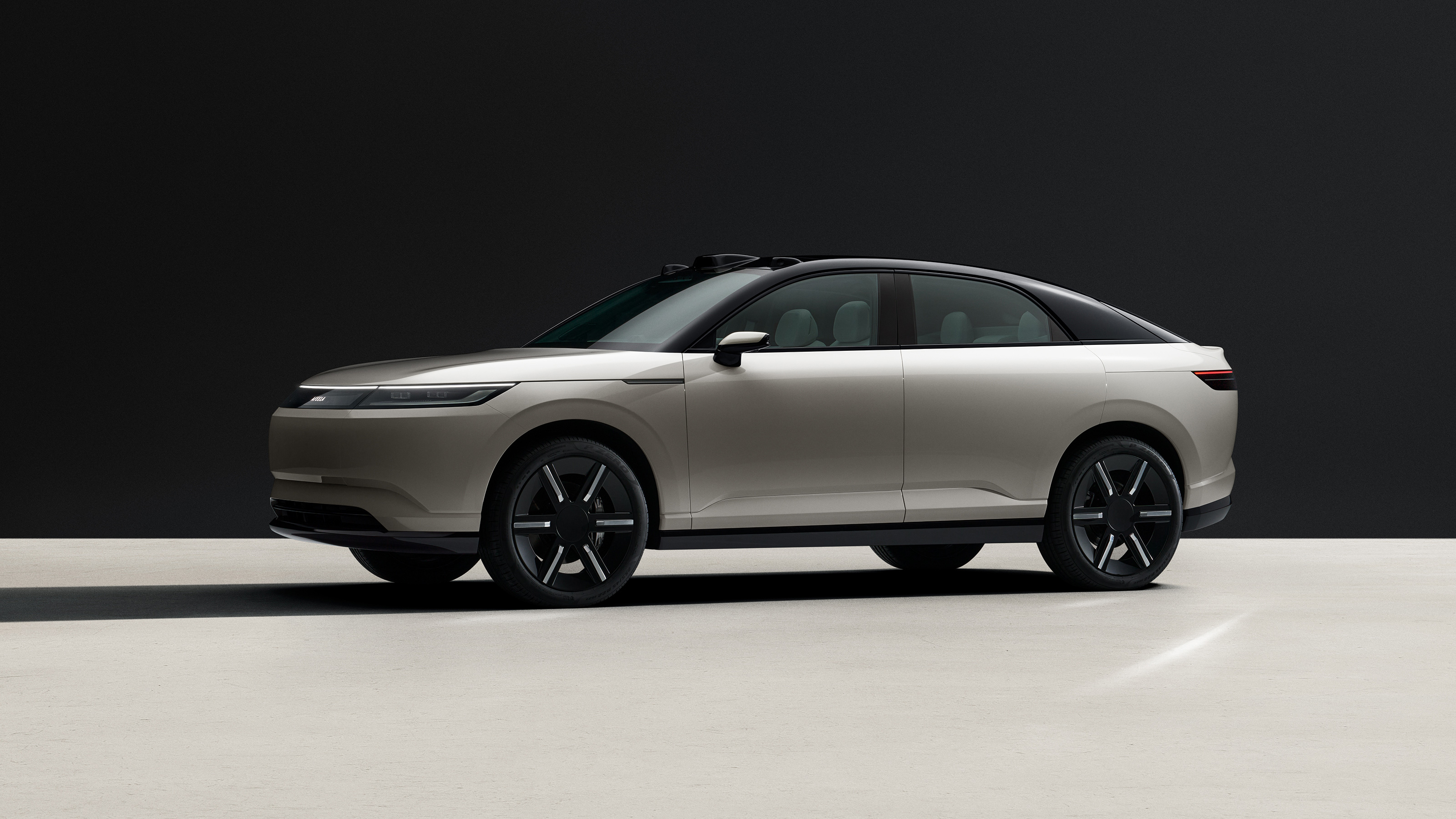
We did not see any interior details of the new Afeela.
Credit: Sony Honda Mobility
Powering all of this on the car? Qualcomm’s Snapdragon Digital Chassis platform; the chipmaker has been a strategic partner of Sony Honda Mobility throughout the Afeela’s development.
Well, it’s also about content
Sony says that its PlayStation remote play experience will be embedded in the Afeela 1. “With a DualSense controller and a good network connection, AFEELA becomes another way you can pick up and play the games you already enjoy. Just like every other Remote Play experience, this isn’t a separate console in the car—you’re playing the games you already own through streaming,” said Erik Lempel, senior vice president of business and product at Sony Interactive Entertainment.
The team at Polyphony Digital, which makes the Gran Turismo series of games, isn’t responsible for the car’s driving dynamics, but there will be GT wallpapers and even electric motor sounds available, as well as an Astro Bot theme. Sony Honda Mobility says it will also provide cloud APIs (that handle vehicle information) and an Android development environment for third-party creators to build apps and experiences for the Afeela interior. It seems probable that tentpole releases from Sony’s various entertainment divisions will find their way into the cars, too.
Sony Honda Mobility says that demo drives for the Afeela 1 sedan begin later this year. And while all of the above certainly sounds like it makes sense if you’re a consumer tech company that wants to get into selling cars, I’m less convinced it makes that much sense on the other end of the equation. $90,000 is a lot of cash for a car, particularly when that gets you into a Lucid Air—much improved in 2026—or a slighty used Porsche Taycan. The competition for electric SUVs at that price point, which is a much larger market, is even more fierce, and 2028 is a long time from now in the car world. That said, I am definitely curious to get behind the wheel of an Afeela 1, which I’m guessing should happen at some point this year.

-
 C114 Communication Network
 -
 Communication Home
