
 Search


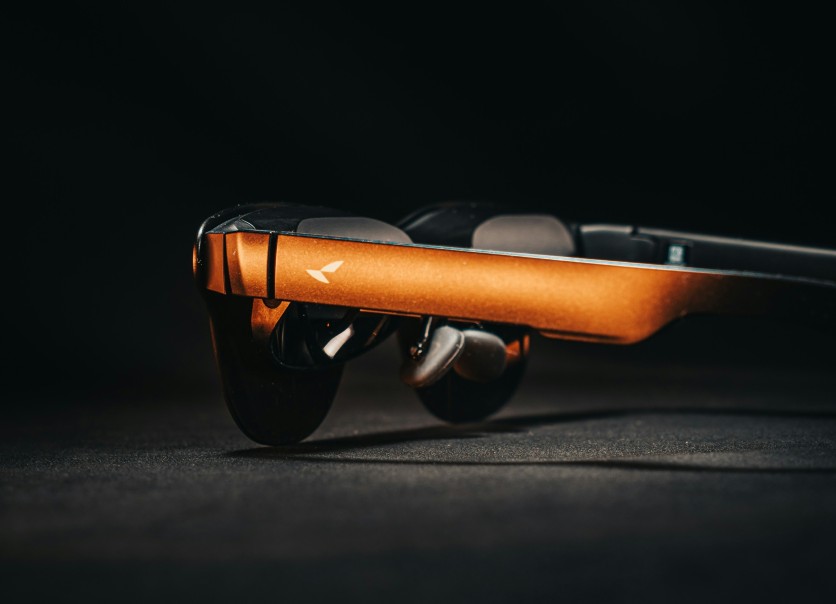
Tymek Niciak/Unsplash.com
Enovix (Nasdaq: ENVX) said Monday, Nov. 23, that a customer it describes only as a leading global technology company has placed a purchase order for engineering work on a curved, trapezoid-shaped battery cell with a silicon-carbon (Si-C) anode for an upcoming smart-glasses product, with production targeted for Q3 2027 and the device targeted for Q4 2027. The release gives no capacity, dimensions, energy density or order value, so a reader can check the cell's shape and schedule today but not whether it holds more energy than the 160 to 248 mAh cells in Meta's Ray-Ban glasses.
Battery space is one of the hardest limits on smart glasses, and Enovix says a cell shaped to a device could extend time between charges without making it bulkier, though it published no figures to test that claim. What exists so far is a paid development contract, not a product.
Enovix Disclosed Cell Shape and Schedule but Not Capacity, Customer or Order Value
| Disclosed | Not disclosed |
|---|---|
| Customer described only as a leading global technology company | Customer name or product |
| Curved-trapezoid shape with an anode containing Si-C | Capacity, voltage, energy density, dimensions or weight |
| Purchase order for non-recurring engineering (NRE), meaning paid development work | Order value or expected production volumes |
| Production targeted for Q3 2027; device launch targeted for Q4 2027 | Where the cell would be manufactured |
Enovix says its cell architecture and manufacturing process allow custom dimensions, including curved and non-rectangular shapes, which it says are difficult to produce with conventional manufacturing approaches. Steven Bakos, Enovix's chief revenue officer and general manager, put the pitch this way: "In wearables, every fraction of a millimeter and every gram matters."
Why Can't Smart Glasses Use Phone-Style Pouch Batteries?
Meta's June engineering write-up said a glasses battery has to fit inside temple arms narrower than an adult's pinky finger. It said pouch cells, the format in most phones and laptops, are hard to reshape and shrink because their folds waste volume and their manufacturing tolerances use up space the arms do not have.
Meta's answer was steel-can cells built from die-cut stacked layers, which it says have reached widths as narrow as 7 mm (0.28 in). Capacities in its glasses are small, with 160, 210 and 248 mAh figures for the first Ray-Ban Meta, the second generation and the display-equipped Ray-Ban Meta, respectively. Meta said the second generation's doubled runtime came from efficiency gains and a larger cell, with the chemistry unchanged.
At 160 to 248 mAh, a few cubic millimeters of recovered volume can matter, which is the logic behind a curved cell. Enovix has not said how much volume its curved trapezoid recovers or whether it beats a steel-can cell of the same envelope.
Silicon Swells Roughly 300% When Charged, Which Is Why Anodes Add Carbon
Graphite, the standard anode material, swells about 10% in volume when full of lithium. Silicon has roughly ten times graphite's theoretical capacity but expands about 320%. IEEE Spectrum put the figure at almost 300% in 2019. That swelling cracks silicon particles, fractures the anode's protective surface layer and consumes lithium, and prototype pure-silicon cells can lose most of their capacity within about 10 cycles.
Silicon-carbon composites embed silicon in carbon to buffer that expansion. The trade-off is that composite capacity is a weighted average of the two, and it can fall toward graphite's as silicon particles become electronically isolated during cycling. Jeff Dahn of Dalhousie University told an industry seminar in March 2025 that cells with 20% Si-C can reach more than 1,000 cycles at moderate (C/3 or C/5) charge rates, though they still expand and contract with every cycle.
Enovix's earlier approach was mechanical rather than compositional. Cofounder Ashok Lahiri told IEEE Spectrum in 2019 that stacking layers under high pressure restrains expansion enough to allow an anode made entirely of silicon and silicon oxides.
Shape complicates that bargain, and the release is silent on how. Dahn also said that in cells with large-volume-change anodes, the time for electrolyte salt imbalance to relax grows with the square of cell length, and he cautioned against long cells for that reason. Whether that applies to a curved trapezoid is an open question that Enovix's release does not address.
Cutting electrodes to a curved outline is a manufacturing question too. In February, Enovix Chairman T.J. Rodgers, now executive chairman, called laser dicing of the battery's electrode ribbons the main limit on its Penang, Malaysia production line and named a custom mechanical punching tool as a fallback. The release does not say how this cell's electrodes would be cut or which plant would build it. Enovix's third-quarter filing says it plans to spend about $19 million to expand drone battery capacity at its South Korea plant, with completion expected in mid-2027. The release's risk list mentions expanded South Korea capacity coming online on schedule, but it does not say that capacity is for this program.
Read more: Vivo V80 Lite 5G Delivers Two-Day Battery Life at Mid-Range: 10,000mAh Debuts Outside China
Enovix Documents Describe AI-1 Anode as Both 100% Silicon and Silicon-Carbon
The release calls the new anode a Si-C anode but does not say how much silicon it contains or how it relates to AI-1, the cell Enovix already ships for smart eyewear. Enovix's annual filings describe its architecture as using 100% active silicon and no graphite. An August shareholder letter published by the company describes its current anode both as 100% silicon and as silicon-carbon composite particles, and says its South Korean subsidiary Routejade's battery was upgraded with a 20% addition of silicon-carbon from AI-1 technology.
Enovix's third-quarter results release also refers to silicon-blended graphite cells for its drone line, and its website describes its portfolio as spanning 100% active silicon, blended silicon and graphite battery technologies.
The Si-C label in the release does not by itself show a new chemistry. What the release discloses as new is geometry. Any energy-density or cycle-life claim for this cell remains unproven until Enovix or its customer publishes it.
Design Win Means Paid Development Work, Not Production Order
Non-recurring engineering (NRE) is a one-time expense to research, design, develop and test a new product, in contrast to per-unit production costs. Enovix says this purchase order covers NRE services only and that production volumes would require a separate order.
Enovix's own note on design wins says they are not customer orders, backlog or committed revenue. It lists ways the program could stall: the NRE order could be modified, delayed, reduced or canceled, or never lead to a production order; the cell could miss customer thresholds for cycle life, low-temperature performance or rate capability; the product launch could slip, be canceled or ship in lower volumes; and Enovix would need to scale manufacturing on schedule.
The company's risk list also cites customer concentration, a history of losses, litigation, liquidity, debt service and an interim CEO arrangement.
Enovix Announced Design Win After Third-Quarter Shipment Shortfall and Job Cuts
In its third-quarter 10-Q, Enovix said it shipped about 8,600 AI-1 batteries against a customer order for 50,000 packs. It said a manufacturing process excursion caused the shortfall, and that completion of the order slipped from the fourth quarter of 2026 to the first half of 2027. About 19,000 units had shipped this year as of the Nov. 12 results release.
That release also said Enovix decided not to proceed with system-level smartphone field testing on pre-AI-2 cells, which missed an energy-density target, and will concentrate silicon-anode development on smart eyewear, where it has backlog. The 10-Q says Enovix eliminated about 220 of 946 employee and contract direct-labor positions in November, mainly in Malaysia.
Benzinga reported shares fell 21.34% to $1.98 at publication, a new 52-week low, after the quarterly report. By Nov. 18, Finviz reported, premarket shares were $1.31, near the 52-week low of $1.28, following analyst downgrades. The same report said law firms have opened preliminary investigations, which are not findings of wrongdoing.
Leadership has also changed. Raj Talluri resigned as CEO effective Aug. 13. CFO Ryan Benton became interim CEO, and T.J. Rodgers, the board chairman and largest shareholder, became executive chairman while the board searches for a permanent chief executive.
Production Order, Capacity Figures and Customer Name Would Settle Open Questions
- Production purchase order. Enovix says production volumes need a separate order, and that order is what would turn this program from paid development into a product.
- Capacity, energy density and weight. Those figures, once Enovix or its customer shares them, would show how much the curved-trapezoid shape and Si-C anode actually add.
- Execution. Enovix now expects to finish the 50,000-pack order in the first half of 2027, shortly before its Q3 2027 production target for this program.
- Customer. Enovix has not said whether this customer is the same company behind its existing eyewear order.
For anyone following smart glasses, the takeaway is narrow but useful: the disclosed news is a custom shape and a schedule, not proof of longer battery life. Until Enovix or its customer publishes capacity, cycle life and a production order, treat the curved Si-C cell as a promising design in paid development.
Frequently Asked Questions
Why does cell shape matter so much in smart glasses?
Meta says glasses batteries must fit temple arms narrower than an adult's pinky finger, and that pouch cells waste volume in folds and tolerances. A cell shaped to the arm can use more of that fixed space, though Enovix has not published how much capacity its curved trapezoid gains.
Does silicon-carbon mean Enovix changed its battery chemistry?
Not necessarily. Enovix's August shareholder letter describes its current anode both as 100% silicon and as silicon-carbon composite particles, and the release does not give the silicon share of the new cell. The change the release discloses is the cell's curved shape.
Does a design win mean these smart glasses will ship?
No. Enovix says design wins are not customer orders, backlog or committed revenue, and this one covers engineering work only. A separate production purchase order, customer qualification and a successful launch would all have to follow.
Why does silicon swell inside a battery?
Silicon can hold far more lithium than graphite, so the anode expands roughly 300% to 320% in volume as it charges. Repeated expansion cracks the material, which is why blends with carbon and mechanical restraint are used.

-
 C114 Communication Network
-
 Communication Home
