
 Search


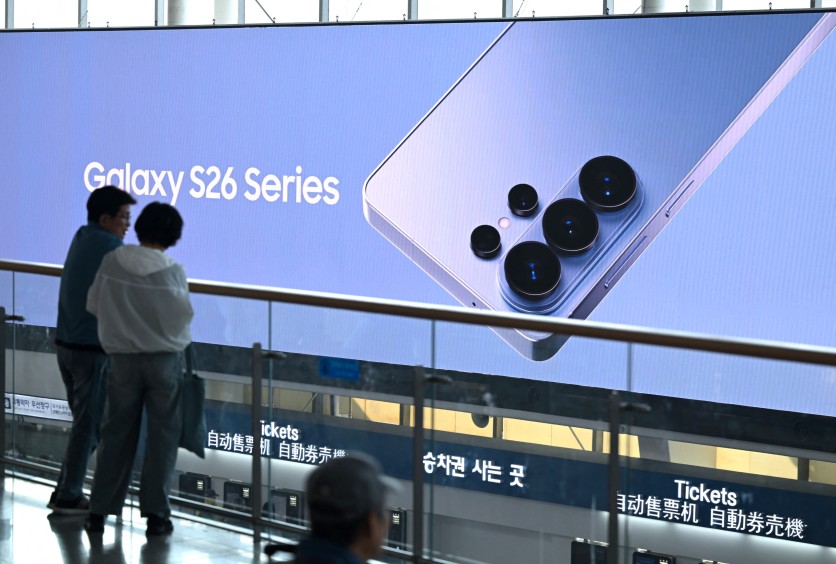
Jung Yeon-je/gettyimages.com
Samsung is distributing its November 2026 security update to the Galaxy S26 Ultra and the Galaxy Z Fold 8 series, starting in South Korea, and Android Headlines reported the rollout on Tuesday, November 10. Outlets disagree on how many flaws the update closes, from 179 at Android Headlines to 206 at SammyGuru, so the security patch level on your phone is a better test of protection than any headline count.
Wider availability should follow within days, according to Android Headlines. SamMobile reported the same day that Samsung has also started pushing the patch to the Galaxy S26, S26+ and S26 Ultra.
Samsung Update Contains Security Fixes and No New Features
Android Headlines says Samsung's changelog lists no new features, so owners should expect fixes only. The Galaxy Z Fold 8 series launched with One UI 9, and the S26 Ultra was among the first Samsung phones to receive it, the outlet notes. The next feature release, One UI 9.5, is expected in the first quarter of next year, per the same report.
The November patch follows two Galaxy S26 updates in October, according to SammyGuru.
Fix Totals Range From 179 to 206 Depending on Source
Android Headlines counts 179 fixes: 155 from Google and 24 from Samsung. The severity breakdown in that report, 20 critical, 141 high and 15 moderate, adds up to 176, so at least one figure does not match the headline total.
Reports based on Samsung's monthly bulletin give a larger number. SammyGuru summarizes the bulletin as 206 vulnerabilities: 178 Google fixes, 24 Samsung fixes and four from Samsung Semiconductor, with 20 critical flaws, all from Google. Samsung's security bulletin lists 20 critical Google CVEs as applied, names 24 Samsung-specific items and four Samsung Semiconductor patches, and shows a November 5 revision labeled as a CVE list update. The same page sets aside Google CVEs that were already included in earlier updates or do not apply to Galaxy devices, so its list is narrower than Google's own.
German outlet Schmidtis Blog puts the base Galaxy S26 package at 203 vulnerabilities for a roughly 510 MB download with firmware ending in BZK1, though the same article lists 178 Google patches, 24 Samsung fixes and four semiconductor fixes, which sum to 206. Google's own bulletin lists 216 CVEs, including 23 critical and 193 high, according to security firm Rescana.
None of the reports reviewed explains why the Google portion appears as 155 in some tallies and 178 in others, and none ties the 155 figure to Samsung's November 5 revision, so the totals should be read as counting differences that remain unreconciled. Of Samsung's 24 own fixes, 17 have been made public and seven remain confidential for now.
Google Bulletin Splits Android Fixes Across Two Patch Levels
Google published its November Android Security Bulletin on November 2 and updated it on November 6. Google says security patch levels of 2026-11-05 or later address every issue in the bulletin.
That statement matters because the bulletin has two tiers. Rescana reports the 2026-11-01 level covers the Android runtime, Framework and System components, 119 CVEs, while the 2026-11-05 level adds kernel and chipset-vendor components, another 97 CVEs. Hacker News describes the same split. A phone that reports 2026-11-01 therefore has the Framework and System fixes but may still lack kernel fixes and chipset-vendor fixes, the firm explains.
Google says it notifies its Android partners of every issue at least a month before publishing the bulletin, which gives manufacturers such as Samsung lead time to prepare updates. Samsung detailed its own November package on November 3 and says it applies Google's fixes for the CVEs in the bulletin. The same page adds that some chipset-vendor patches may not be included in a given month's package and can arrive in later ones.
Samsung's release notes list patch levels that end in 05 for earlier European Galaxy S26 Ultra builds, such as 2026-07-05. Release notes for the November Korean builds had not been confirmed in the sources reviewed, so owners should verify the date on their own phone.
Critical Android Framework Flaw Needs No User Interaction
The most severe issue in Google's bulletin is CVE-2026-58868, a critical flaw in the Android Framework that could allow remote code execution with no extra privileges and no user interaction. The public description from the CVE record points to a heap buffer overflow in FrameDecoder.cpp, which means a memory-safety bug in a frame decoder file, according to Rescana. The firm says the descriptions of the critical flaws point to media and image handling, but the bulletin does not say which delivery paths reach the vulnerable code. Both Rescana and The Hacker News place the flaw in the 2026-11-01 tier, and Samsung's bulletin lists it among the Google fixes applied.
Google's severity ratings describe the worst case, assuming platform and service mitigations are turned off or bypassed. Google has not reported exploitation of any issue in the bulletin, Rescana says, and none of the CVEs appeared in the U.S. Cybersecurity and Infrastructure Security Agency's Known Exploited Vulnerabilities catalog as of November 4. The Hacker News reported no attacks as of the same date. The firm rates the advisory High rather than Critical for that reason, while noting that a flaw requiring no user interaction is serious enough to plan around.
Remote code execution means an attacker could run code of their choosing on a device, usually with the privileges of the vulnerable process.
Samsung Fixes Exynos Modem, Bootloader and Lock Screen Calling Flaws
Samsung's own fixes cover Exynos chipsets and modems, the bootloader, improper input validation, buffer overflows, unauthorized lock-screen calling through widgets, SIM-lock bypasses, and the Dialer, Contacts and Messages apps, along with MKV media playback, according to Android Headlines. Of the high-severity items, three come from Samsung's mobile division and four from Samsung Semiconductor.
Samsung's bulletin rates three items High: a bootloader out-of-bounds write that physical attackers could exploit, a camera filter plugin flaw that could let local attackers execute code if the user takes an action, and a stack-based buffer overflow in a library called libsecuibc.so.
How Do You Check Galaxy Phone Security Patch Level?
Google's bulletin points owners to its Check and update your Android version guide for finding a device's security patch level. For the update itself, open Settings, tap Software update, then Download and install. The rollout is staged, and Samsung's bulletin says delivery time varies by region and model.
Owners who plan to flash or sideload firmware should know that downgrades may be blocked afterward. SammyFans reported that Samsung warned users cannot roll back to a lower patch level after installing a recent S26 update, and NPowerUser says the November build applies an updated bootloader anti-rollback policy. Samsung's own notes for the November build were not confirmed.
Install the update when it appears for your phone, then confirm the patch level reads 2026-11-05 or later. That date, not a fix count, tells you whether Google's full November bulletin applies to your Galaxy, though Samsung notes that some chipset-vendor patches can arrive in later packages.
Frequently Asked Questions
Why do reports disagree on how many fixes the November Samsung update contains?
Outlets tally different pieces. Android Headlines counts 155 Google fixes, SammyGuru counts 178 in Samsung's bulletin, and Google's own bulletin lists 216 CVEs, so totals of 179, 203 and 206 all circulate. No source reviewed reconciles them.
What does security patch level 2026-11-05 mean for a Galaxy phone?
Google says that level, or later, covers every issue in its bulletin. The earlier 2026-11-01 level covers only the Android runtime, Framework and System fixes and may leave kernel and chipset flaws unpatched.
Has anyone exploited the critical Android flaw fixed this month?
Google has not reported exploitation of any issue in the bulletin, and Rescana found none of the listed CVEs in CISA's Known Exploited Vulnerabilities catalog as of November 4. That status can change, so check the bulletin for revisions.
How do I install the Samsung November 2026 security update?
Open Settings, tap Software update, then Download and install. If nothing appears, Samsung's rollout is staged and may not have reached your region or model yet.

-
 C114 Communication Network
-
 Communication Home
