
 Search


Apple
Apple has been methodically working through China's AI registration requirements for months, and the latest update moves its AI platform closer to being fully available across all major device categories in the country's market.
A new milestone has been confirmed, and it carries significant implications for the hundreds of millions of Apple users in China.
Apple's AI Now Completes Regulatory Registration in China
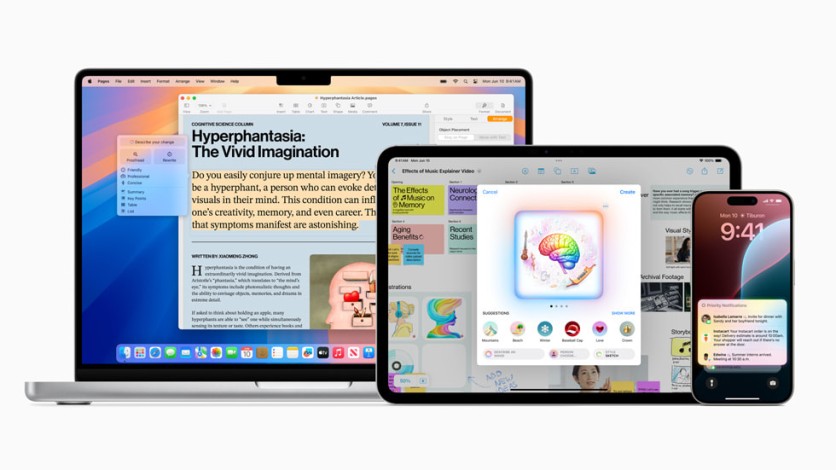
Reuters reported earlier today that Apple Intelligence has completed regulatory registration with China's Cyberspace Administration for use on tablets and computers, covering iPads and Mac devices. The filings were made alongside Chinese partner Baidu and represent the most recent step in a gradual expansion of Apple Intelligence into the Chinese market.
The completion of regulatory registration for iPad and Mac follows an earlier filing that covered iPhone use, which had already been submitted as Apple worked to bring its AI suite to the country's users. China requires generative AI services to register with the Cyberspace Administration before they can be offered to the public, making this procedural clearance a necessary prerequisite for any commercial rollout on those platforms.
Apple has not formally responded to the Reuters report, though the registration filings themselves are a matter of public record through the regulator's processes.
Apple Intelligence Is Coming to iPad and Mac in China
Apple's official Chinese newsroom had already set expectations for a phased rollout when it announced on October 31 that the first Apple Intelligence features would arrive on iPhone in China beginning with an iOS developer beta on November 4. The company stated at that time that support for other platforms, specifically iPad and Mac, would follow once the necessary approvals were obtained. The November 9 registration completion confirms that the approval process for those additional platforms is now underway.
The features Apple is bringing to China are a curated subset of what is available in other markets, adapted specifically for Chinese users and built in partnership with Alibaba's Qwen AI model rather than the OpenAI integration available elsewhere.
Features included in the Chinese launch encompass:
- Live Translation integrated across Messages, FaceTime, and phone calls,
- Writing Tools for rewriting, proofreading, and summarizing text,
- Visual Intelligence for real-time understanding of the world through the iPhone camera, the Clean Up tool in the Photos app,
- Genmoji for generating custom emoji from text descriptions,
- Natural language photo search,
- Memory movie creation,
- Priority Mail and Mail Summaries in the Mail app,
- Smart Reply,
- Notification Summaries and Priority Notifications,
- Audio transcription summaries in Notes,
- Call transcript summaries,
- And a refreshed Siri with Type to Siri functionality and Qwen integration for responding to specific requests.
The announcement explicitly noted that Siri AI and other next-generation Apple Intelligence features announced at WWDC 2026 are not included in this initial rollout.
China Is Getting Apple Intelligence by December
The iOS developer beta carrying Apple Intelligence for China went live on November 4, allowing developers and registered testers to begin evaluating the features ahead of the public release. Apple confirmed that the full public launch is planned alongside iOS 27.3, targeting a December 2026 release date for iPhone users in China with Simplified Chinese set as the device and Siri language.
Supported devices for the Chinese launch include iPhone 16 and later, the iPhone Duo, iPhone 15 Pro, iPhone 15 Pro Max, and iPhone Air. The Qwen-powered features within Apple Intelligence are accessible to users who either log in with an Alibaba Qwen account or sign in using Apple's own Apple ID login integration.
For iPad and Mac, no specific software version or timing has been officially announced beyond the confirmation that approvals are in progress following the November 9 regulatory registration.
Frequently Asked Questions
What Is Apple Intelligence?
Apple Intelligence is Apple's suite of AI-powered features built into its operating systems, covering iPhone, iPad, Mac, and other Apple platforms. It was first announced at WWDC 2024 and began rolling out to users in the United States and other English-language markets starting with iOS 18 in late 2024.
Apple Intelligence encompasses a range of features powered by on-device AI and, for some tasks, server-side processing in what Apple calls Private Cloud Compute. Core capabilities include Writing Tools for text generation, editing, and summarization, Visual Intelligence for understanding images and the physical world through the camera, Genmoji for creating custom emoji, the Clean Up tool in Photos, Smart Reply and Mail Summaries, Notification Summaries, and an upgraded Siri with significantly broader knowledge and cross-app action capabilities.
In markets outside China, Apple Intelligence also includes integration with ChatGPT from OpenAI for tasks that benefit from an external large language model. In China, that integration is replaced by Alibaba's Qwen model, in compliance with local requirements.
Why Is Apple Intelligence Not Yet Available in China?
China requires all generative AI services and large language model-powered products to register with the Cyberspace Administration of China before they can be offered to the public. This requirement, which falls under China's Interim Measures for the Administration of Generative Artificial Intelligence Services that took effect in August 2023, applies to any service that generates text, images, audio, or other content for Chinese users.
Apple had to submit its services for review, which involves the regulator assessing the technology's compliance with Chinese content and data handling rules. The process covers each device category separately, which is why Apple's iPhone registration and iPad and Mac registration were handled in separate filings. Apple's partnership with Alibaba for Qwen integration, rather than OpenAI's ChatGPT, reflects the same regulatory reality: US-based AI models face additional hurdles in China that a domestic Chinese AI partner does not.
Why Are US Tech Generally Unavailable in China?
The Chinese market operates under a distinct regulatory framework for internet and technology services that has effectively kept most major US platforms out of the country. Services including Google Search, Gmail, YouTube, Facebook, Instagram, WhatsApp, Twitter, and many others are blocked or inaccessible within China under a system known informally as the Great Firewall, which filters and restricts internet access at the infrastructure level.
For companies that do want to offer services in China, compliance with local regulations is mandatory and often requires partnering with approved domestic companies, storing data on Chinese servers, and cooperating with government oversight requests. That is why Apple maintains a separate Chinese App Store with different content rules, why iCloud data for Chinese users is stored on servers operated by a state-linked partner, and why Apple Intelligence in China is built around Alibaba's Qwen rather than OpenAI.
The layered nature of China's AI-specific regulations, including the generative AI registration requirement, adds another procedural layer on top of the existing compliance infrastructure that any company must navigate before launching AI features in the country.

-
 C114 Communication Network
-
 Communication Home
