
 Search

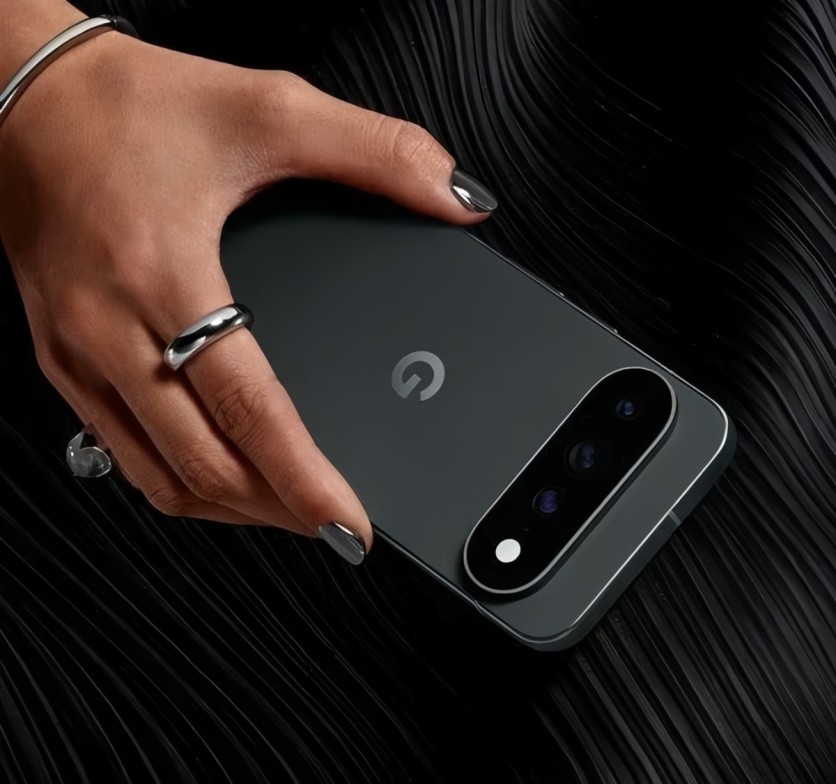
Australian tech publication EFTM handed Google's standard Pixel 11 a score of 90 out of 100 after two weeks of sustained daily use — and delivered a verdict that should give pause to anyone about to spend extra for the Pixel 11 Pro: reviewer Scott Plowman concluded that the camera and performance gap between the two phones is "minuscule to most people's eyes," making the AU$1,499 (approximately $1,082 USD; exchange rate as of September 8, 2026; conversions are approximate) standard model a harder buy to argue against than any previous non-Pro Pixel based on EFTM's two-week Pixel 11 review. The timing is deliberate: the review lands one day before Apple's September 9 iPhone event, where Apple is set to reveal the iPhone 18 Pro, iPhone 18 Pro Max, and the company's first-ever foldable — iPhone Ultra — none of which are expected to start below $1,299 in the US.
"Repeat after me: Pixel 11, you are enough," Plowman wrote in his conclusion, adding that the experience changed his long-held view of the standard Pixel as the "lesser phone."
What Has Actually Changed in the Pixel 11
The Pixel 11's headline upgrades over its predecessor are three: Google's Tensor G6 chipset — built on TSMC's 2nm manufacturing process using Gate-All-Around transistors that deliver approximately 20% better power efficiency than the prior generation — bumped base storage from 128 GB to 256 GB, and 25W Qi2.2 wireless charging support, which had previously been a Pro-only feature per Google's Tensor G6 launch specifications. The efficiency gain comes from the Tensor G6's GAA transistor architecture, in which the gate material surrounds the conducting silicon channel on all four sides — compared to three sides in the FinFET transistors used in prior chips — reducing electrical leakage and enabling faster switching within a tighter power budget.
Read more: Google Pixel 11 Launches; Gemini AI Books Rides and Orders Groceries Now
Camera hardware is largely unchanged: a 48 MP wide sensor (f/1.70), 13 MP ultrawide (f/2.2), and 10.8 MP telephoto with 5x optical zoom (f/3.1). What Google changed is the software and silicon that drives it. The Tensor G6's Metis image signal processor captures dozens of slightly-offset frames by exploiting natural hand motion, then reconstructs fine detail across that composite — a process explained in detail in how Super Res Zoom reconstructs frames, which is why the Pixel 11 reaches a 30x Super Zoom cap in practice rather than being limited to 5x optical. The standard Pixel 11 caps at 30x while the Pro reaches 120x, but Plowman found that gap rarely produces a practically usable image for everyday shooting at the outer range of either phone.
The Pixel 11 also adds Magic Capture — a mode that automatically shoots a burst of stills and short video clips simultaneously, with Google Photos' Key Moments feature then identifying the highlight clip. A customizable Camera Looks feature lets users set a default color temperature and style. Circle to Search has moved into the Camera app directly rather than requiring a gesture from the home screen.
Gemini Software: Where the Pixel 11 Pulls Ahead
For EFTM, the software experience — specifically Gemini-powered features running on Android 17 — is where the Pixel 11 most convincingly earns its score. Plowman described the Android 17 experience as "buttery-smooth," comparing it favorably to iOS.
The most notable new addition is Rambler, a Gemini-powered voice-to-text mode built into Google's Gboard keyboard. Per Google's Rambler Gboard documentation, Rambler uses Google's on-device Gemini Nano v3 model to process spoken input and output clean, structured text — removing filler words and correcting punctuation in a way that standard dictation does not. There is a meaningful limitation EFTM flagged: Rambler requires the user to physically tap to start and stop recording. It cannot run as a continuous background listener, which means it does not replace the existing always-on voice mode for hands-free use while driving. For commuters and mobile workers who want a dictation tool that runs without touching the screen, the existing standard voice mode remains the option to use.
Gemini Writing Tools in Gboard extend that AI layer to any app, allowing rephrase, proofread, and reformat operations from the keyboard even when the app itself has no native Gemini integration. Proactive AI assistance surfaces rich context cards in messaging apps — flight status, calendar availability, restaurant details — based on what the conversation contains. Pixel Screenshots and Live Translate return as Pixel-exclusive software features alongside the full Pixel 11 Gemini Intelligence feature list.
Is the Pixel 11 vs Pixel 11 Pro Gap Really Gone?
EFTM's most useful contribution is the direct side-by-side camera comparison between the Pixel 11 and the Pixel 10 Pro — whose camera system is essentially equivalent to the Pixel 11 Pro's. Plowman found the difference "minuscule to most people's eyes" in everyday shooting conditions. The 30x Super Zoom ceiling is real, and any buyer who regularly shoots distant subjects — wildlife, sporting events, architectural detail — should note that the Pro's 120x capability is a genuine hardware advantage. For buyers who rarely push past 10x, the practical gap closes significantly.
The Pixel 11 prices at Google Store in Australia are AU$1,499 (approximately $1,082 USD) for the 256 GB Pixel 11 versus AU$1,849 (approximately $1,335 USD) for the 256 GB Pixel 11 Pro — a AU$350 (approximately $253 USD) premium. In the US market, Google priced the Pixel 11 at $899 and the Pixel 11 Pro at $1,099, a $200 difference for a camera and performance step that a two-week sustained reviewer found difficult to distinguish in practice.
Design continuity is framed as a positive in the EFTM review: the Pixel 11 retains Google's camera island aesthetic — now with black glass spanning the full width of the bar — rounded corners, an under-display fingerprint sensor, and a new biometric face unlock that Plowman described as "even faster and even more accurate" than the prior generation. The phone ships in Hibiscus and Pistachio alongside standard colorways, weighing 197 grams — seven grams (0.25 oz) lighter than the Pixel 10 at 204 grams (7.2 oz). The 6.3-inch OLED display runs at 120Hz with 3,000 nits peak brightness, protected by Gorilla Glass Victus 2. The chassis carries an IP68 water and dust resistance rating.
Battery and Charging: Where the Verdict Gets Complicated
Day-to-day battery life holds up for full-day heavy use, EFTM found — consistent with the Tensor G6's 20% efficiency improvement over the G5. The meaningful gain is wireless: 25W Qi2.2 wireless charging — requiring a compatible Qi2.2 charger such as Google's Pixel Snap charger, sold separately — brings the standard Pixel 11 up to parity with the Pro lineup for users who charge overnight on a pad.
Wired charging remains at 30W via USB Power Delivery 3.0. Plowman flagged this ceiling as "increasingly conspicuous" compared with rival Android flagships, and the flag is justified: Samsung's Galaxy S26 Ultra charges at 60W wired; OnePlus and Xiaomi flagship devices charge at 65W to 120W wired in the same price bracket. A buyer who travels frequently and relies on short wired top-up charges — rather than overnight wireless — will feel this constraint in daily use in a way that a buyer with a bedside Qi2.2 pad will not. No charger is included in the box.
The Pixel 11 ships with Google's seven-year Pixel update commitment from its August 2026 launch date, a commitment that meaningfully extends the per-year cost-of-ownership calculation against competitors whose support windows typically run three to four years.
Context: Apple Reveals Only Premium Hardware Tomorrow
The EFTM verdict arrives one day before Apple's officially confirmed event date on September 9, 2026 (10 AM PT / 1 PM ET), where Apple is set to reveal the iPhone 18 Pro, iPhone 18 Pro Max, and iPhone Ultra — its first-ever foldable smartphone. Critically, Apple is not releasing a standard iPhone 18 this fall: that model is expected in 2027, confirmed by standard iPhone 18's 2027 release reporting from MacRumors and 9to5Mac. The iPhone 18 Pro is expected to start at $1,299 to $1,399, with the iPhone Ultra estimated above $1,999, based on TrendForce iPhone 18 Pro price estimates and some analysts citing figures approaching $2,500.
That context makes the Pixel 11's position unusually clear-cut for the September 2026 market: for buyers unwilling to spend $1,300 or more on a smartphone this fall, the standard Pixel 11 at $899 is now the benchmarked, two-week-reviewed option — not a compromise. The Pixel 11 ships with Android 17 and the Tensor G6 already confirmed on the same manufacturing process node Apple is using for its A20 Pro chip, making this the first time a Pixel has shipped on Tensor G6's 2nm process parity with the contemporary iPhone.
Read more: Google Removed Pixel 11 Memory Safety Hardware, Blocking GrapheneOS Port
EFTM Score Breakdown
| Category | Score |
|---|---|
Value for Money | 90% |
Display | 90% |
Camera | 90% |
Software and AI | 90% |
Overall | 90% |
Google Pixel 11 Australian Pricing (exchange rate as of September 8, 2026; approximate)
| Model | 256 GB | 512 GB |
|---|---|---|
Pixel 11 | AU$1,499 (~$1,082 USD) | AU$1,699 (~$1,227 USD) |
Pixel 11 Pro | AU$1,849 (~$1,335 USD) | AU$2,049 (~$1,479 USD) |
Pixel 11 Pro XL | AU$2,099 (~$1,515 USD) | AU$2,299 (~$1,660 USD) |
Pixel 11 Pro Fold | AU$2,799 (~$2,021 USD) | AU$2,999 (~$2,165 USD) |
Frequently Asked Questions
Is the Pixel 11 worth buying over the Pixel 11 Pro in 2026?
For most buyers, yes — according to EFTM's two-week Pixel 11 review. The camera difference in everyday conditions is small enough that reviewer Scott Plowman found it "minuscule to most people's eyes" when comparing side-by-side with the Pixel 10 Pro, whose camera system is equivalent to the Pixel 11 Pro's. The standard model now has 25W Qi2.2 wireless charging — previously Pro-only — and ships with the same Gemini AI software. The Pro's real advantages are 120x Super Zoom versus 30x, and a larger display on the Pro XL. If you regularly shoot at maximum telephoto distances, the Pro is worth considering. If you don't, the $200 US / AU$350 (~$253 USD) premium is hard to justify based on EFTM's testing.
What charging speeds does the Pixel 11 support, and how does it compare to other flagships?
The Pixel 11 supports Pixel 11's 30W wired charging spec via USB Power Delivery 3.0 and 25W wireless charging via the Qi2.2 standard (a compatible Qi2.2 charger, sold separately, is required for the 25W rate). The wireless speed is now on par with the Pixel 11 Pro, which is a genuine upgrade from prior standard Pixel models. The wired charging speed, however, is slower than many flagship Android competitors: Galaxy S26 Ultra's 60W wired charging is the new benchmark for Samsung's flagship; OnePlus and Xiaomi flagships offer 65W to 120W wired. Buyers who primarily charge on a pad overnight will not feel this constraint. Buyers who rely on short wired top-ups — on travel or during the day — will notice the ceiling compared with alternatives.
Does the Pixel 11 work with GrapheneOS or other privacy-focused Android forks?
No — not in a complete form. GrapheneOS confirmed on August 31, 2026 that it cannot finish its Pixel 11 port because the Tensor G6 chip is missing the ARM Memory Tagging Extension (MTE) hardware blocks that GrapheneOS requires for production-level memory safety, as documented in the TechTimes GrapheneOS Pixel 11 MTE report. An incomplete port is technically installable but does not provide the security protections GrapheneOS is built around. The project has indicated it may skip the Pixel 11 generation entirely. Users for whom GrapheneOS is a requirement should note this limitation before purchasing.
What is Rambler, and what are its real-world limitations?
Rambler is a new Gemini-powered voice-to-text mode in Google's Gboard keyboard. It uses Google's on-device Gemini Nano v3 model to process spoken input and output clean, structured written text — removing filler words, correcting punctuation, and formatting sentences in a way standard dictation does not, per Google's official Rambler specifications. The key limitation: Rambler requires a physical tap to start and stop recording. It does not run as a continuous background listener, which means it cannot serve as a hands-free dictation tool while driving — a use case the existing standard voice-to-text mode covers. For users who primarily dictate at a desk or while stationary, Rambler adds real value. For commuters, it supplements rather than replaces the existing mode.

-
 C114 Communication Network
 -
 Communication Home
