
 Search

Dell.com
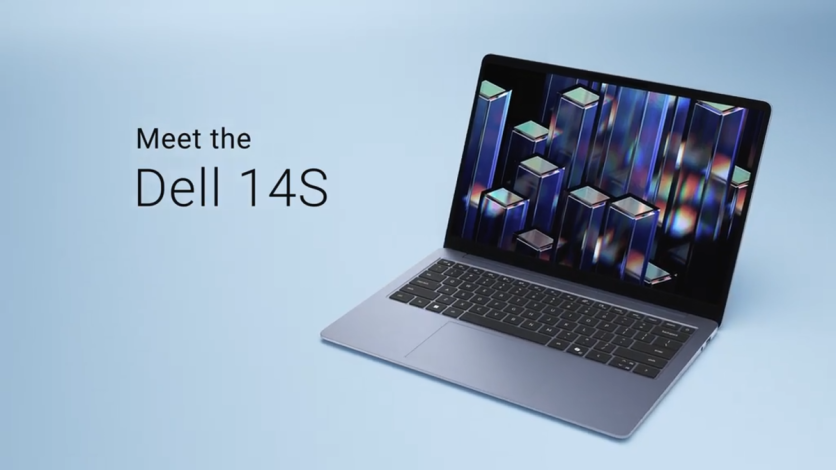
Dell Technologies announced the Dell 14S at IFA 2026 in Berlin on Wednesday, positioning it as a direct student-market answer to the MacBook Neo — and centering its pitch on a specific engineering claim that prior Windows laptops in this price range have never made: 21 hours of Netflix streaming on a single charge. The machine is the first mainstream Dell laptop to pair Intel's new Darkmont low-power efficiency cores with a redesigned Prussian-analog Nickel-Cobalt-Manganese battery cell, a chemistry combination that explains both the headline number and its limits. That last part — the limits — is what buyers should read before choosing between the 14S's two display options, because the choice will determine whether the 21-hour figure has anything to do with the laptop they bring home.
What Makes the Battery Claim Credible
Dell is using a battery cell it designates the 750ED PNCM battery cell — Prussian-analog Nickel-Cobalt-Manganese — in a 61.2Wh pack housed in the 14S's 13.5mm (0.53-inch) aluminum chassis. The "Prussian-analog" distinction matters in a way the spec sheet does not explain. Standard NMC (Nickel-Manganese-Cobalt) cathode cells, the dominant laptop battery chemistry for the past decade, pack nickel, manganese, and cobalt into a layered oxide structure that stores roughly 220–250 Wh/kg of energy. Prussian Blue Analogue frameworks modify that structure by applying an open three-dimensional lattice borrowed from Prussian Blue chemistry, which improves ion diffusion pathways and reduces heat generation during charge cycles. Dell's claim that the cells "run cooler under load and maintain capacity over time" is consistent with Prussian Blue Analogue cathode research — the structural stability reduces exothermic reactions at the cathode during repeated cycling, which matters for a laptop that students may charge and discharge daily for years.
The 61.2Wh pack is substantially larger than the MacBook Neo lasting 13 hours on its 36.5Wh battery — 67.7% more capacity. That capacity gap alone is not the story; what matters is the efficiency at which the 14S's processor consumes it under streaming conditions.
How Darkmont LP E-cores Enable the 21-Hour Number
The Intel Core Series 3 launch brought Wildcat Lake chips as the first Intel processors at this price tier to include Darkmont Low Power Efficiency cores — an architecture previously found only in Intel's premium Panther Lake (Core Ultra Series 3) lineup. Understanding what LP E-cores do differently is the key to understanding the 21-hour claim.
A standard Intel laptop chip running Netflix operates primarily on its Efficiency cores — power-efficient compute cores that handle background tasks and media decode. Efficiency cores in prior Intel generations consumed roughly 3–6W of sustained power during light workloads. Darkmont LP E-cores are a distinct architecture designed specifically for sustained low-power operation, consuming approximately 1–3W during the same tasks. The Core 5 320 inside the 14S's base configuration pairs two Cougar Cove Performance cores (boosting to 4.6GHz) with four Darkmont LP E-cores (boosting to 3.4GHz). During Netflix streaming at 150 nits of brightness on the FHD display, the workload routes almost entirely through the LP E-cores and the chip's display media decode engine — P-cores are largely idle. Intel's own Wildcat Lake Netflix reference test for the Core 7 350 achieved 18.5 hours of Netflix streaming. Dell's 14S carries a 61.2Wh pack against the likely 50–54Wh reference platform battery; scaling the 61.2Wh capacity against that reference figure produces approximately 21–22 hours — which is exactly what Dell claims.
This math is not marketing fiction. Independent real-world testing has validated the Darkmont architecture's efficiency advantage. In Tom's Guide's standardized battery test — continuous Wi-Fi browsing at 150 nits — the Dell XPS 13 battery test running the same Core 5 320 chip lasted 14 hours and 26 minutes, compared to 13 hours and 28 minutes for the MacBook Neo, despite the XPS 13 using a substantially smaller battery. The Intel architecture wins real-world battery life when the workload sits in the Darkmont LP E-core's ideal operating range.
The Intel 18A RibbonFET specification underlying Wildcat Lake contributes directly to this efficiency. Intel 18A combines RibbonFET gate-all-around transistors with PowerVia backside power delivery. RibbonFET wraps the transistor gate around all four sides of the channel rather than three (as in the previous FinFET design), giving engineers finer control over current leakage at low voltages — directly relevant to the LP E-cores that spend most of their time at very low power states. PowerVia moves the power delivery network to the back of the silicon wafer, reducing voltage droop by approximately 30%, which allows the chip to operate at lower sustained voltages. Combined, Intel's 18A delivers 38% lower power efficiency at the same performance level compared to its prior Intel 3 node.
The Display Choice That Changes Everything
Here is what the 21-hour figure conceals: it is a measurement taken on a specific test configuration — Intel Core 5 320, 8GB of RAM, 256GB SSD, and the 60Hz FHD display set to 150 nits. That configuration is 14S tested in Dell's labs in August 2026. The 60Hz FHD panel draws substantially less power than the 2.8K 120Hz panel. A buyer who selects the 2.8K 120Hz option — the more compelling display for video, creative work, and general visual quality — should expect materially lower battery life, potentially in the range of 13–16 hours in similar conditions, depending on how Dell has implemented the panel's variable refresh rate and self-refresh capabilities.
This is the most important number the announcement does not make explicit. The MacBook Neo's rated battery life for streaming is 16 hours; its real-world tested figure from Tom's Guide is MacBook Neo lasting 13 hours and 28 minutes. A 14S buyer who upgrades to the 2.8K 120Hz display may find themselves in the same range — or potentially below it — while paying more for a laptop whose headline claim was built on the lower-spec panel. Neither option is wrong; but understanding that the 21-hour number belongs to the 60Hz model is essential before selecting a configuration.
There is also a display quality comparison that the announcement glosses over. The MacBook Neo's 13.3-inch Liquid Retina display (2408×1506, approximately 224 PPI) offers richer color processing tied into Apple's software pipeline. Dell's 2.8K panel (2880×1800) reaches 244 PPI and adds 120Hz — superior on paper — but without the software-hardware color pipeline integration Apple provides. For a student who primarily browses, reads, and streams, the 60Hz FHD 14S panel at 300 nits is adequate. For creative work or high-refresh gaming, the 2.8K panel is the right choice — with the battery trade-off understood and accepted.
Read more: Intel Core 5 320 Posts First x86 Compute-Per-Watt Win Over Apple A18 Pro
What the Dell 14S Is — and Is Not
The 14S weighs 1.15 kg (approximately 2.5 lbs) and measures 13.5mm (0.53 inches) thick — meaningfully lighter than the average 14-inch Windows notebook and competitive with premium ultrabooks, though a step below Dell's own XPS 13 (1 kg/2.2 lbs, 12.7mm) in thinness and structural refinement. The aluminum chassis arrives in four fashion-forward finishes — Linen, Dusty Rose, Washed Denim, and Velvet Green — a clear acknowledgment that Apple's color strategy with the MacBook Neo (Indigo, Blush, Citrus, Silver) has changed the aesthetic expectations of budget laptop buyers.
RAM starts at 8GB LPDDR5x (soldered, not upgradeable) with a 16GB option available. Storage spans 256GB to 1TB NVMe SSD. The port layout is USB-C only on the wired side: two USB-C 3.2 Gen 2 ports (both with DisplayPort alt-mode and Power Delivery), HDMI 1.4, and a 3.5mm combo audio jack. This port selection is more generous than the XPS 13, which dropped the headphone jack entirely, and it includes HDMI for direct projector connections — a practical advantage in lecture halls.
Wireless connectivity is Wi-Fi 6E — a meaningful step below the Wi-Fi 7 in premium Wildcat Lake configurations (the Wildcat Lake platform specification includes Wi-Fi 7/R2 as an option, but Dell has implemented cost-contained Wi-Fi 6E selection in the 14S, likely for cost containment). A 1080p FHD webcam with dual far-field microphones and Windows Hello facial recognition rounds out the hardware. There is no USB-A port — buyers with older accessories will need a hub.
A notable hardware limitation is the Wildcat Lake architecture's single-channel memory interface. While the LPDDR5x-7467 provides approximately 59.7 GB/s of theoretical bandwidth, this is a single-channel configuration — compared to the dual-channel memory in Dell's own XPS 13 and Panther Lake-based laptops. For the target workload (streaming, browsing, productivity apps, light creative tasks), the single-channel limitation is not perceptible. For tasks that push memory bandwidth — large spreadsheets, image processing, or compilation — it becomes a constraint. It is also architecturally distinct from the MacBook Neo's 60 GB/s unified memory (which, as TechTimes previously reported, delivers that bandwidth to all compute units simultaneously through Apple InFO-PoP bonding).
How the 14S Is Not the XPS 13
These two Dell laptops coexist, and they are different products in meaningful ways.
The XPS 13, last repriced to $699, has a 13.4-inch 2560×1600 touchscreen at up to 120Hz and 500 nits — more screen brightness than either of the 14S's panels — and carries Thunderbolt 4 support on its higher-end configurations, along with faster SSD speeds (Tom's Guide measured 3,714 MB/s write and 5,026 MB/s read on the XPS 13). It also weighs 1 kg (2.2 lbs) and measures 12.7mm thick — lighter and thinner than the 14S. The XPS 13 is the enthusiast choice in Dell's lineup, built for users who want the thinnest possible machine with maximum display quality.
The 14S adds: a larger screen (14-inch vs. 13.4-inch), more storage and display configuration options, a 3.5mm headphone jack the XPS 13 dropped, HDMI 1.4, and — critically — a substantially larger battery (61.2Wh vs. the XPS 13's approximately 50Wh). The 14S is the endurance choice, built for students who need the screen to stay on through a full day without hunting for an outlet.
Where the MacBook Neo Wins
The 14S makes a credible battery argument. It does not close every gap with the MacBook Neo, and buyers deserve a clear picture of what Apple still offers that Dell does not match.
The MacBook Neo's A18 Pro chip delivers 35 TOPS (tera-operations per second) of dedicated Neural Engine AI inference — more than twice the Core 5 320 NPU specification of 16 TOPS and well above Microsoft's 40-TOPS threshold for Copilot+ PC certification. This means the Dell 14S (Core 5 320) is not a Copilot+ PC and cannot run Windows Recall or the NPU-accelerated AI features that Microsoft is shipping as Copilot+ exclusives. Buyers who specifically want AI-accelerated photo enhancement, real-time transcription, or Apple Intelligence features will not find them here in Windows form at this price tier.
The MacBook Neo runs fanless and silent — the A18 Pro is a mobile phone chip designed for passive thermal management. The Dell 14S is not fanless, though at Wildcat Lake's 15W base power with Darkmont LP E-cores handling light loads, fan engagement during typical use should be infrequent.
Finally, software ecosystem: the MacBook Neo ships with Apple Intelligence fully integrated, iOS app compatibility, and Apple's M-series-optimized software pipeline. The Dell 14S ships with Windows 11, which remains in the middle of a memory-footprint optimization program that Microsoft expects to complete through fall 2026, targeting the WebView2 overhead that currently causes Windows to consume more RAM at idle than macOS.
Read more: MacBook Neo's 8GB Beats Windows Laptops With 16GB: Architecture PC Makers Can't Copy
Pricing and Decision Window
Dell has not announced pricing for the Dell 14S. The company described the 14S as complementary to the XPS 13, signaling a positioning at or slightly below the XPS 13's current $699 price. IFA 2026 opens its public doors to exhibitors Thursday through September 8; the 14S's North America launch is scheduled for fall 2026, with international pricing and availability to follow.
The competitive price context is tighter than at any previous Dell launch in this segment. The MacBook Neo currently retails at $699 — having been raised from its $599 launch price earlier in 2026 due to the LPDDR5x memory shortage that has DRAM prices surged 89% in a single quarter. Chinese OEM competitors have launched Wildcat Lake laptops at aggressive prices. Dell will need to price the 14S below $699 — ideally at $549–$629 — to make a compelling case for buyers comparing it directly to the MacBook Neo on value. If Dell lands at $699, the purchase decision collapses almost entirely to OS preference: Windows with longer battery on the FHD model vs. macOS with stronger AI acceleration.
For back-to-school timing, the 14S's fall 2026 arrival means most students will have already made a decision before the laptop reaches retail. Dell may be positioning this more for spring 2027 buyers who are browsing over winter.
Quick Specs at a Glance
| Feature | Dell 14S |
|---|---|
Weight | 1.15 kg (approximately 2.5 lbs) |
Thickness | 13.5mm (0.53 in) |
Display | 14-inch 16:10 — 1920×1200 60Hz 300-nit or 2.8K 120Hz 450-nit |
Processor | Intel Core 5 320 or Core 7 350 (Wildcat Lake, Intel 18A) |
CPU Architecture | 2 Cougar Cove P-cores + 4 Darkmont LP E-cores |
RAM | 8GB or 16GB LPDDR5x-7467 (single-channel, soldered) |
Storage | 256GB / 512GB / 1TB NVMe SSD |
Battery | 61.2Wh / 750ED PNCM chemistry / up to 21 hours (Netflix, 60Hz panel, rated) |
Ports | 2× USB-C 3.2 Gen 2, HDMI 1.4, 3.5mm jack |
Wireless | Wi-Fi 6E |
Webcam | 1080p FHD with Windows Hello |
Colors | Linen, Dusty Rose, Washed Denim, Velvet Green |
OS | Windows 11 |
Availability | North America, Fall 2026 |
Price | TBA (expected sub-$699) |
Frequently Asked Questions
Is the Dell 14S's 21-hour battery claim accurate?
The claim is credible for a specific configuration: Intel Core 5 320, 8GB RAM, 256GB SSD, the 60Hz FHD display set to 150 nits, measured as continuous Netflix streaming. 14S tested in Dell's labs in August 2026, those conditions reflect the workload where Darkmont LP E-cores operate most efficiently — sustained light compute at 1–3W sustained draw. Independent validation comes from the XPS 13 Wildcat Lake battery test (same processor, smaller ~50Wh battery) lasting 14 hours 26 minutes in Tom's Guide's browsing test vs. 13 hours 28 minutes for the MacBook Neo. Scaling the 14S's larger 61.2Wh pack against Intel's own Wildcat Lake reference platform figure of 18.5 hours Netflix streaming produces approximately 21–22 hours — so Dell's claim is consistent with the architecture. The number does not apply to the 2.8K 120Hz panel configuration.
How does the Dell 14S differ from the Dell XPS 13?
The XPS 13 is thinner (12.7mm vs. 13.5mm), lighter (1 kg vs. 1.15 kg), has a touchscreen with up to 500 nits brightness, and offers Thunderbolt 4 on higher-end configurations, along with faster SSD performance. It also dropped the headphone jack. The 14S is larger (14-inch vs. 13.4-inch), offers more battery capacity (61.2Wh vs. approximately 50Wh), retains HDMI 1.4 and a 3.5mm audio jack, and comes in four expressive colors. The 14S is the endurance-focused, accessibility-priced option; the XPS 13 is the premium thin-and-light choice for users who prioritize portability and display quality over battery duration.
What is PNCM battery chemistry and why does it matter for laptops?
PNCM stands for Prussian-analog Nickel-Cobalt-Manganese — a modification of standard NMC lithium-ion cathode chemistry that applies a Prussian Blue Analogue structural framework to the cathode material. The Prussian Blue Analogue cathode paper demonstrates that standard NMC cells store roughly 220–250 Wh/kg. The Prussian-analog framework creates a more open three-dimensional lattice structure that improves ion diffusion and reduces heat generation during charge cycles — which is why Dell describes the 750ED PNCM cells as running cooler under load and retaining capacity longer over their lifecycle. For everyday laptop use, the practical effects are a larger energy capacity in a lighter pack, and better thermal behavior during repeated charging, which matters for longevity.
Does the Dell 14S support Copilot+ PC features?
No. Microsoft's Copilot+ 40 TOPS requirement for certification means the Intel Core 5 320's 16 TOPS from its NPU 5 block and the Core 7 350's 17 TOPS — both well below the Copilot+ threshold — disqualify the 14S. This means the 14S cannot run Windows Recall, NPU-accelerated real-time captioning, or other AI features Microsoft designates as Copilot+-exclusive. Buyers who specifically want on-device AI acceleration at this price should consider Intel's Panther Lake-based laptops (Core Ultra Series 3 with a 50-TOPS NPU) or, for a different ecosystem, the MacBook Neo, whose 35-TOPS Neural Engine exceeds the equivalent Windows Copilot+ threshold.

-
 C114 Communication Network
 -
 Communication Home
