
 Search

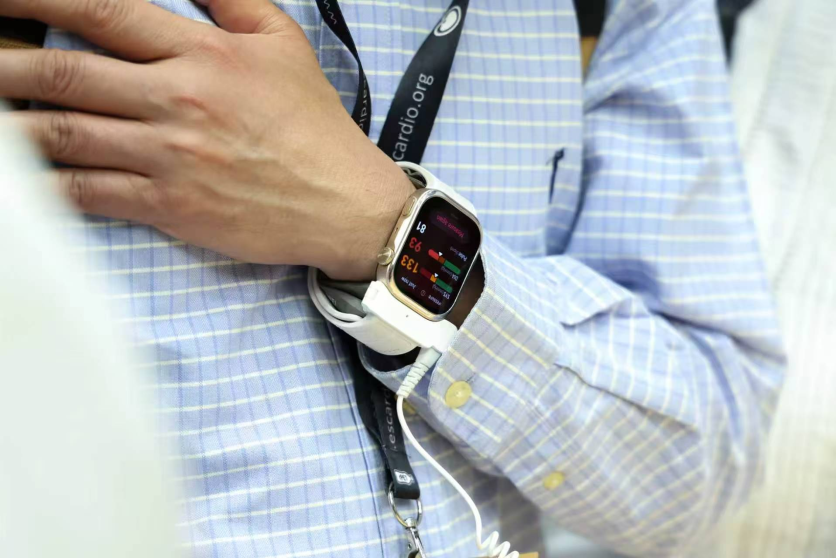
Close-up of the Huawei Watch D3 Huawei.com
Huawei today unveiled six new hardware products at its "Chase the Wild" Innovative Product Launch in Munich, Germany, but one device stands apart from the others in a way no Apple Watch or Samsung Galaxy Watch currently can match: the HUAWEI WATCH D3 carries CE-MDR certification from the European Union — the bloc's current Medical Device Regulation — for ambulatory blood pressure monitoring, making it the only mainstream consumer smartwatch in Europe that can be legally marketed and used as a Class IIa medical monitoring device for blood pressure.
Before reaching for a credit card, every reader should understand a fixed legal condition that travels with each Huawei device regardless of which country buys it: China's National Intelligence Law (2017), Article 7, legally compels Huawei — as a Chinese company — to cooperate with government intelligence requests on demand. No privacy setting, firmware update, or corporate denial modifies that obligation.
Watch D3: What CE-MDR Actually Means
The Watch D3 made its first appearance at the European Society of Cardiology Congress 2026, which opened in Munich on August 31 — one of the most influential academic gatherings in cardiovascular medicine — where Huawei gave cardiologists an advance look at the device before today's broader global launch.
Its CE-MDR certification covers three clinical use cases: single blood pressure measurements, 24-hour ambulatory blood pressure monitoring (readings taken at scheduled intervals throughout the day and night), and pre- and post-exercise blood pressure measurements.
The distinction between CE-MDR and the older CE marking matters. Samsung's Galaxy Watch blood pressure feature received CE marking in December 2020 — under the prior Medical Device Directive, a lower-bar predecessor to the current EU Medical Device Regulation. Apple Watch Series 11 and Ultra 3 do not provide blood pressure readings in millimeters of mercury at all; they detect hypertension patterns over 30-day periods, a feature the FDA cleared in 2025 that is fundamentally different from an on-demand or scheduled mmHg measurement. Under the stricter EU MDR framework that governs the Watch D3, a notified body must review clinical evidence — Huawei cited collaboration with more than 300 hospitals during the original Watch D development program — before issuing certification.
The technical mechanism is direct measurement rather than estimation. The Watch D3 uses a micro air pump and an inflatable airbag built into the strap to take oscillometric wrist blood pressure readings — the same operating principle as a traditional upper-arm cuff, miniaturized. This contrasts with Samsung's Galaxy Watch 8, which uses optical photoplethysmography (PPG) to estimate blood pressure from pulse waveform analysis and requires the user to recalibrate against an arm cuff every 28 days. Independent analysts at The 5k Runner have confirmed that Huawei's wrist-cuff mechanism — measuring rather than estimating — places it in a distinct technical category from PPG-based competitors.
New capabilities in the D3 include blood pressure measurement reminders triggered by high-altitude environments and sudden temperature changes — conditions where hypertension risk can spike without warning — along with more accurate readings at elevated exercise heart rates and automatic logging before and after workouts. The design has been substantially slimmed from the D2, with three nature-inspired colorways intended to make the device read as a daily accessory rather than clinical hardware. Pricing and full specifications were not disclosed in advance of today's event.
Read more: Huawei MatePad Air 2026 Goes on Sale in Malaysia: OLED Flagship Carries China Data-Law Obligation
Watch GT 7 and GT 7 Pro: How the Navigation System Actually Works
The HUAWEI WATCH GT 7 Series, which launched in China on August 5 before today's formal global introduction, leads the wearables lineup numerically but follows the Watch D3 in medical significance. The standard GT 7 is available in 41mm and 46mm sizes, featuring a 1.47-inch AMOLED panel rated at 3,000 nits of peak brightness. It runs HarmonyOS 6.1 and includes NFC, Bluetooth 6.0, GPS, a built-in speaker, and a microphone. Battery life on the 46mm model is rated at up to 21 days under light use or approximately 51 hours of continuous GPS trail running — a figure that meaningfully exceeds most rival sports watches at this price tier.
The most substantive technical upgrade in the GT 7 series is the navigation system, which combines the updated Sunflower positioning hardware with an AI-XDR inertial navigation algorithm. Sunflower is Huawei's name for its dual-band, five-constellation GNSS receiver — acquiring signals from GPS, GLONASS, BeiDou, Galileo, and QZSS simultaneously. The AI-XDR layer adds inertial dead-reckoning, using the watch's accelerometer and gyroscope to estimate position during the brief periods when satellite signals drop out — under forest canopy, between tall buildings in an urban canyon, or on a fast ski descent. Huawei claims the system improves location accuracy by 20 percent versus the GT 6 series.
New sport-tracking capabilities include an expanded Pro Ski mode with turn-type recognition, turn count, turn frequency, and G-force analysis alongside slope maps for more than 3,000 ski resorts in 59 countries. Cycling mode now imports custom routes and displays elevation profiles with advance warnings of tight turns. Sleep tracking advances to TruSleep 5.0, and a morning readiness score synthesizes overnight heart rate variability (HRV) measurements, sleep quality, and recent training load into a single daily recovery assessment — a feature already offered by Garmin, Oura, and Polar, but now present at Huawei's price points.
The GT 7 Pro features titanium alloy construction with a nanocrystal ceramic rear cover and sapphire glass display protection. It adds an ECG sensor for arrhythmia screening, a 40-meter (131-foot) freediving water resistance certification, and expanded golf capabilities — coverage for more than 17,000 courses worldwide with slope compensation, movable pin positioning, and rotatable green views. The GT 7 Pro launched in China at approximately ¥2,688 CNY (approximately $399 USD); the standard GT 7 started at approximately ¥1,588 CNY (approximately $236 USD). European pricing had not been officially confirmed before today's event.
A documented limitation: Android users cannot install Huawei Health from the Google Play Store — the app requires download through AppGallery or a standalone APK. Syncing workouts to Strava, TrainingPeaks, or Apple Health requires third-party workarounds such as Health Sync. As the specialists at The 5k Runner note, the health algorithms for sleep staging, stress scoring, and readiness are generally less mature than Firstbeat-derived analytics found on many Garmin devices.
Does China's National Intelligence Law Apply to Health Data?
Yes. And the categories of data these watches collect are specifically sensitive.
Huawei Technologies Co., Ltd. is headquartered in Shenzhen, China. Under China's National Intelligence Law (2017), Article 7, all Chinese organizations are required to "support, assist, and cooperate with national intelligence work in accordance with the law." Article 14 grants intelligence agencies explicit authority to compel that cooperation. National security law experts have stated that Huawei has no legal means to refuse such a request. The US Department of Homeland Security's Data Security Business Advisory characterizes these laws as compelling all Chinese firms to turn over data collected both domestically and abroad.
China's Data Security Law (2021) and Cybersecurity Law (2017, revised effective January 2026) add data localization requirements and compelled technical assistance provisions for public security agencies.
The categories of data the Watch GT 7, Watch D3, and other Huawei wearables collect that fall under this framework include: blood pressure readings (on the Watch D3), ECG recordings, overnight HRV readings, sleep stage data, SpO2 measurements, GPS track recordings of your location and routes, skin temperature readings, and activity and workout history — all linked to a Huawei ID account and processed through Huawei's health data infrastructure. No independent Western security audit has been published confirming or refuting what data is transmitted to Huawei's servers from these 2026 wearable devices. The US House Select Committee has also raised formal concerns about HarmonyOS security in communications to the relevant oversight bodies.
Huawei has consistently and strenuously denied sharing or intending to share user data with the Chinese government. No confirmed specific incident of data sharing has been publicly documented. The legal framework described above is a fixed jurisdictional condition — not an allegation of a specific act — and it cannot be waived by server location, corporate subsidiary structure, or privacy policy language.
Practical steps for readers who choose to use these devices:
- Connect Huawei wearables to a Wi-Fi network isolated from primary home or business systems.
- Disable cloud sync for health data where the option exists within Huawei Health settings.
- Avoid storing blood pressure or ECG data in the cloud if this information is clinically sensitive for your situation.
- Understand that none of these steps modify the underlying legal obligation described above.
Read more: FCC Bans Devices With Huawei Chips and Unlocks a 440 MHz 5G Super-Band
Watch 6: Familiar Flagship Returns to Europe
Alongside the GT 7 and D3, Huawei reintroduced the HUAWEI WATCH 6 Series to the European market after approximately a year-long absence. The Watch 6 is positioned as a fashion-forward flagship with a redesigned exterior, AI-driven sport analysis, and a broader health management suite. It runs HarmonyOS and is compatible with both iOS and Android.
nova 16s Pro: RYYB Explained
The nova 16s Pro and standard nova 16s represent Huawei's smartphone entry at today's event, distinguished from the earlier China-market nova 16 Pro by their global software and regional configuration.
The nova 16s Pro's headline specification is a 200MP main camera using a RYYB sensor. Standard smartphone camera sensors use a Bayer color filter array (RGGB) — one red, two green, and one blue subpixel per four-pixel unit. Huawei's RYYB pattern replaces the two green subpixels with yellow. Yellow light encompasses both red and green wavelengths, allowing each yellow subpixel to capture approximately 40 percent more light than a green subpixel — improving low-light sensitivity. The trade-off: yellow's broader spectral response requires more intensive computational color correction, which can introduce saturation artifacts under mixed lighting. Huawei's dual Red Maple multispectral sensors address this by measuring actual scene-specific color temperatures for calibration rather than relying solely on software estimation.
The nova 16s Pro's 1/1.28-inch main sensor (f/1.8 aperture, OIS, AIS) is complemented by a 50MP RYYB ultrawide and 50MP periscope telephoto. The display is a 6.84-inch LTPO OLED panel with 1-120Hz adaptive refresh, 6,000 nits peak brightness, AI HDR processing, and 2,160Hz PWM dimming for reduced eye strain in low light. The 7,000mAh battery supports 100W wired SuperCharge Turbo and 50W wireless charging. At 7.1mm (0.28 in) thin in an aerospace aluminum frame with Kunlun Glass protection, the hardware specifications compete with 2026's leading flagship smartphones on paper.
The Kirin 9010S processor powering both nova 16s models is manufactured on SMIC's 7nm-class process — a constraint that US export controls have imposed on Huawei since 2019. This places the nova 16s Pro's sustained compute performance below Qualcomm Snapdragon 8 Elite and Apple A-series alternatives, which use TSMC's 3nm process nodes. For camera processing and everyday tasks, the Kirin 9010S is capable; for sustained intensive AI workloads, the process-node gap is real.
European buyers also need to note: the nova 16s series ships without Google Mobile Services. Gmail, Google Maps, YouTube, and the Play Store are not available natively; users work within Huawei's AppGallery ecosystem or pursue third-party workaround solutions.
MatePad Pro 12-Inch and FreeBuds Neo: OLED Tablet and Lossless Audio
Huawei also launched the MatePad Pro 12-inch at today's event, configured with a 12-inch flexible OLED PaperMatte display, 12GB of RAM, 256GB of storage, and a folio cover — priced in Europe at €1,199 (approximately $1,391 USD). The flexible OLED display technology allows the screen to be made thinner than a conventional glass-substrate OLED while maintaining the individual pixel self-illumination and deep black levels that separate OLED from IPS LCD. The PaperMatte coating applies an anti-glare matte finish that reduces specular reflection and adds tactile friction for stylus input. AI-powered features include live speech-to-text conversion, handwriting enhancement, and stylus air gestures. Like all Huawei tablets, it runs HarmonyOS without Google Mobile Services.
The HUAWEI FreeBuds Neo earbuds close out today's launch with a focus on two specifications: full-band active noise cancellation rated at up to 30dB, driven by a third-generation audio chip sampling ambient noise up to 400,000 times per second, and lossless audio transmission via LDAC at up to 2.3 Mbps. Latency is rated at 8 milliseconds — suitable for video and casual gaming. Combined case-plus-buds battery life is rated at 40 hours, and Huawei Audio Connect allows seamless cross-platform switching.
What the Munich Launch Means for European Consumers
Huawei's "Chase the Wild" event is explicitly a European statement. With Apple preparing its fall hardware cycle and Samsung having already launched its Galaxy Z series foldables and Galaxy Watch 8 lineup earlier in 2026, Huawei is competing for the premium European wearables and smartphone segments where it was largely absent from 2020 through 2024.
The Watch D3's CE-MDR certification is the most strategically significant element of today's launch. It is not a marketing claim — it is a regulatory achievement that took documented clinical validation, hospital collaboration, and a notified body review process under the EU's current Medical Device Regulation. Apple Watch Ultra and Samsung Galaxy Watch 8 do not hold equivalent CE-MDR certification for blood pressure monitoring. For European consumers managing hypertension or seeking a medically documented monitoring record, that gap is real and clinically meaningful.
The performance-and-ecosystem limits are equally real. The nova 16s Pro lacks Google services. The Watch GT 7 ecosystem is proprietary and less mature than Garmin's for serious endurance athletes. The nova 16s Pro's Kirin 9010S processor operates below the performance ceiling of rivals using TSMC's 3nm nodes.
And across every device launched today — the Watch D3 carrying blood pressure and ECG data, the Watch GT 7 recording GPS routes and health metrics, the MatePad Pro processing documents and voice inputs — China's National Intelligence Law creates a standing government-access obligation that Huawei cannot waive, regardless of the quality of the hardware attached to it. European buyers interested in these products should weigh the CE-MDR certification milestone, the genuine hardware value, the documented ecosystem limits, and the fixed legal framework — together, not separately.
Currency conversions in this article are approximate, based on exchange rates as of September 2, 2026.
Frequently Asked Questions
Is the Huawei Watch D3 actually certified as a medical device in Europe, and what does that mean in practice?
Yes. The Watch D3 carries CE-MDR certification under the EU Medical Device Regulation — the current, stricter framework that replaced the older Medical Device Directive in 2021. The certification covers single blood pressure measurements, 24-hour ambulatory blood pressure monitoring (readings taken at scheduled intervals), and pre- and post-exercise measurements. Practically, this means the Watch D3 can be legally marketed and used as a Class IIa medical monitoring device in EU member states — a standard that requires clinical evidence reviewed by an accredited notified body. Samsung's Galaxy Watch blood pressure CE marking was issued under the prior Medical Device Directive (2020), a lower-bar predecessor. Apple Watch does not provide millimeter-of-mercury blood pressure readings; it detects hypertension patterns over 30-day periods. The Watch D3 occupies a specifically higher regulatory tier for blood pressure monitoring than any other mainstream consumer smartwatch in Europe.
If I buy a Huawei wearable in Europe, can the Chinese government access my health data?
Huawei cannot legally refuse a data request from Chinese government intelligence agencies under China's National Intelligence Law (2017), Article 7, regardless of where the device is sold, where Huawei's servers are located, or what its privacy policy states. The Watch D3 and Watch GT 7 collect health data including blood pressure readings, ECG recordings, overnight HRV data, GPS track history, and sleep stage data — all linked to a Huawei ID account and processed through Huawei's health infrastructure. No independent Western security audit of these 2026 devices has been published. Huawei has consistently denied any government data sharing, and no specific incident has been publicly confirmed. The legal obligation, however, is a fixed jurisdictional condition — not a theoretical risk — and cannot be modified by any device setting or corporate statement.
Can the Watch GT 7 sync with Strava or Apple Health?
Not natively. Huawei Health is unavailable on the Google Play Store; Android users must download it through AppGallery or a standalone APK. Syncing workouts to Strava, TrainingPeaks, or Apple Health requires third-party tools such as Health Sync rather than a native integration. Workout data that transfers seamlessly from Garmin and Wahoo devices can occasionally be omitted or formatted differently through these workarounds. The GT 7's sports-tracking features — including the AI-XDR navigation and TruSleep 5.0 — are fully functional within the Huawei ecosystem; the friction appears specifically at the boundary between Huawei's platform and third-party fitness services.
What is ambulatory blood pressure monitoring and why does it matter for diagnosis?
Ambulatory blood pressure monitoring (ABPM) records blood pressure repeatedly over a 24-hour period, capturing readings during daily activity, exercise, and sleep. Clinical guidelines from the European Society of Cardiology recommend ABPM as the diagnostic gold standard for confirming hypertension — because it reveals "white coat hypertension" (elevated readings only in clinical settings) and "masked hypertension" (normal clinical readings, elevated in daily life). Traditional ABPM devices are worn for a full day and taken off; the Watch D3's CE-MDR certification enables the same monitoring framework in a slimmer, wearable form factor. For the estimated 150 million European adults with hypertension, a CE-MDR certified wrist-based device that can generate a documented ambulatory monitoring report represents a genuine convenience and compliance improvement — provided the user accepts the data-governance framework described above.

-
 C114 Communication Network
 -
 Communication Home
