
 Search

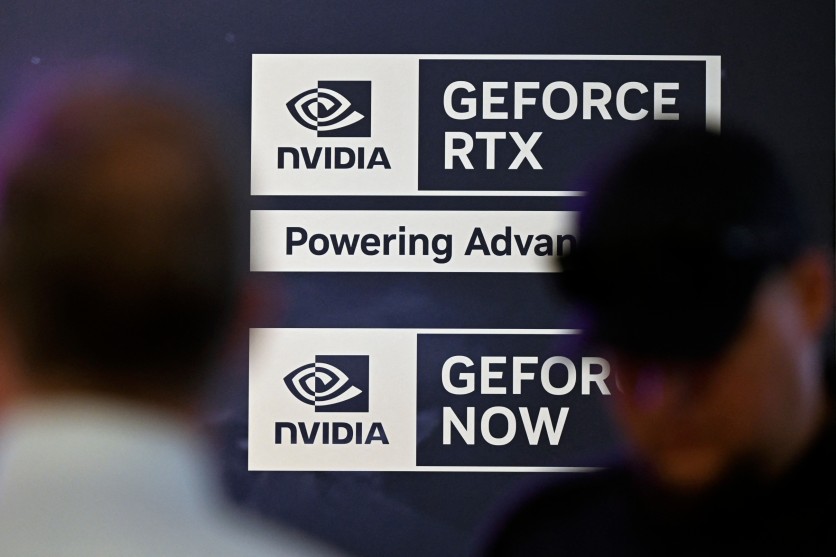
A sticker reading Nvidia - Geforce RTX is seen during the Gamescom video games trade fair at the Trade Fair Center in Cologne, western Germany, on the first day of the fair on August 20, 2025. The 2025 edition of the vast Gamescom trade fair in Cologne, Germany, had its opening night on August 19, 2025 and will be running from August 20 to 24, 2025. (Photo by Ina FASSBENDER / AFP) INA FASSBENDER/AFP via Getty Images
Palit Microsystems announced the GeForce RTX 3060 Infinity 2 OC on Wednesday, marking the first genuinely new PCB engineering applied to Nvidia's revived Ampere lineup rather than a restock of old inventory — and the clearest signal yet that the production restart launched earlier this year has matured into something more than a warehouse clearance sale.
The card runs on the same GA106 silicon that powered the original RTX 3060 at its February 2021 launch: 3,584 CUDA cores, 12GB of GDDR6 memory on a 192-bit bus, and 360 GB/s of memory bandwidth. What is new is everything around it. Palit fitted the Infinity 2 OC with a dual-fan all-black cooler featuring a ventilated backplate and a flow-through section behind the heatsink, with 0dB fan mode that spins the fans down completely during light workloads. The result is a card that is mechanically and visually distinct from anything Palit shipped during the original Ampere cycle — even though the die at its core has not changed. Pricing and availability dates were not disclosed.
Why a 2021 Chip Is Back in Production
To understand the Infinity 2 OC, you have to understand what happened to the GPU market in the first half of 2026.
Nvidia's current consumer lineup, the RTX 50 series, runs on GDDR7 memory — which happens to be manufactured by the same three companies (Samsung, SK Hynix, and Micron) that produce the high-bandwidth memory powering AI data-center accelerators. With AI buildout consuming roughly 20% of global DRAM wafer capacity in 2026, according to TrendForce, manufacturers shifted production capacity toward HBM and server-grade DDR5. DRAM contract prices surged between 60% and 95% quarter-over-quarter in Q1 2026, with no meaningful supply relief expected before late 2027, according to multiple industry analysts including Gartner and Intel's own supply-chain assessments.
The downstream effects on gaming GPUs were direct. Current-generation RTX 50 budget cards have been scarce since launch, with the RTX 5060 trading at $329 to $359 on street — well above its $299 MSRP. The RTX 5050 9GB, long expected to fill the entry-level slot, has reportedly been delayed amid competing priority for the very same GDDR7 supply.
Into that gap, Nvidia revived the GA106. According to Korean media outlet Hankyung, Samsung Foundry restarted production of the chip on its 8nm DUV (deep ultraviolet) node in March 2026. That matters specifically because it is a separate, older manufacturing line from the TSMC 4N process used for Ada Lovelace and Blackwell chips — meaning Samsung can produce GA106 silicon without competing for the TSMC allocations Nvidia needs for its newer GPUs. AIC partners including Asus, MSI, Colorful, and Palit's recently integrated GALAX brand were confirmed as production participants. MSI's Ventus model became the first new RTX 3060 to appear on US shelves — on Newegg, at $329.99, in early July. Palit's Infinity 2 OC, announced today, is the first new board design to emerge from that restart cycle.
Read more: RTX 3060 12GB Returns to Newegg at $330 as GPU Memory Crisis Hits Budget Buyers
Why the Memory Numbers Are Not What You Think
The RTX 3060's 12GB VRAM is widely cited as its main selling point against the RTX 5060's 8GB. What rarely gets explained is that neither figure was a decision about being generous with memory — both are direct consequences of bus-width architecture.
The GA106 die has a 192-bit memory bus. Fill that bus with standard GDDR6 chips at 1Gb density and you need twelve of them, each contributing 16 bits to the bus, to reach the full 192-bit width. That is 12GB. There is no partial-fill option without leaving bus bandwidth on the table. When Nvidia launched the RTX 3060 in 2021, 12GB felt like an unexpected windfall for a sub-$350 card. In reality, it was a consequence of the chip's architecture rather than a product decision.
The GB206 die that powers the RTX 5060 has a 128-bit bus. Fill that bus with GDDR7 chips at 1Gb density and you get eight of them — 8GB. The faster GDDR7 memory compensates with bandwidth: 448 GB/s versus 360 GB/s on the RTX 3060. But bandwidth cannot substitute for capacity when a game's texture load or a model's weight file exceeds the total available pool. The RTX 5060 is the technically superior card — approximately 50% faster in raw FP32 compute, 25% ahead in memory bandwidth, and the only card in the comparison that supports DLSS 4 Multi Frame Generation. But it is categorically smaller in VRAM.
That gap has become structurally significant in 2026. Multiple independent tests have documented the RTX 5060 8GB failing to run certain AAA titles at high settings at 1440p — not due to shader performance, but because the texture budget exceeds what the card can hold. In more extreme workloads, users running local large-language models find that a 14-billion-parameter model at standard 4-bit quantization requires 8 to 9GB of weights alone, before any additional context window allocation. The RTX 3060 12GB can run such models at roughly 28 to 32 tokens per second while keeping the model fully in GPU memory; the RTX 5060 8GB cannot load the model into VRAM at all, falling back to CPU offloading at speeds that make interactive use impractical.
Steam's Most-Used GPU, Still
The market rationale behind Nvidia's production decision is not hard to find: the RTX 3060 remained the single most-used GPU on the Valve Steam Hardware Survey for the better part of two years. In the June 2026 survey — the most recent — the desktop RTX 3060 held 3.73% of all surveyed Steam systems, second overall after the RTX 4060 Laptop GPU edged it out at 3.81% in the first time a mobile chip has ever topped the chart.
That installed base carries real value for board partners. A card re-entering the market under an established name inherits five years of driver maturity, community benchmarking, compatibility documentation, and user familiarity — advantages that no freshly launched GPU possesses in its first months on market. Palit's decision to invest in a new PCB design, rather than simply relabeling an existing Infinity 1 board, suggests the company is treating the Infinity 2 OC as a product with a meaningful forward runway rather than a short-term inventory conversion.
Read more: GPU Memory Crisis Prices RTX 5090 Above $4,300 as Nvidia Offers Paper Cards
What the Infinity 2 OC Does Not Offer
A card built on a five-year-old architecture carries limits that no new cooler design can address.
The RTX 3060 does not support DLSS 4 Multi Frame Generation, Nvidia's latest AI frame-generation technology that allows Blackwell cards to insert up to three generated frames for every conventionally rendered one. It supports DLSS 2 and 3 — upscaling and single-frame generation — but buyers looking to use the most current Nvidia AI rendering stack will not find it here. The card also outputs via DisplayPort 1.4 rather than the DisplayPort 2.1 found on RTX 50 series cards, a limitation that matters for buyers targeting very high-refresh or very high-resolution displays. Ray-tracing performance is meaningfully weaker: the Ampere RT core generation trails Blackwell by two full architectural generations.
The Infinity 2 OC's factory overclock lands at 1,792 MHz boost clock — a 0.8% increase above Nvidia's reference spec of 1,777 MHz. That is essentially no overclock: the figure is below measurement noise in real-world benchmarks, and Palit's own marketing does not make meaningful performance claims around it. The card competes on its memory specification and its price, not its clock speed.
For a buyer who prioritizes ray tracing performance, wants headroom for increasingly VRAM-hungry future titles beyond the 12GB ceiling, or needs DLSS 4's frame generation for a high-refresh monitor, the RTX 5060 — or the RTX 5060 Ti 16GB at a higher price point — remains the more forward-looking purchase. For a buyer who wants 12GB of VRAM at a price point where current-gen Nvidia budget cards offer only 8GB, and who runs workloads where VRAM capacity matters more than compute throughput, the Infinity 2 OC represents a coherent, if unusual, argument.
Palit has not confirmed pricing, retail availability, or the regions in which the Infinity 2 OC will be sold. Based on the pattern of the broader RTX 3060 revival — European and Chinese retail availability preceded the US listing that appeared on Newegg on July 2 — a similar phased rollout appears likely.
Frequently Asked Questions
Why does the RTX 3060 have 12GB when the newer RTX 5060 only has 8GB?
This is an engineering consequence of memory bus width rather than a choice to be generous. The GA106 chip inside the RTX 3060 has a 192-bit memory bus; filling it with standard GDDR6 chips at typical density requires twelve chips totaling 12GB. The GB206 chip inside the RTX 5060 has a 128-bit bus, which takes eight chips for 8GB. Nvidia compensated with faster GDDR7 memory (448 GB/s versus 360 GB/s), so the RTX 5060 is ahead in bandwidth — but bandwidth cannot substitute for total capacity when a game's textures or an AI model's weights exceed what the card can hold.
Is the RTX 5060's 8GB limitation a real problem in 2026, or mostly theoretical?
It is a documented, measurable problem in specific workloads. Independent benchmark testing has shown the RTX 5060 8GB failing to run certain AAA titles at high settings at 1440p due to VRAM saturation — causing crashes, DirectX errors, or forced settings reductions. For local AI inference, the situation is more absolute: a 14-billion-parameter model at standard compression requires 8 to 9GB of memory before any context window is allocated, meaning the model simply cannot load onto the RTX 5060's 8GB at all. For esports titles and 1080p gaming, 8GB remains sufficient, and the RTX 5060 is the faster card.
Why is Nvidia manufacturing a five-year-old chip in 2026 instead of a new budget design?
The short answer is fabrication capacity. Nvidia's current RTX 50 series uses TSMC's advanced 4N process, which is under heavy demand from both Nvidia's own higher-end chips and AI data-center accelerator production. The GA106 die is built on Samsung's separate 8nm node — a mature, less-contested line that can be ramped without affecting Nvidia's TSMC allocations. The AI-driven shortage of GDDR7 memory also plays a role: the RTX 3060 uses GDDR6, which is less affected by the supply constraints squeezing current-gen GPU production. Together, these factors make reviving a known, proven design on an underutilized fab line a practical near-term solution to the budget GPU supply gap.
Should a buyer today choose the RTX 3060 Infinity 2 OC or the RTX 5060?
That depends on the workload. The RTX 5060 is the faster card for gaming — roughly 50% more raw compute throughput — and supports DLSS 4 Multi Frame Generation, which the RTX 3060 cannot access. If the primary use is competitive gaming at 1080p, or if future titles are expected to make heavy use of DLSS 4, the RTX 5060 is the more capable purchase. If the workload involves running larger local AI models (14B parameters or above), editing high-resolution video with large frame buffers, or playing texture-heavy open-world titles at 1440p without reducing settings, the RTX 3060's 12GB VRAM offers capacity the RTX 5060 structurally cannot match. Pricing for the Infinity 2 OC has not been confirmed; if it comes in materially below current RTX 5060 street prices ($329–$359), that further narrows the decision toward the older card for capacity-sensitive buyers. If it lands at parity, the RTX 5060 is faster for most standard gaming workloads.

-
 C114 Communication Network
 -
 Communication Home
