
 Search

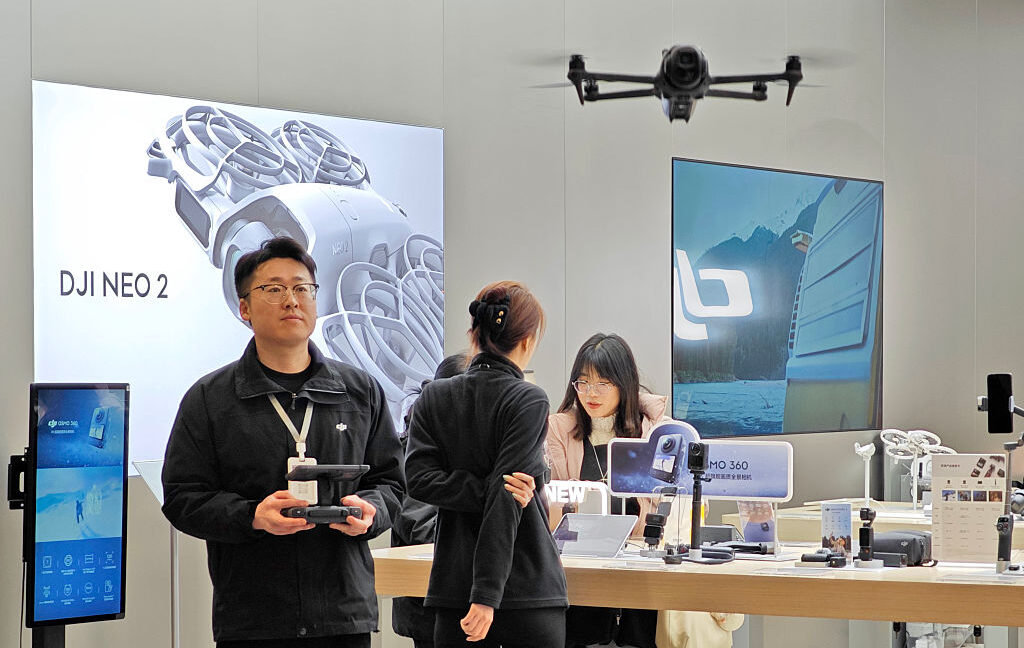
Credit: CFOTO/Future Publishing via Getty Images
China’s new clampdown on drone sales and even the storage of drone components within the capital of Beijing stands out in a country that effectively built the global market for affordable commercial drones. The unprecedented citywide rules taking effect on May 1 come as authorities tighten drone regulations across the country and enforce flight restrictions more strictly.
Chinese officials are refining drone regulations because “enforcement and rules have been uneven or unclear,” said Lizzi C. Lee, a fellow on the Chinese economy at the Asia Society Policy Institute’s Center for China Analysis in New York City. Now it appears that Beijing officials are “experimenting with a more comprehensive, front-end approach” by implementing the citywide ban on drone sales and rentals—not to mention restricting the storage of drones and drone components within the city.
“What’s pretty notable here is that this is not just about regulating use but also about controlling the entire lifecycle—sales, transport, and storage—of drones,” Lee told Ars. “That’s a much more preventive, system-level approach to eliminating unauthorized drone activity rather than just policing them after the fact.”
Ordinary Beijing residents and businesses were already finding it difficult to buy drones in the run-up to the May 1 enforcement deadline. For example, the Associated Press reported that Chinese online shopping platforms were preventing customers from purchasing drones for delivery to Beijing addresses as of late April, while some consumer electronics stores were attempting to clear out their drone stocks by the deadline.
Local authorities also plan to “conduct security inspection at entry points to intercept inbound drones, with violators handed over to police,” according to Chinese media site Caixin Global. Existing storage facilities within Beijing’s Sixth Ring Road—an encircling expressway about 15 to 20 miles from the city center—are limited to storing a maximum of three drones or 10 core components while also being required to undergo police inspections.
The new rules mainly make exceptions for universities and research institutions along with law enforcement. Beijing residents who already own drones and have registered those with the authorities will supposedly be allowed to transport the drones in and out of the city.
“I wouldn’t assume this exact Beijing pilot model gets replicated nationwide, but elements of it could inform nationwide drone regulations,” Lee said.
Flight restrictions and sales headwinds
Officials had already made Beijing’s airspace off-limits to most drone flights as of August 2025, according to Caixin Global. It’s not uncommon for government officials to implement such drone flight restrictions around sensitive areas, as is the case in Washington, DC, which is a US no-fly zone for drones. But such airspace restrictions are still unusually strict compared to policies in other Chinese cities like Shanghai and Shenzhen.
Starting in May, drone pilots in China must also begin registering with their real names and link their drones to official identification or a cellphone number, with flight data being transmitted to the government. That is broadly similar to how the US Federal Aviation Administration requires registration for drones weighing more than 0.55 pounds and maintains the capability to track drones using the Remote ID system.
However, some Chinese drone users have complained on social media about the tightening drone regulations and local police enforcement that is so strict that it blocks most drone flight requests. The New York Times interviewed Beijing residents who told of receiving calls from police as soon as they powered on their drones, or receiving home visits from police officers asking about drones they had not flown in years.
Such “overzealous enforcement” runs the risk of creating a chilling effect on Chinese drone users that dampens sales, according to The New York Times. The publication pointed to drone dealers telling Chinese media about declining sales in recent months, even as used drone listings were rising.
In the grand scheme, the new Beijing ban on drone sales within the city should not make much of a dent in total sales for DJI, the Shenzhen-based drone manufacturer that has between 70 and 80 percent share of the global market for commercial drones.
“Economically, the direct impact on major firms like DJI should be limited since Beijing is a relatively small slice of overall demand, and this is not about cracking down on the drone industry but about regulating emerging technology,” Lee told Ars. “In fact, I think we will see clearer, more standardized rules that may ultimately bring more predictability to the industry, which is quickly evolving.”
But Chinese drone maker DJI is facing a potentially greater business challenge in the United States, where DJI drones account for the vast majority of operational drones in the world’s largest commercial drone market. On December 22, 2025, the Federal Communications Commission ruled that it would no longer authorize sales of new foreign-made drone models—effectively blocking Americans from buying the newest DJI drone models going forward. DJI filed an appeal with the US 9th Circuit Court of Appeals earlier this year.

-
 C114 Communication Network
 -
 Communication Home
