
 Search

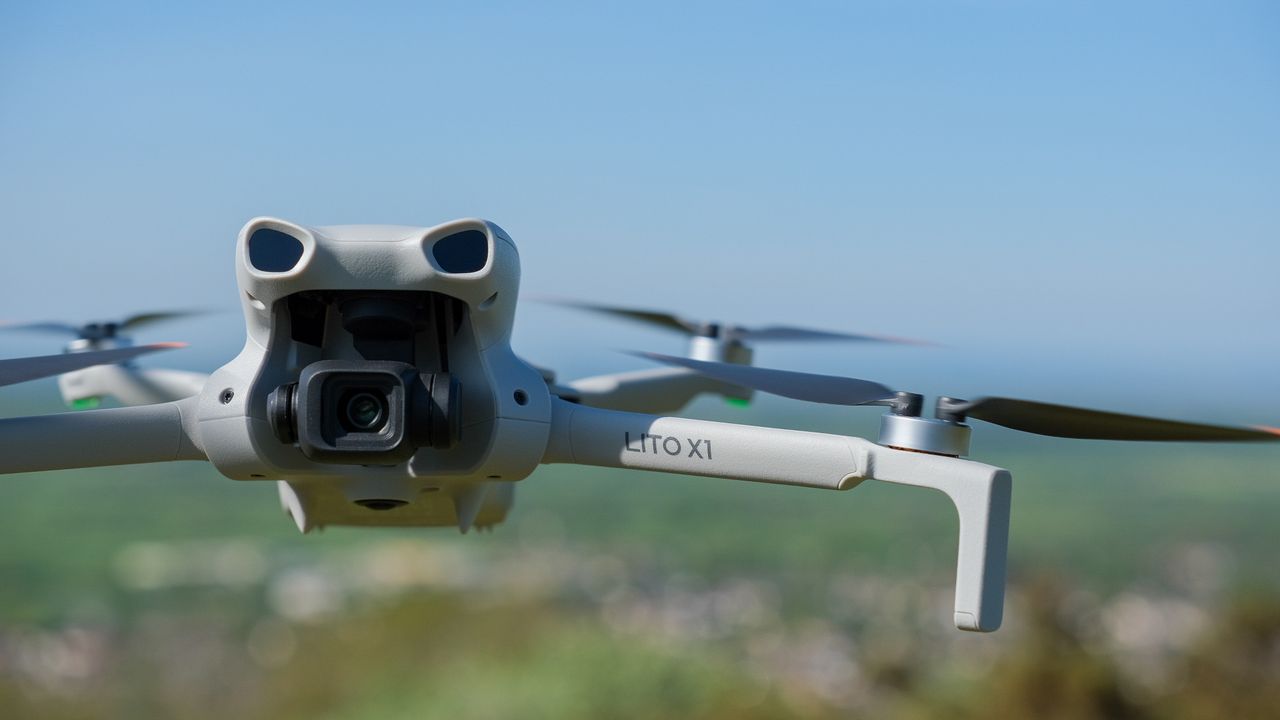
(Image credit: Matt Kollat)
DJI had a crazy month in April. The brand has launched a ton of highly anticipated products, including the Osmo Pocket 4 and the successors to what is surely DJI's most popular beginner drone, the Mini 4K. And since the company wasn’t dominating the drone market quite enough (?), it decided to offer two new models: Lito 1 and the Lito X1.
Rumours about the Lito Series have been swirling around for months, so I can’t say I was massively surprised when the company started teasing the upcoming release earlier this month. And because it’s DJI, I just assumed they would be of decent quality.
I wasn’t wrong. I’ve been testing the more premium of the two models, the Lito X1, for a little over a week, and it made me seriously question who might need a DJI Mini 5 Pro other than people who fly drones for a living. It has everything from long battery life and forward-facing LiDAR to high-resolution photos and videos and easy controls.
Best of all, it’s cheap as chips, making it the beginner drone to beat in 2026 (and probably beyond). Some pilots might still opt for the entry-level Lito 1 – which I’ll be testing next – but the Lito X1 is really just an amazing drone for not a lot of money.
If you haven’t already bought the Mini 4K, or bought it a while ago, or have a Neo or a Flip and want to take your piloting, photography and videography to the next level, read my full DJI Lito X1 review below. Let’s get started.
DJI Lito X1 review
Price and availability
The Lito X1 was announced on 23 April 2026 and is available to buy now at DJI for the recommended price of £369 / €379 / AU$619 (Drone only). The Lito X1 Fly More Combo (DJI RC 2), which includes the RC2 controller with a built-in screen, three Intelligent Flight Batteries, a charging hub and a shoulder bag, sells for £599 / €619 / AU$1,069.
Sadly, just like the Osmo Pocket 4, the DJI Lito series will not be available in the U.S. market as the application for authorisation is still pending. A crying shame for beginner pilots over yonder!
Design and build quality
The Lito X1 is a compact, sub-249g drone with foldable arms and a front-mounted gimbal. Mine came at 248 grams, just under the limit. It measures 144×94×62 mm when folded and 183×251×79 mm when flight-ready. It’s quite small and lightweight, all things considered.
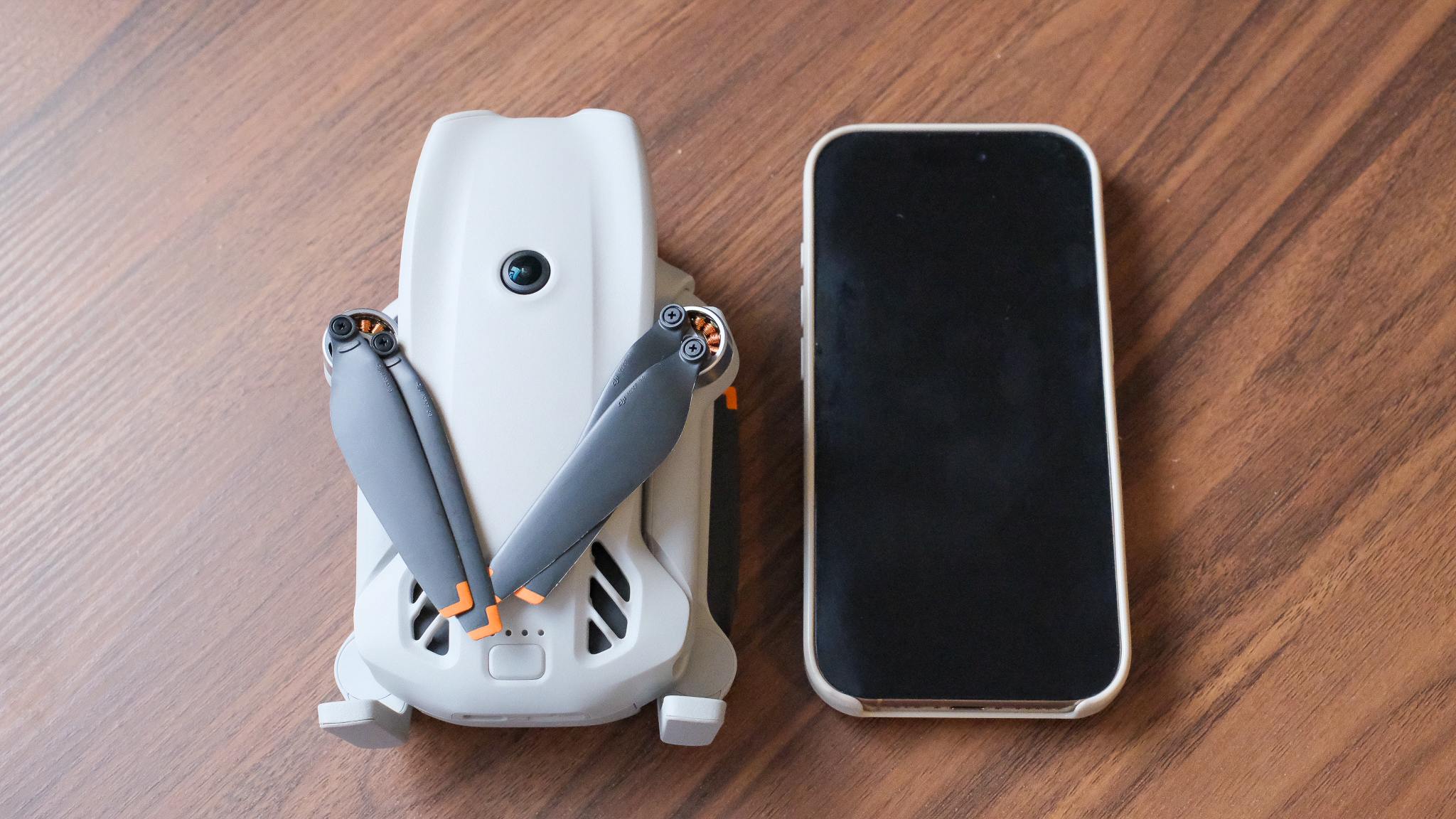
Lito X1 folded next to an iPhone 16 Pro
(Image credit: Matt Kollat)The drone doesn't come with propeller guards like the Neo 2, but DJI included a gimbal cover, which is as awkward to take off as always. This covers the camera unit and the two LiDAR sensors, the latter of which are located above the gimbal. You’ll find two more (optical) sensors at the top and bottom of the Lito X1.
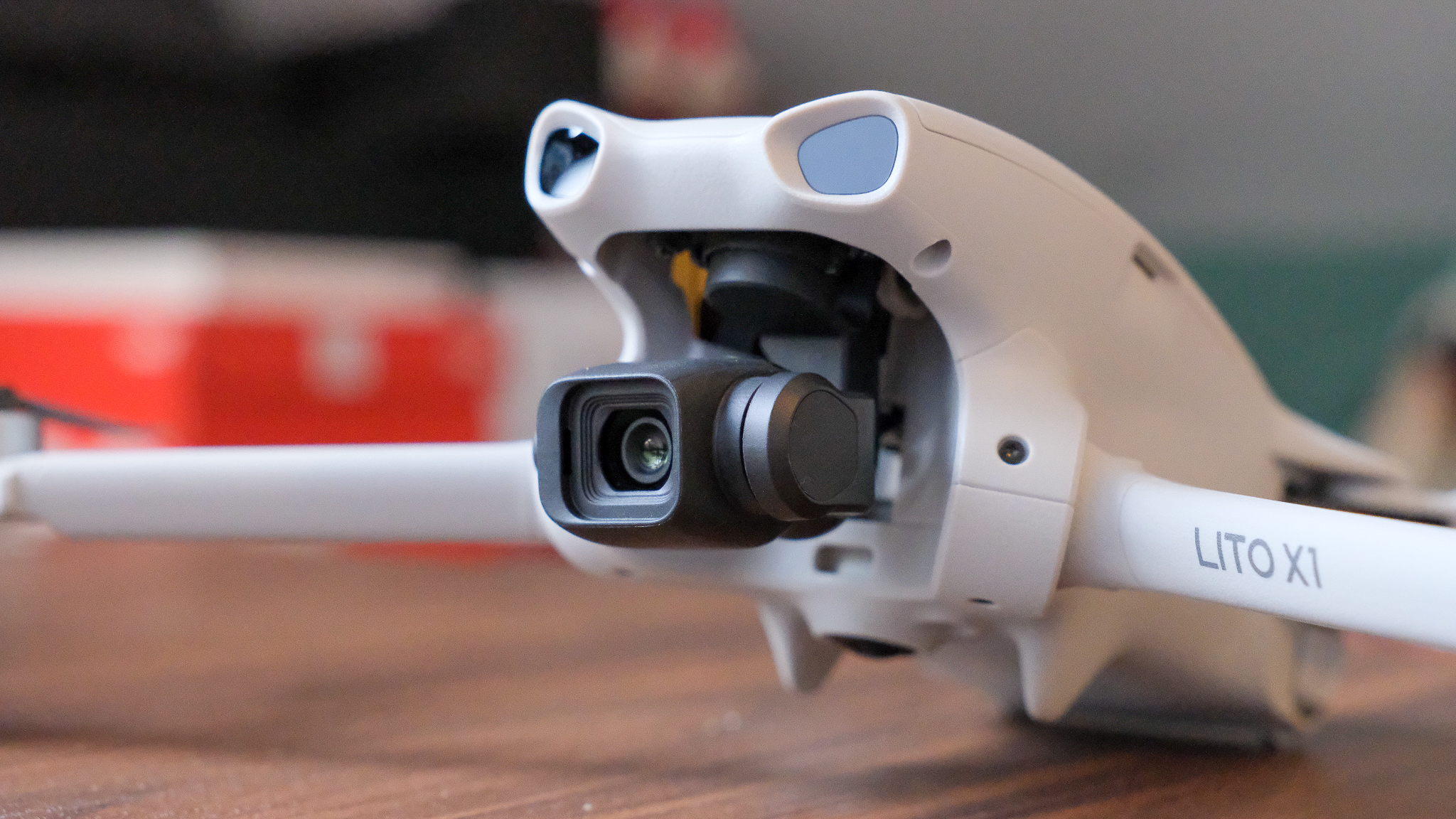
Serious-looking gimbal setup
(Image credit: Matt Kollat)The gimbal itself is a 3-axis mechanical gimbal (tilt, roll, pan) with a mechanical range of -126° to 67°. Of this, the controllable range (tilt) is -90° to 40°, allowing you to point the camera directly towards the ground and slightly up. DJI claims the angular vibration ranges ±0.01° – excellent in this category.
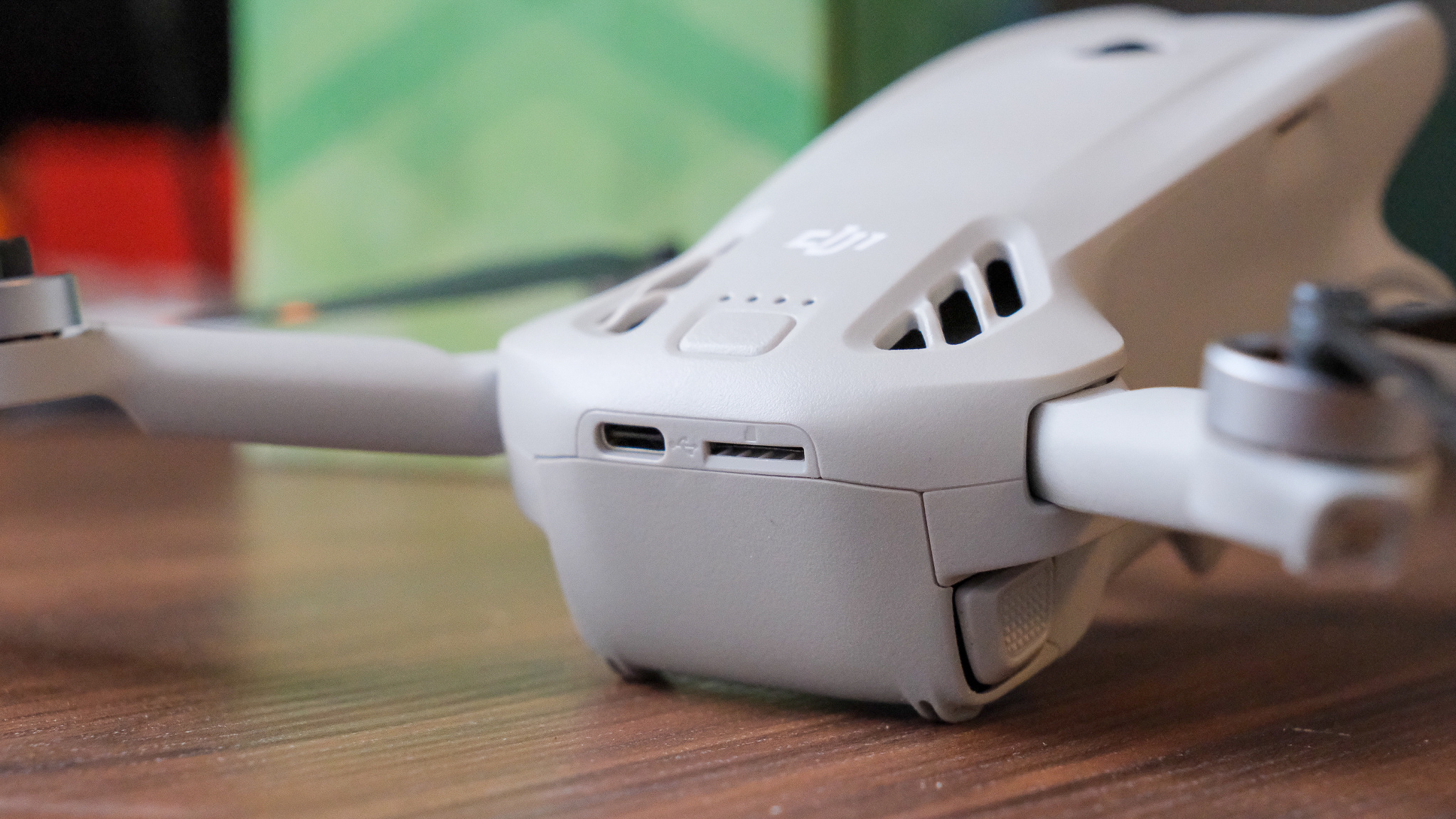
MicroSD cards can still be used
(Image credit: Matt Kollat)The Lito X1 is equipped with a 2,788 mAh Li-ion battery (Intelligent Flight Battery), which weighs approximately 74 grams. This is, of course, included in the drone's overall weight. The Lito X1 has 42 GB built-in storage, continuing the trend of DJI adding this feature to most of its newer products.
Camera performance
The Lito X1 has a 1/1.3-inch CMOS sensor with 48MP effective pixels – a lot larger than the Mini 4K’s camera unit. The lens has an FOV of 82.1°, equivalent to a 24 mm lens on a full-frame camera, and an aperture of f/1.7. The minimum focusing distance is 1 metre, which is more than enough, considering it’s unlikely you’ll be flying the drone that close to anything or anyone.
The maximum resolution is 8,064 × 6,048 pixels (48 MP), but the Lito X1 can also shoot 12 MP photos, both JPEG and RAW (and JPEG+RAW). It’s pretty cool to have raw functionality on a beginner drone, along with manual exposure control options.
As for video, the Lito can deliver up to 4K (3,840×2,160) videos @ 100 fps, full HD (1,920×1,080) @ 200 fps and 2.7K (1,512×2,688) vertical videos at 60 fps. The Lito X1 can shoot 'true vertical' videos like the Mini 5 Pro; instead, it downsamples 4K landscape footage to 2.7K vertical.
The maximum bitrate is 130 Mbps, and thanks to the built-in storage, you don’t have to worry about getting a fast enough microSD card.
(The Lito X1 supports microSD cards up to 1TB and recommends either Lexar’s Silver Plus or Kingston’s CANVAS GO! Plus models.)
Even though the Lito X1 has only one lens, it offers up to 3x zoom. It’s all digital, of course, but that larger sensor enables the drone to produce a 2x zoom that’s almost surprisingly not digital-looking. The 3x zoom is usable, but doesn’t quite look as good as the 1x or 2x zoom.
As always, it’s best to step down the exposure compensation to -0.3 or -0.7, as the Lito X1, like most DJI drones, tends to slightly overexpose images and videos. I was testing the drone early-ish in the morning on nice, sunny days, and the sensor was clearly trying its best to account for the huge dynamic range.
Sure, the videos don’t look quite as good as the Mini 5 Pro's, but considering the Lito X1 is a beginner drone, I’m thoroughly impressed with how well it performed in the camera department.
Features and flight performance
It probably doesn’t come as a surprise, but the Lito X1 is a much more capable drone than the Mini 4K in terms of features and flight characteristics. I already mentioned the forward-facing LiDAR – those little cameras above the gimbal unit – that allow the drone to navigate even in low light conditions.
The Mini 4K doesn’t have obstacle avoidance, while the Lito X1 sports omnidirectional sensing and can recognise and manage hazards around the drone.
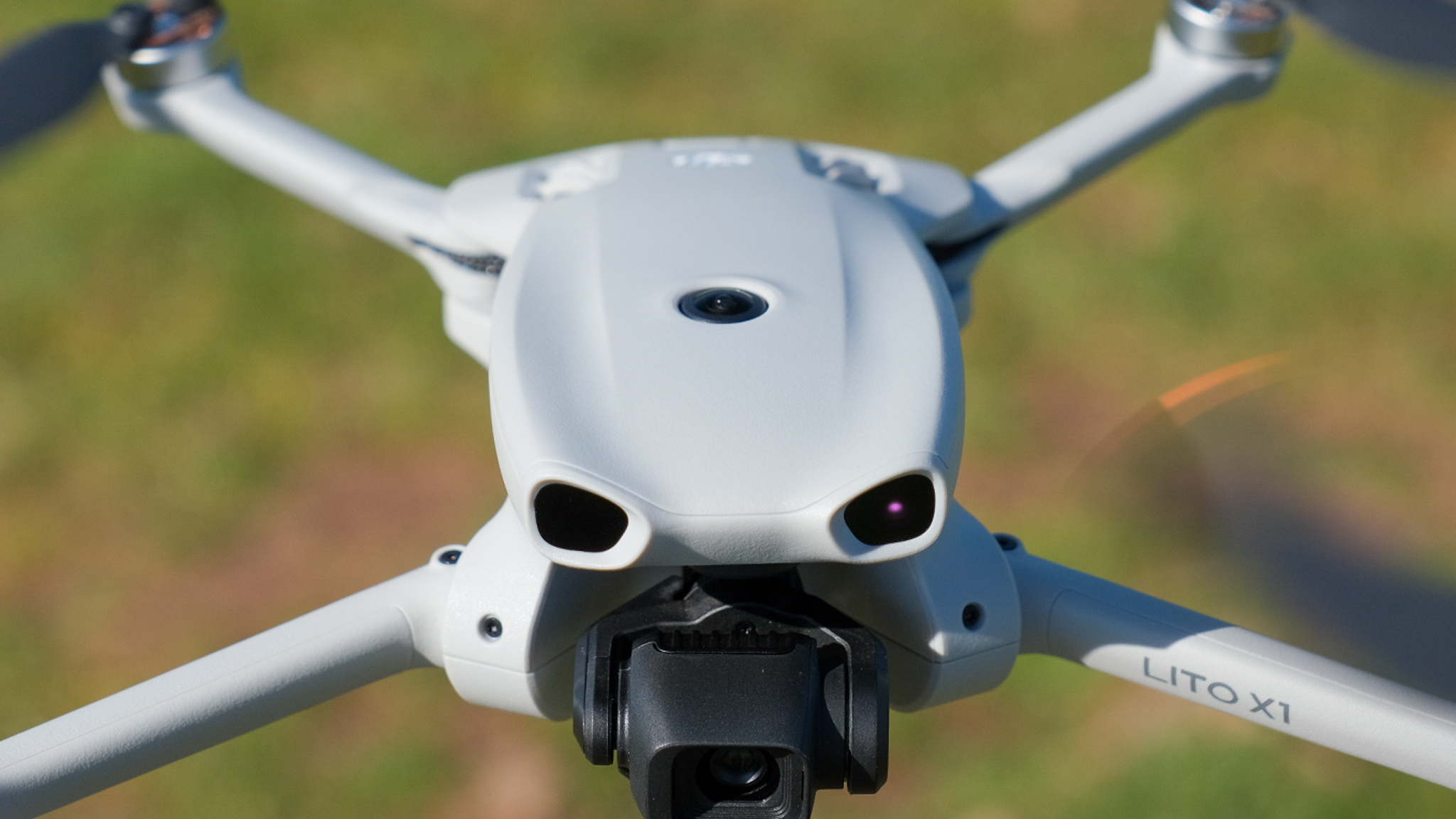
The all-seeing eyes of the Lito X1
(Image credit: Matt Kollat)I flew the Lito X1 directly towards me, and it slowed down and then stopped well before it could hit me. I mostly use the drone in ‘Normal’ mode, which balances speed and battery life, but if you switch to ‘Sport’ mode, the Lito X1 disables the obstacle-sensing feature – something to be aware of.
Speaking of Sport mode, the drone's maximum speed is 18 m/s, which is 2 m/s faster than the Mini 4K’s maximum speed (16 m/s). It’s on par with the Mini 5 Pro but much slower than the much larger Mavic 4 Pro, which has a top speed of 25 m/s in Sport mode. 18 m/s is more than fast enough for beginner pilots, anyway.
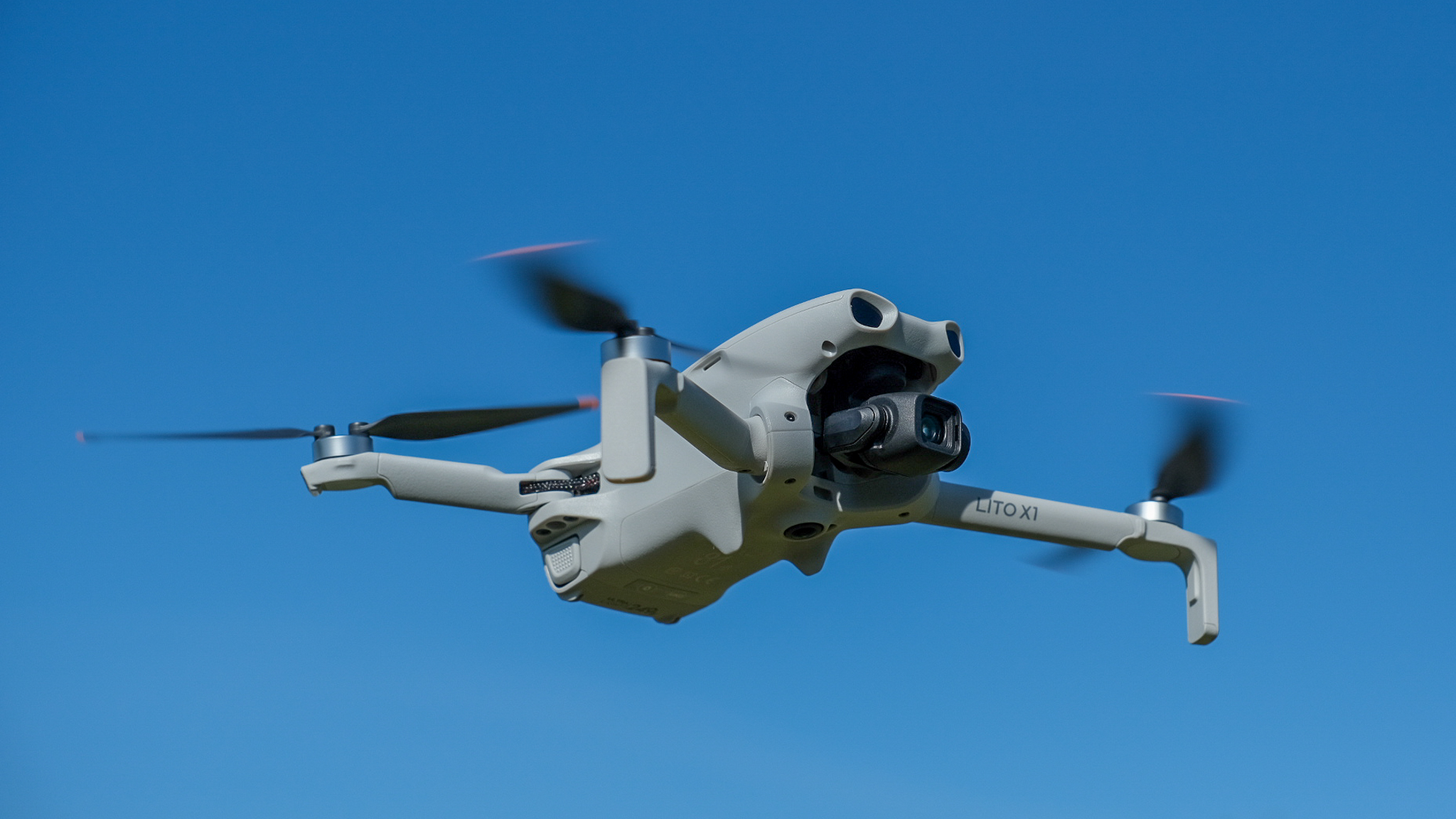
Gotta go fast
(Image credit: Matt Kollat)Wind resistance is the same as before, with the Lito X1 being capable of managing gusts up to 10.7 m/s (Level 5). The dinky drone will, of course, struggle in higher winds, and trying to maintain a stable hover when gusts push the Lito X1 around will also drain the battery. Overall, the drone is satisfactory in this department.
A big upgrade is dynamic autonomous tracking. The Lito X1 can not only lock onto stationary subjects – something the Mini 4K can also do – but also continuously follow a moving subject, predict motion, adjust its path, and reframe in real time. Plus, the new model now has MasterShots as well as QuickShots, which string together a few shots and can be edited into a short video in the DJI Fly app.
MasterShots are an easy way to create good-looking social media clips with absolutely no effort.
Battery life and charging
Battery life (i.e., flight time) improved from 31 minutes on the Mini 4K to 36 minutes on the Lito X1 when using the 2,788 mAh Intelligent Flight Battery. It’s a decent increase, but as always, impossible to achieve in real-life flying conditions.
I tested a fully charged battery, hovering the Lito X1 in a room with just enough breeze to keep it from overheating for as long as it could. I flew for 38 minutes and 26 seconds, with the plane beeping excessively for the last 10 or so minutes, warning me that the battery was dangerously low before force-landing the unit.
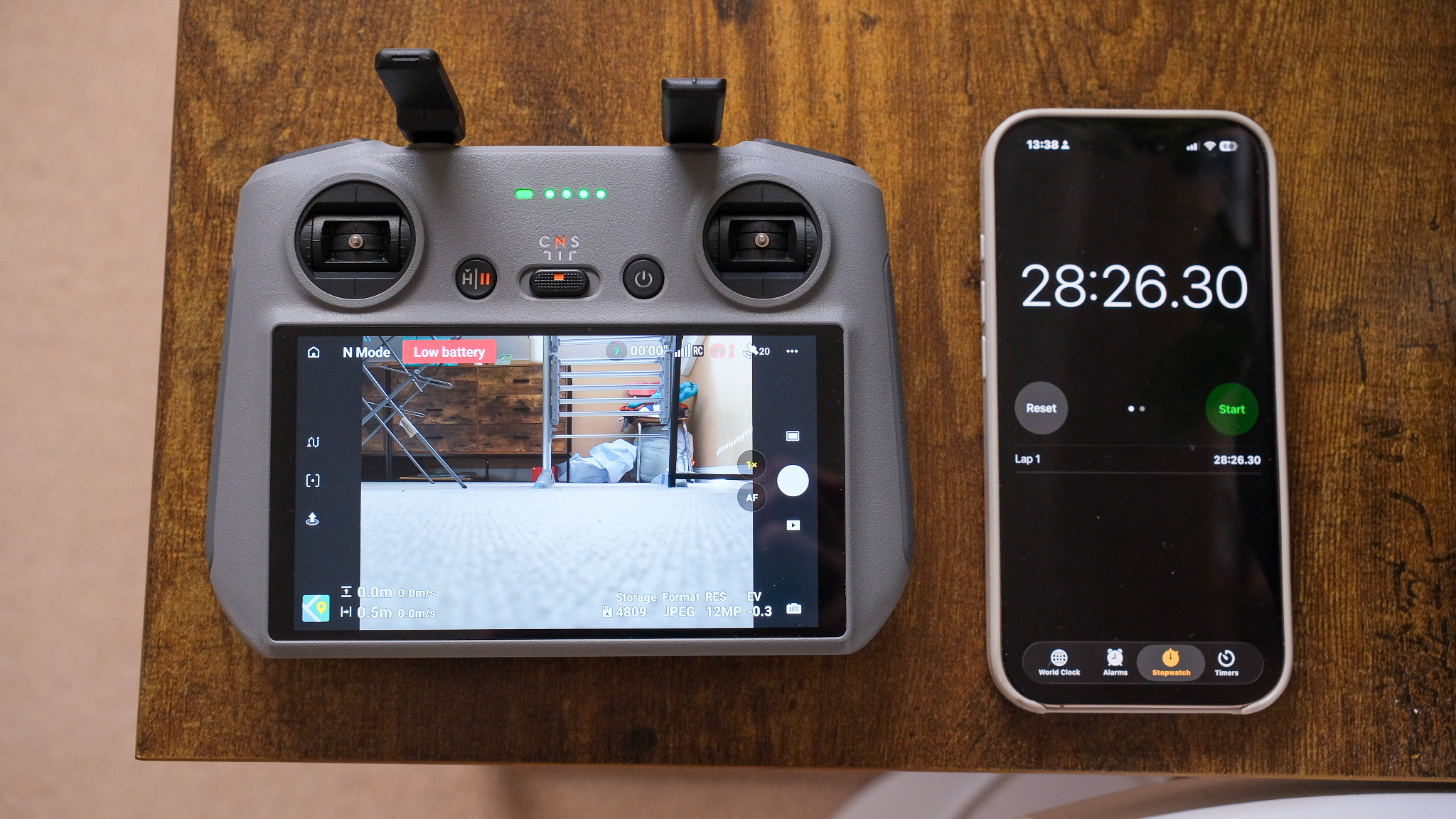
Forced landing – in my bedroom
(Image credit: Matt Kollat)The Lito X1 still had around 7% battery left at this point, so in theory, it might have been able to fly for longer, but no drone will let you drain its battery completely while it's airborne. I’d say, if you’re flying the Lito X1 in comparatively windless conditions, you’ll be able to get around 23-25 minutes of flight time.
Battery charging speed is far from mind-blowing at around 70 minutes with the battery in the drone using a 65W charging cable and block. Using the Charging Hub improves things and can reduce charging time to 45 minutes. Charging three batteries simultaneously with the Charging Hub is the most efficient way, as they will all be ready to go in just under 90 minutes.
Verdict
The DJI Lito X1 is an amazing beginner drone. In fact, it’s more than just a cheap flying tripod; the premium Lito bridges the gap between basic and intermediate drones, and does it for an incredibly low price, too.
What makes it stand out isn’t just the longer battery life or the faster top speed, but the intelligence packed into such a small, affordable package. Features like dynamic subject tracking and omnidirectional obstacle sensing fundamentally change how the drone behaves in the air and make it easier to get usable footage without constantly thinking about flight control.
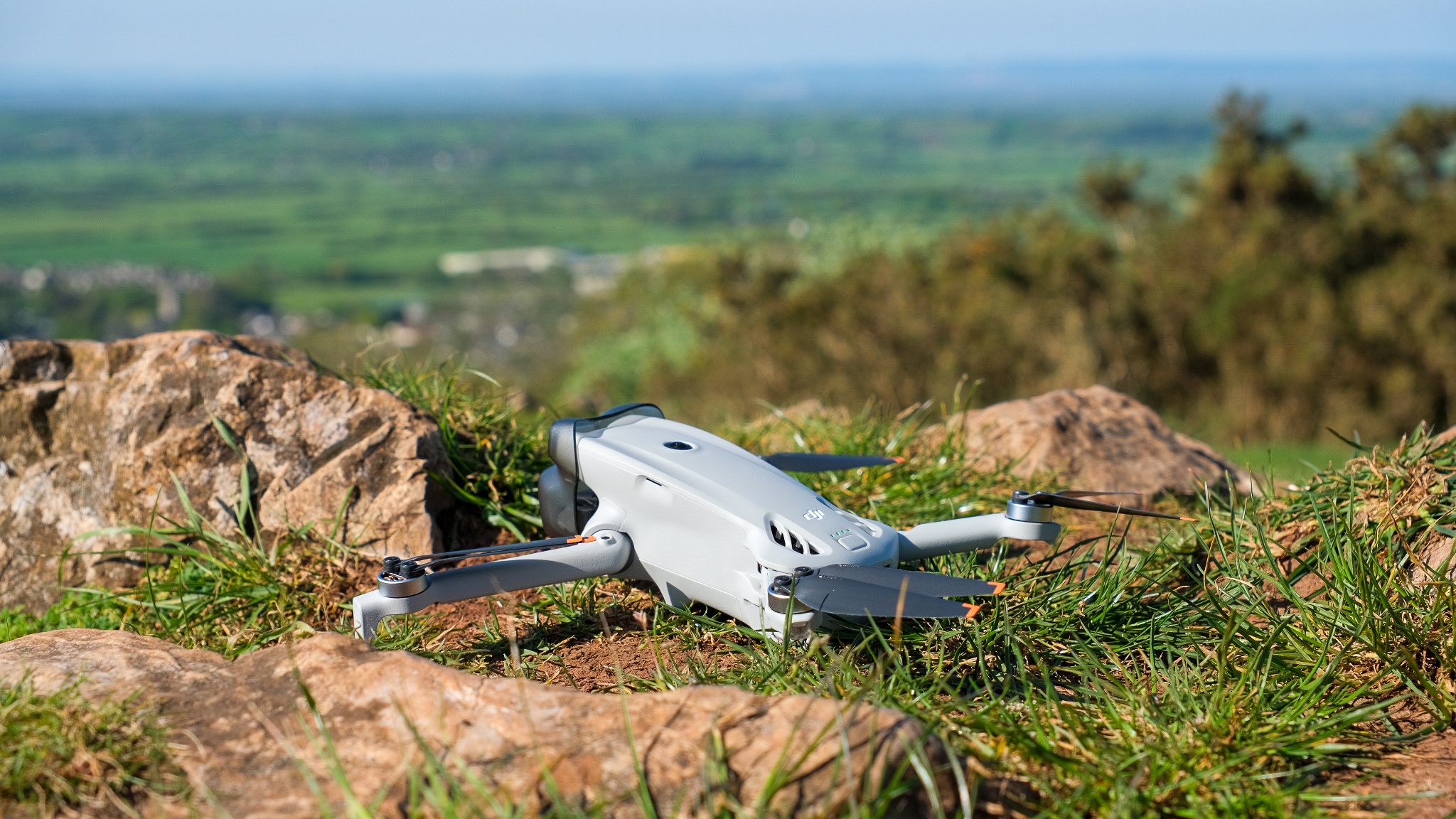
Ready to fly
(Image credit: Matt Kollat)It doesn’t quite match the Mini 5 Pro in outright image quality or flight refinement, and more experienced pilots will still appreciate the extra polish of DJI’s higher-end models. But for everyone else, the Lito X1 hits a sweet spot that’s hard to ignore.
For beginners, it’s approachable, and for upgraders, it’s a genuine leap forward. And for DJI, it’s a clear sign that “entry-level” no longer means stripped back.

-
 C114 Communication Network
 -
 Communication Home
