
 Search

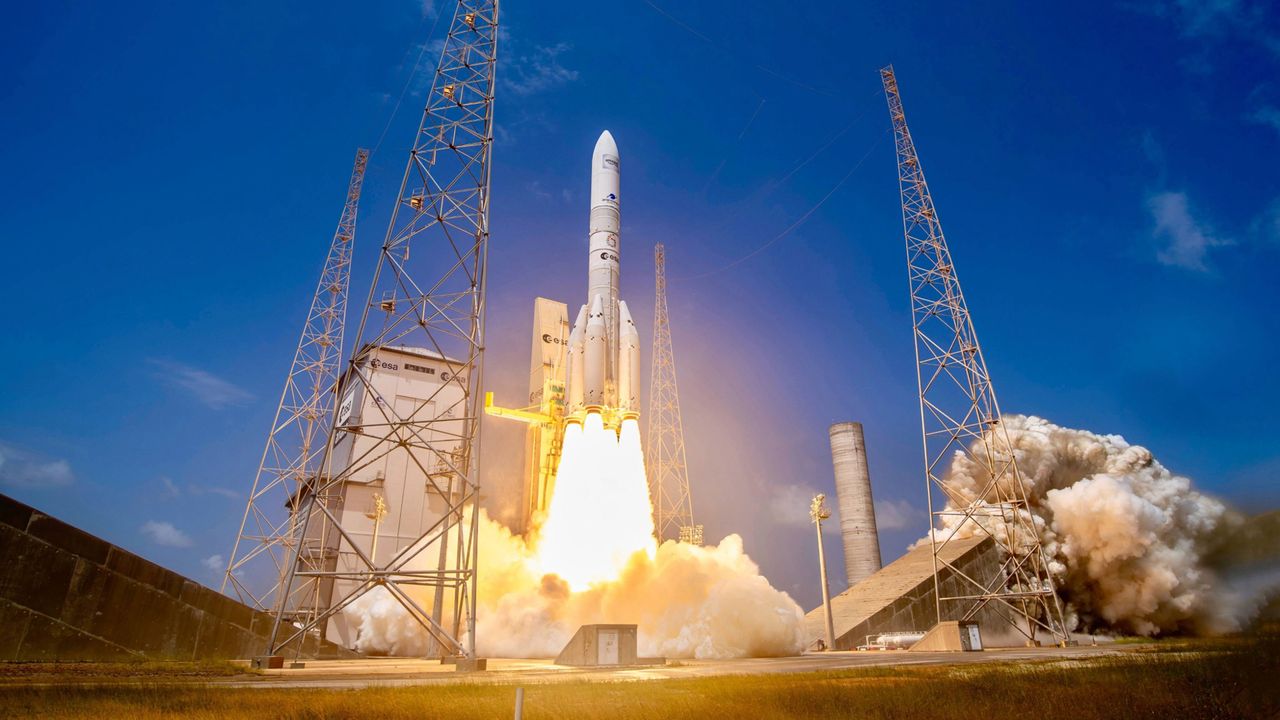
(Image credit: Amazon)
While we're all still riding high from the excitement of the Artemis II mission, there's been another shift in the space race with Amazon and Globalstar announcing a merger agreement, expanding Amazon's satellite ambitions – while also outlining a new deal with Apple.
There's a lot to take in here: for a couple of years, Amazon has been building its low orbit satellite network, known as Amazon Leo. It's aims are to boost connectivity in areas off the grid, rivalling Elon Musk's Starlink, although currently not operating at the same scale.
The merger will see Amazon take control of Globalstar and in the process, take over and expand on the agreement that Globalstar had with Apple. For those who don't remember, Globalstar is the company that provides Apple's satellite services on iPhone and Apple Watch.
So in star wars terms, there's a lot happening. For Apple users, this sees an agreement with Amazon for current and future Apple devices to continue to use those satellites, as Globalstar gets integrated with Amazon Leo.
"We're excited to support Apple users through the Leo D2D [Direct-2-Device] system, and look forward to working with mobile network partners to help extend coverage to every corner of the planet," said Panos Panay, senior vice president of devices and services at Amazon.
Why does Apple need a satellite partner – and why not Starlink?
Apple first announced satellite connectivity in 2022 with the iPhone 14, choosing to work with Globalstar and investing in the company in the process. It reportedly rejected Starlink for the service following an ultimatum from Elon Musk, according to The Information (via 9to5Mac).
While Musk didn't get the agreement he wanted with Apple directly, Starlink and T-Mobile went on to announce their own connectivity agreement, something that Starlink has established with a range of mobile operators worldwide.
Amazon's challenge is to now grow Leo, with a mid-2026 scheduled launch date and plans to launch "a few thousand more" satellites in the coming years according to CEO Andy Jassy.
On top of that – and something that brings Amazon back into competition with Starlink – is Amazon's launch of an aviation antenna, which can supply up to gigabit download speeds for commercial aircraft. Delta has already signed, with the service expected to go live in 2028.
Starlink has agreements with airlines such as Qatar and British Airways to provide high-speed in-flight connectivity, but if nothing else, the growth of Amazon Leo is likely to lead to more colourful outbursts from Musk as various deals fall into place.

-
 C114 Communication Network
 -
 Communication Home
