

 Search

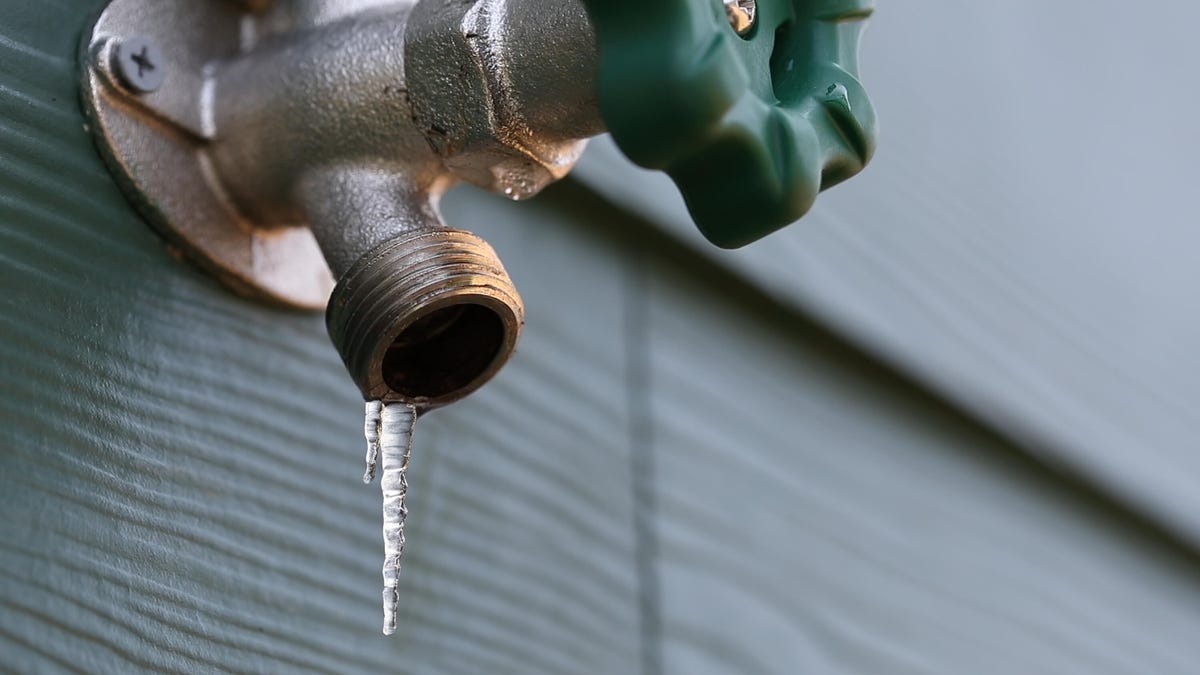
Frozen pipes aren't as noticeable as a home fire, but they can be more sinister, causing immense amounts of damage once the pipes crack and burst. Often, homeowners don't know it's happened until it's too late, creating expensive repair requirements and follow-up conditions like mold contamination that insurance doesn't always cover.
That's all bad news, I know, so now for the good news: Home technology has developed ways to monitor and protect your home's pipes, and they work well. I use such tech myself under sinks and in the garage as temperatures get close to zero degrees. If you get cold winters like that, too, consider these upgrades for your protection.
1. Tap into temperature sensors in security systems and more

From all-in-one sensors to affordable kits, we have the best home security picks for renters and those on the move. Arlo
Temperature sensor devices are a bit like smoke detectors: Instead of focusing on your comfort as a thermostat does, they focus on danger signs that something is wrong. That's particularly useful for catching low temperatures before they start freezing pipes, since you'll get app alerts or even sirens when sensors trigger. Stick sensors as near pipes as possible and take action if numbers drop well below freezing.
Temperature sensors can be standalone devices or part of a home security system like Arlo's sensors that can detect both temperatures and water at the same time. You can also find sensors dedicated to frozen pipes, such as TempCube or the app-powered Temp Stick Pro, which even includes a pipe clamp for extra accuracy.
Important note: At this point, you may be wondering if you should use a space heater to rapidly heat pipes when temperatures are too low. It's usually a bad idea unless you're really desperate for fast heating. Space heaters may have limited influence on pipes that aren't exposed and can be huge fire hazards when used incorrectly. Instead, the tech we discuss below is usually a better answer.
2. Use a leak detector in vulnerable areas
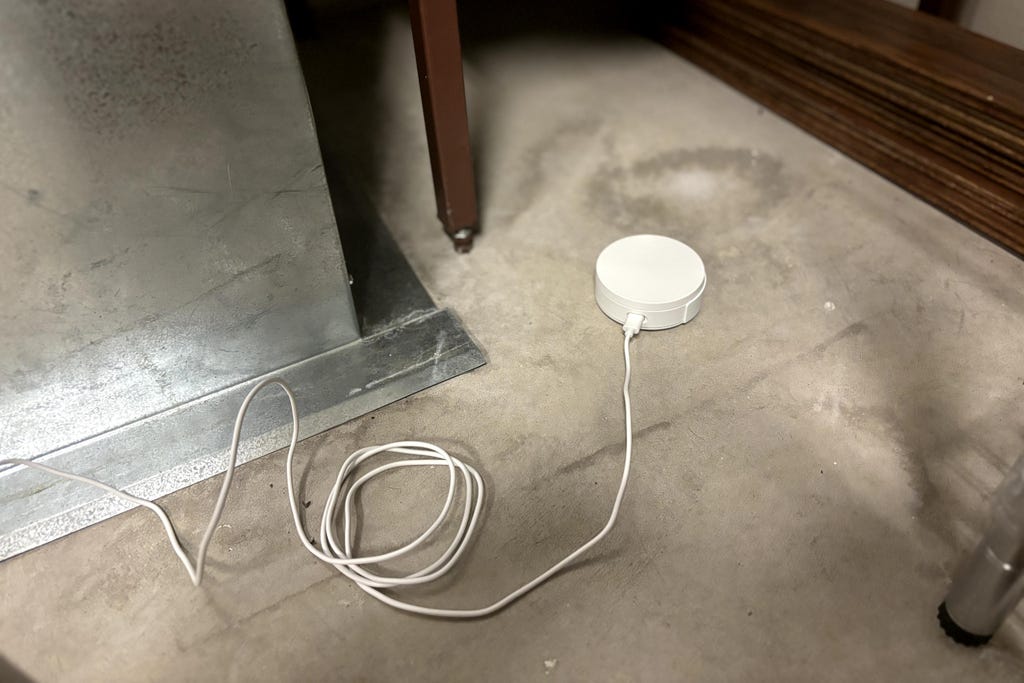
ADT's leak detector has snappy performance. Tyler Lacoma/CNET
Leak detectors are a particularly handy bit of home technology that can fit nearly anywhere and monitor the presence of water. If a leak occurs nearby, the water will complete the detector's circuit, and it'll send out an alert. (Some also have drip sensors on top.)
A leak detector can't stop frozen pipes from bursting, but it can give you a much-needed warning sign if they start leaking. Leak detectors can work where the leaks first begin -- like in crawlspaces, cabinets and closets -- and give you warning before significant damage occurs. That allows homeowners to quickly shut off their water and explore the problem. You may still face plumbing repair bills, but you can speedily stop the worst results.
Certain leak detectors go even further. One of my favorite models is this Eufy water and freeze sensor ($35). As long as you have a compatible Eufy hub, it can send you alerts that temperatures are dropping below freezing in certain parts of your home, letting you take action fast before pipes get damaged.
3. Set smart thermostats and use satellite sensors
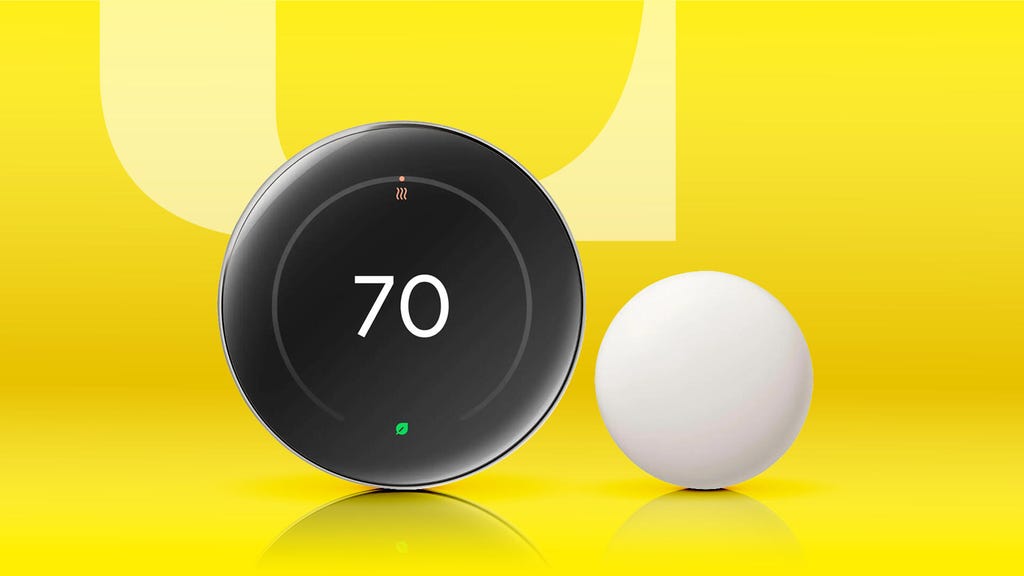
Nest's smart thermostat and many others use sensors that can detect temperatures anywhere in the house. Ecobee/CNET
Smart thermostats make an excellent upgrade to your home that can save you money, but they may also be able to help prevent frozen pipes. The problem is that some areas, especially basements, are harder to heat and it's more difficult for heated air to reach pipes. That typically means bumping the thermostat degrees up.
Ideally, basement areas and similar spots where frozen pipes are a problem should stay above 60 degrees Fahrenheit. That provides enough of a buffer to keep hidden-away pipes from reaching extra-freezing temperatures that can crack valves or burst pipes entirely.
Adjust your smart thermostat to create safeguards for the coldest parts of your home. Satellite sensors to detect temps far from the thermostat can be especially helpful here: My satellite sensor for my Google Nest Thermostat 4 resides in the coldest parts of my home to influence the thermostat to give a bit more heat when necessary. I may even move it underneath a sink if temperatures dip below 20 degrees (it's been a mild winter here so far).
4. Equip pipes with a smart water valve
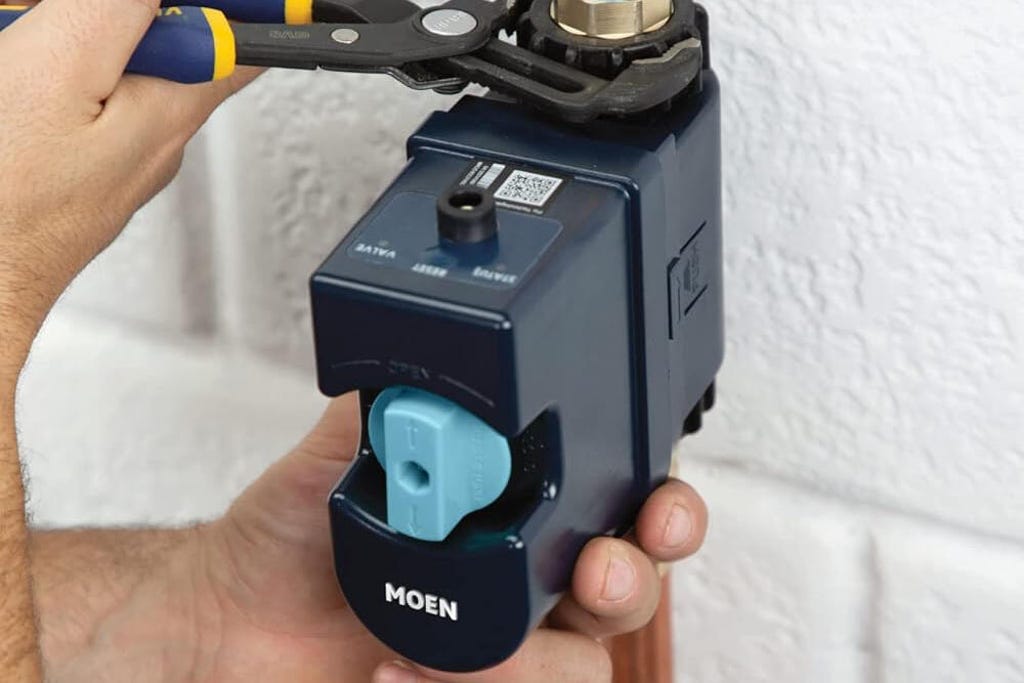
Smart valves can be expensive but can also automatically stop many leaking problems. Moen
If your winters regularly drop temperatures deep into the freezing digits, you may want to add another layer of protection to your plumbing system: a smart water valve. These valves sense when leaks or other problems occur; they can automatically shut off water to a section of plumbing or let you shut it off remotely with an app.
However, smart water valves can be expensive. High-end models, like this Moen valve monitor ($500), can learn water-use patterns and watch for abnormalities, but they'll cost you. Midrange models, like this EcoNet valve ($215), won't have as many options, but still have the ability to connect to a compatible leak detector. Budget models, like this Navitree valve ($35), are much more affordable but have limited to no sensors and no extra features.
This technology is fast improving, too. At CES 2026, we saw this Droplet model that can attach to pipes nearly anywhere and use ultrasonic sensors to watch for signs of sudden leaks and other problems. You can get one now for $200.
5. Install temp-sensing heat tape
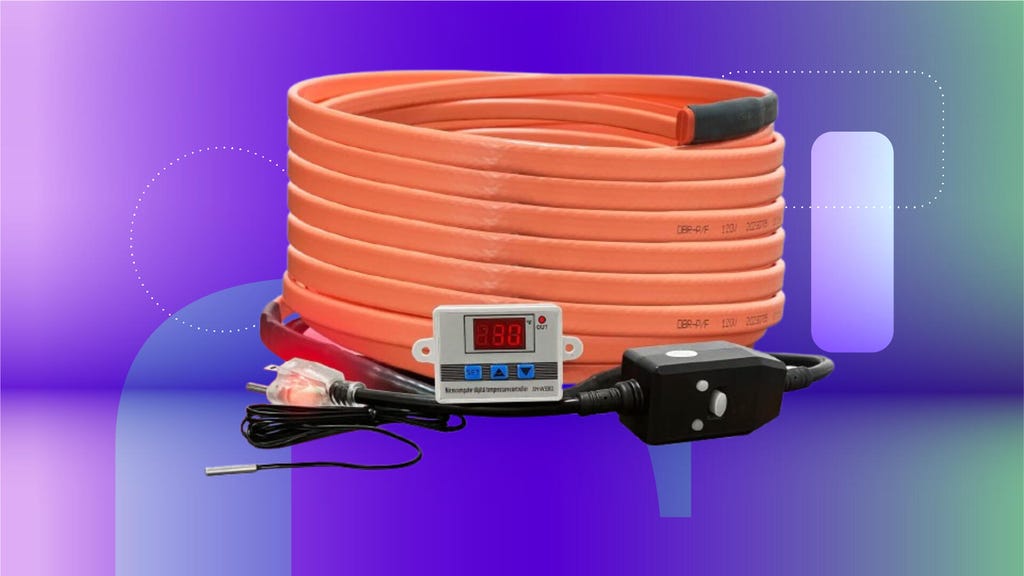
Heat tape and wrap is smart enough to only turn on when you need it, and can provide protection in especially cold areas. Cuphus
There's a final step you can take for guaranteed protection against frozen pipes, most suitable for those who have had frozen pipes before or who know that their neighborhood is susceptible. This involves installing heating cable and heating wrap along your vulnerable pipes so it can heat the pipes directly in the winter and keep the water from ever freezing again.
Heat wrap is fairly affordable -- this version costs $45 for 30 feet -- and surprisingly smart, including temperature sensors that you can set to trigger at specific temperatures to turn up the heat. They can work with metal or plastic pipes and valves.
For more winter safety info, take a look at how to fully weatherproof your internet, smart thermostat settings to use during winter, and our complete cold weather checklist.


