
 Search

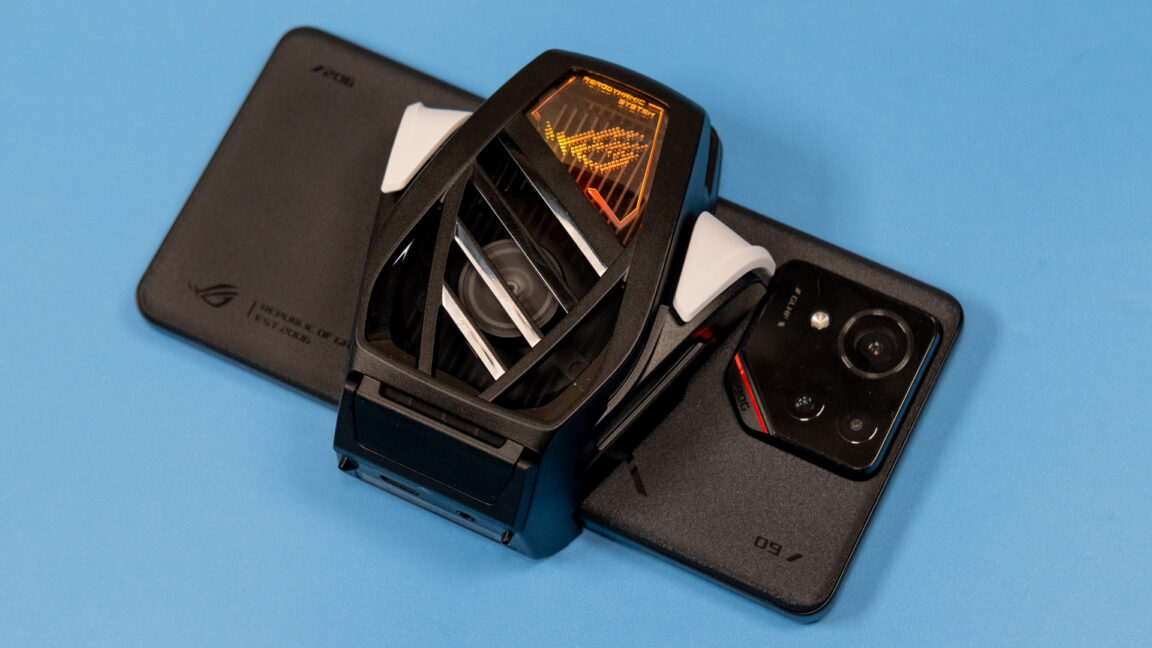
Credit: Ryan Whitwam
An unconfirmed report early this month suggested Asus was pulling back on its smartphone plans, but the company declined to comment at the time. Asus chairman Jonney Shih has now confirmed the wind-down of its smartphone business during an event in Taiwan. Instead, Asus will focus on AI products like robots and smart glasses.
Shih addressed the company’s future plans during a 2026 kick-off event in Taiwan, as reported by Inside. “Asus will no longer add new mobile phone models in the future,” said Shih (machine translated).
So don’t expect a new Zenfone or ROG Phone from Asus in 2026. That said, very few phone buyers were keeping tabs on the latest Asus phones anyway, which is probably why Asus is throwing in the towel. Shih isn’t saying Asus won’t ever release a new phone, but the company will take an “indefinite wait-and-see” approach. Again, this is a translation and could be interpreted in multiple ways.
The Zenfone line might not be missed—its claim to fame was being slightly smaller and cheaper than competing devices, but Asus’ support and update policy were lightyears behind the market leaders. The ROG Phone line has been prominent in the gaming phone niche, offering the latest chipsets with active cooling, multiple USB-C ports, game controller accessories, blinking lights, and even a headphone jack. However, ROG Phones are even more expensive than Samsung’s flagship devices, with the most recent ROG Phone 9 Pro starting at $1,200. Apparently, the market of those who aren’t happy gaming on the latest iPhone or Samsung Galaxy is miniscule.
Existing Asus devices should continue to get updates, but Asus never took the lead there. The lavishly expensive ROG Phone 9 Pro is only guaranteed two OS updates and five years of security patches. The most recent Zenfones are also only eligible for two Android version updates, but they get just four years of security support.
A tough business
Shih’s comments imply that Asus won’t get back into the phone game unless something changes, and that’s not likely. Asus is not the first OEM to drop phone plans, and this is a continuation of a trend that has been underway for years as people upgrade phones less often.
Asus used to be a major player in the Android device ecosystem, offering myriad phones, tablets, phones that turned into tablets, and tablets that turned into PCs (sort of). The rapidly expanding market and advancing technology in the late 2000s and early 2010s left room for companies like Asus to operate alongside bigger OEMs like Samsung and Apple. Those were the days when every smartphone preference was served, from keyboarded sliders, to devices with integrated projectors, to the flat slab phones that eventually won out.
Today, smartphones have become a mature technology, and there simply isn’t as much room for improvement year-to-year. Combine that with rising prices, and people are apt to keep their devices longer. The continued rise of Chinese OEMs like Vivo, Xiaomi, and Huawei also makes it more difficult for niche players—particularly those focused on markets outside the US—to earn money designing and manufacturing a new smartphone every year. And as soon as you stop doing that, other brands are faster and more well-supported when the time does come to pick up a new phone.
So far, no Android device maker that has taken a break from releasing phones has ever ramped back up. Just ask LG, which once traded blows with hometown rival Samsung in smartphones. LG’s mobile division lost money for years, leading it to scale back its release schedule in 2019. At the time, the company was adamant it would release new phones when it had a good reason. A few years later, LG’s mobile division called it quits.
The possible end of Asus phones further narrows the market, leaving phone buyers with fewer choices. That doesn’t matter to Asus, though, which is a company that exists to make money. While announcing an indefinite pause in smartphone releases, Shih also noted that the company saw a 26.1 percent increase in revenue for 2025, thanks in large part to a doubling of its AI server business. So Asus is focusing on that part of the market. Maybe that’s not the best long-term strategy, but neither is losing money on smartphones.

-
 C114 Communication Network
 -
 Communication Home
