
 Search

Nuon Medical
The floor of the Consumer Electronics Show (CES) in Las Vegas is often a cacophony of flashing screens and autonomous vehicles, but this year, a quieter revolution is taking place in the beauty tech sector. Nuon Medical is at the forefront of this shift, moving beyond the era of bulky handheld gadgets to a more integrated future: smart, active packaging.
Engineering the Point of Contact
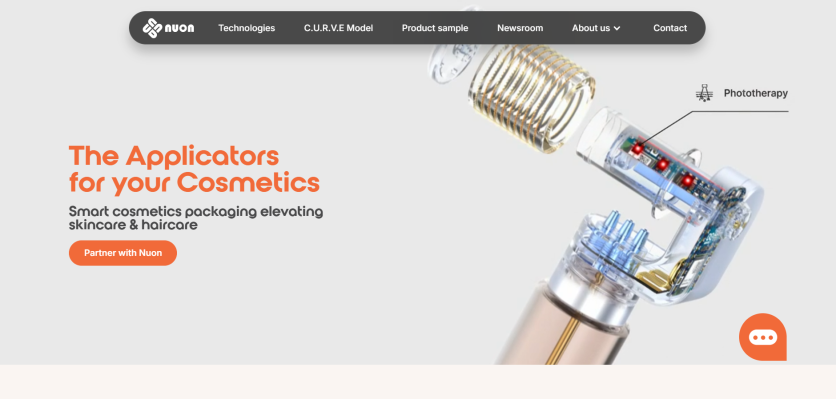
Nuon Medical does not manufacture cosmetics. Instead, they operate as a technology partner for global brands, transforming traditional jars and tubes into "intelligent delivery engines." Their presence at CES 2026 highlights a sophisticated ecosystem where sensing, treatment, and connectivity are embedded directly into the point of skin contact.
While many companies at CES focus on AI for the sake of novelty, Nuon's approach is rooted in medical device history. During an interview at their booth, the team emphasized their move from separate devices to integrated solutions.
"Last year, I was a car last year, but we are in OEM/ODMs, and our history is in medical device manufacturing," explained a staff member. "What we've done is we've taken those technologies—mostly heavy [phototherapy], vibration, heating, cooling, EMS, and microparts—and we've worked to integrate them into custom options that cosmetic companies can actually adapt into their packaging."
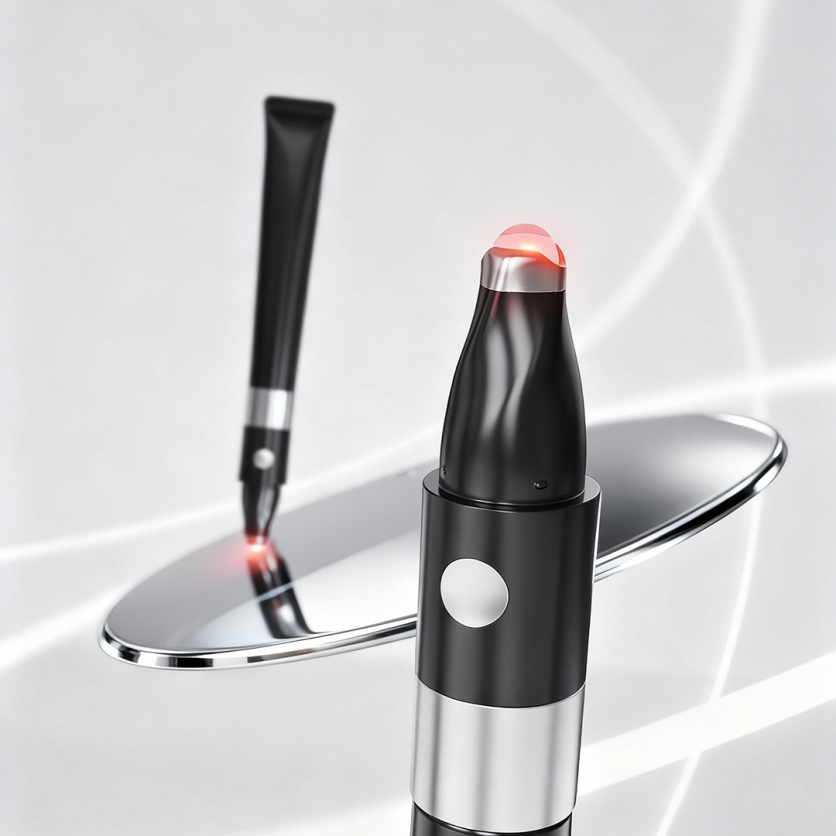
This "device-in-packaging" architecture aims to solve a common consumer pain point: the choice between a dedicated LED mask or a premium night cream. Nuon's technology allows the two to work in tandem.
Nuon Medical
The Five Pillars of Smart Beauty
Nuon's CES showcase is organized into five technology sectors designed to improve product performance:
- Phototherapy Area: Highlighting LED applicator heads with red and blue light therapy that work simultaneously with formula application.
- Skin Diagnostic Area: Utilizing bio-sensing tips that analyze hydration and texture to personalize skincare routines.
- UV Diagnostic Area: Featuring sensors that visualize invisible environmental risks, helping users improve their SPF compliance.
- NFC & Connected Packaging: Implementing digital systems for product authentication and usage tracking.
- At-Home Spa Area: Systems that combine thermal control and micro-vibration to maximize the absorption of skincare formulations.
A Critical Perspective on Quality Control
In a market flooded with inexpensive LED devices of questionable efficacy, Nuon's competitive edge lies in their manufacturing vertical. They do not buy components at auction; they manufacture their own LEDs to ensure specific wavelengths are met.
"One thing is we make all our own LEDs for phototherapy," the staff member noted. "So, we can guarantee that they're hitting the ranges they should be hitting. We don't buy bulk at auction, so we do have a rather rigorous control of the quality and making sure that we're using red lights for specific wavelengths."
However, the "positively critical" question remains: how will these sophisticated electronics impact the sustainability goals of the beauty industry? Nuon addresses this through a modular design philosophy. By turning a jar lid into a permanent treatment device that can be reused with formula refills, they argue that technology can actually drive a more sustainable, less disposable relationship with beauty products.
Looking Toward 2027
As the 2026 show continues, Nuon is already eyeing the next iteration of consumer-facing tech. Their design team works closely with brands to develop unique, brand-specific tools rather than "one-size-fits-all" gadgets.
When asked what to expect for CES 2027, the staff hinted at a more democratic approach to high-end diagnostics.
"Let's see a lot of new and a lot of new in skin analysis that is actually quite consumer-friendly, and we're hoping to have that all rolled out."
For an industry often criticized for making grand promises with little data, Nuon Medical's focus on "the logic of cosmetics"—clinical precision meeting everyday usability—might just be the most practical innovation on the CES floor this year.

-
 C114 Communication Network
 -
 Communication Home
