
 Search

Credit: Dell
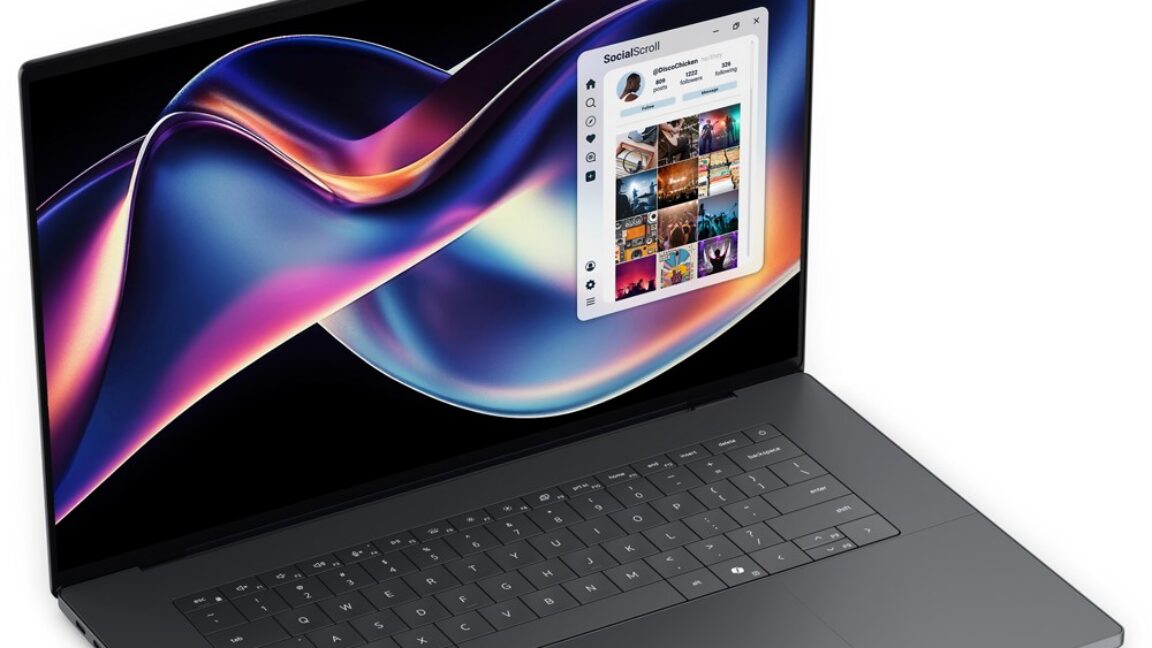
After making the obviously poor decision to kill its XPS laptops and desktops in January 2025, Dell started selling 16- and 14-inch XPS laptops again today.
“It was obvious we needed to change,” Jeff Clarke, vice chairman and COO at Dell Technologies, said at a press event in New York City previewing Dell’s CES 2026 announcements.
A year ago, Dell abandoned XPS branding, as well as its Latitude, Inspiron, and Precision PC lineups. The company replaced the reputable brands with Dell Premium, Dell Pro, and Dell Pro Max. Each series included a base model, as well as “Plus” and “Premium.” Dell isn’t resurrecting its Latitude, Inspiron, or Precision series, and it will still sell “Dell Pro” models.
This is how Dell breaks down its computer lineup now.
Credit: Dell
XPS returns
The revival of XPS means the return of one of the easiest recommendations for consumer ultralight laptops. Before last year’s shunning, XPS laptops had a reputation for thin, lightweight designs with modern features and decent performance for the price. This year, Dell is even doing away with some of the design tweaks that it introduced to the XPS lineup in 2022, which, unfortunately, were shoppers’ sole option last year.
Inheriting traits from the XPS 13 Plus introduced in 2022, the XPS-equivalent laptops that Dell released in 2025 had a capacitive-touch row without physical buttons, a borderless touchpad with haptic feedback, and a flat, lattice-free keyboard. The design was meant to enable more thermal headroom but made using the computers feel uncomfortable and unfamiliar.
The XPS 14 and XPS 16 laptops launching today have physical function rows. They still have a haptic touchpad, but now the touchpad has comforting left and right borders. And although the XPS 14 and XPS 16 have the same lattice-free keyboard of the XPS 13 Plus, Dell will release a cheaper XPS 13 later this year with a more traditional chiclet keyboard, since those types of keyboards are cheaper to make.
The XPS 14’s deck.
Credit: Dell
Dell’s about-face comes amid ongoing declines in its consumer PC revenue and global PC market share. It also represents a divergence in Dell’s messaging to computer shoppers.
Last year, Dell, as well as many other computer makers, committed to convincing people that they not only needed to buy a new computer but also a new “AI PC.” Corporate desire to leverage newly mainstream interest in AI to push PC sales was part of the reason Dell made new brand names for its 2025 computers.
“The AI PC market is quickly evolving,” Kevin Terwilliger, VP and GM of commercial, consumer, and gaming PCs at Dell, told reporters last year when announcing the new branding. “(E)veryone from IT decision makers to professionals and everyday users are looking at on-device AI to help drive productivity and creativity. To make finding the right AI PC easy for customers, we’ve introduced three simple product categories to focus on core customer needs,” he said.
But this week, as Dell unveils its ultralight laptop lineup, AI is taking a backseat.
“We’re getting back to our roots with a renewed focus on consumer and gaming,” Clarke said in a statement accompanying Dell’s announcement today.
Clarke holding the upcoming XPS 13.
Credit: Dell
The website for the new XPS laptops makes an obligatory nod to Microsoft’s Copilot+ PC program but is primarily focused on the computers’ thin build, low weight, battery life, and display. It seems Dell has accepted that these are the things that the average person cares about in their primary laptop, not the computer’s ability to run AI locally.
The XPS 14 launched today starting at $2,049, and the XPS 16 launched with a starting price of $2,200. A Dell spokesperson told Ars Technica that Dell will release additional configurations in February that are “well under $2,000.” Dell hasn’t shared final specs, pricing, or a release date for the 2026 XPS 13.

-
 C114 Communication Network
 -
 Communication Home
