
 Search

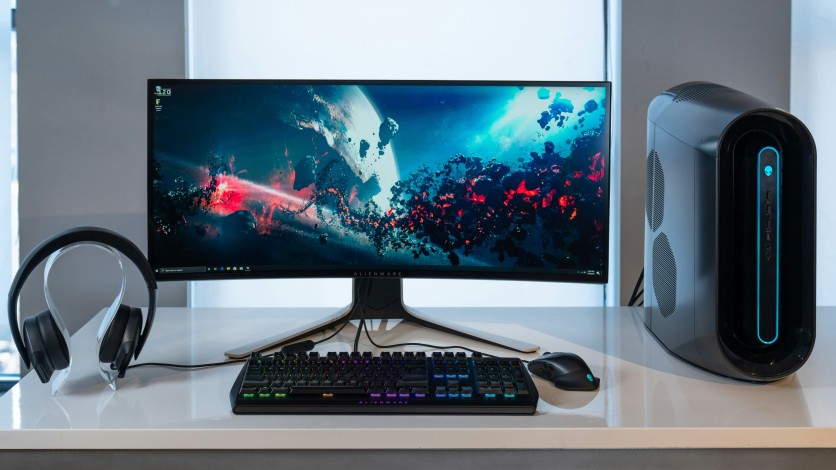
Alienware/Unsplash
Upscaling technologies have transformed modern gaming performance, allowing high-resolution visuals without the need for extreme GPU power. NVIDIA DLSS 3.5, AMD FSR 3.1, and Intel XeSS 1.3 reconstruct higher-resolution frames from lower internal render resolutions, delivering 2–4x FPS gains even in graphically demanding, ray-traced games. Each technology balances frame rates, visual fidelity, and latency differently, offering gamers multiple pathways to maximize gaming performance tech.
Selecting the right upscaler is critical for responsiveness and image clarity. DLSS emphasizes AI-powered temporal reconstruction and motion accuracy, FSR prioritizes cross-platform compatibility and low system requirements, and XeSS occupies a middle ground using Intel XMX cores or DP4a instructions. Understanding their technical foundations, benchmark performance, and hardware requirements helps gamers choose the optimal solution for FPS upscaling on any rig.
Technical Foundations of DLSS, FSR, and XeSS
DLSS, FSR, and XeSS rely on distinct technical approaches to deliver upscaled frames efficiently. DLSS employs dedicated Tensor Cores on NVIDIA RTX GPUs, using motion vectors and frame history to reconstruct high-resolution images with anti-aliasing and temporal coherence. FSR applies spatial reconstruction algorithms with optional temporal feedback, enabling wide GPU support across NVIDIA, AMD, and Intel devices. XeSS leverages Intel XMX cores or DP4a instructions for machine learning inference, with models pre-trained offline for real-time upscaling.
- DLSS Quality mode preserves approximately 70% more detail than FSR at native render resolution in blind testing across multiple titles.
- FSR 3.1 benefits from Radeon HYPR-RX optimizations, gaining 8–12% performance on AMD GPUs, while DLSS retains consistent cross-vendor parity via Tensor emulation.
- XeSS focuses on balancing frame generation and temporal stability, offering superior 1% lows on Arc GPUs compared with FSR's slightly higher average FPS.
- Hybrid upscaling modes do not exist; games like Cyberpunk 2077 enforce a single technology per session, though Path Tracing demos highlight exclusive DLSS Quality+ benefits.
Understanding these foundations clarifies why FPS gains and visual fidelity vary across titles, resolutions, and hardware platforms.
DLSS vs FSR vs XeSS Performance in Gaming Performance Tech
Benchmark testing highlights how each upscaler affects FPS, latency, and responsiveness. DLSS 3 with Frame Generation often delivers 25–40% higher FPS than FSR 3 at 4K Ultra settings, especially in motion-intensive scenes. FSR 3 Frame Generation narrows the gap to approximately 110 FPS but can introduce 10–15ms additional latency, while XeSS 1.3 generally trails FSR by 5–10% on non-Intel GPUs.
- Best FPS upscaling occurs with DLSS in fast-paced games like Cyberpunk 2077 RT Overdrive, achieving 120 FPS versus FSR2's 85 FPS.
- XeSS offers roughly 1.8x FPS uplift, while FSR 3 Frame Gen provides 2.1x uplift, though XeSS maintains slightly better frame consistency on Arc GPUs.
- Input lag analysis shows DLSS 3 Reflex + Frame Gen adds ~8ms at 4K144, compared to FSR 3's ~12ms, making DLSS more responsive for competitive play.
- Adjusting each upscaler's quality modes affects clarity: DLSS Quality mode retains more fine detail, while FSR's spatial reconstruction may soften textures.
For gamers, these comparisons highlight a trade-off between raw FPS, image quality, and responsiveness, guiding decisions depending on whether motion clarity or frame rate takes priority.
Read more: Gaming PC Build for 2026: Best PC Parts and High-Performance Tips for Next-Gen Gaming
Hardware Requirements and Compatibility Matrix
Accessibility of upscaling technologies depends heavily on GPU architecture, VRAM, and system support. DLSS 3 requires RTX 20-series or newer GPUs, whereas FSR 3 is compatible with a wide range, including GTX 10-series and older hardware. XeSS 1.3 requires GPUs with at least 4 vector ALUs, favoring Intel Arc cards but remaining functional on other GPUs via DP4a instructions.
- Best FPS upscaling at 4K generally demands 12GB+ VRAM for texture caching; FSR consumes ~20% less memory than DLSS due to simpler kernels.
- DLSS users benefit from Tensor Cores and motion-vector acceleration, while XeSS relies on XMX cores for ML inference or software fallback on other GPUs.
- FSR's broad compatibility makes it ideal for gaming performance tech accessibility across multiple generations of hardware.
- Selecting the right upscaler may hinge on GPU ownership: DLSS for RTX enthusiasts, XeSS for Arc users, and FSR for older or cross-vendor systems.
Hardware constraints ultimately determine which upscaler can deliver the highest FPS, lowest latency, and acceptable image fidelity for each individual setup.
Maximizing FPS with the Right Upscaler
DLSS vs FSR vs XeSS reveals a clear hierarchy in FPS upscaling performance and accessibility. DLSS leads in best FPS upscaling for RTX owners with superior motion handling and lower input lag, while FSR 3 dominates cross-platform compatibility and memory efficiency. XeSS sits in between, offering reliable performance and better frame consistency on Arc hardware but slightly lower raw FPS than FSR.
For gamers, choosing the right technology depends on hardware, performance goals, and priority between image fidelity and responsiveness. Future upscaling standards are likely to converge through open frameworks, but the current upscaling comparison favors ecosystem-specific optimizations for maximum frame rates. By understanding technical foundations, FPS gains, latency, and system requirements, gamers can maximize gaming performance tech across any rig.
Frequently Asked Questions
1. Which upscaling gives the best image quality?
DLSS Quality mode preserves significantly more detail than FSR or XeSS at similar resolutions. FSR may soften textures due to spatial reconstruction, while XeSS balances clarity and frame consistency. Gamers prioritizing fidelity often prefer DLSS on compatible hardware. Quality differences are most visible in motion-heavy sequences and high-resolution textures.
2. Does FSR work better on AMD GPUs?
Yes, FSR 3.1 gains 8–12% performance using Radeon HYPR-RX optimizations. DLSS maintains consistent performance across all vendors via Tensor emulation. XeSS can perform well on Intel GPUs but may lag slightly on NVIDIA or AMD cards. FSR is ideal for older or cross-vendor systems.
3. Can you mix upscaling technologies?
No hybrid modes exist; games enforce a single technology per session. Titles like Cyberpunk 2077 do not allow DLSS and FSR simultaneously. Path Tracing demos sometimes showcase DLSS-exclusive Quality+ benefits. Users must select one upscaler based on hardware and performance goals.
4. What's faster: XeSS or FSR 3?
FSR 3 Frame Generation delivers higher average FPS (~2.1x) compared to XeSS 1.3 (~1.8x). XeSS retains ~5% better 1% lows on Intel Arc hardware, giving smoother frame consistency. DLSS generally outpaces both in motion-heavy scenes. Performance varies depending on GPU and in-game resolution settings.
Read more: Graphics Card Market Stabilizes: GPU Pricing Trends and PC Hardware Outlook Explained

-
 C114 Communication Network
 -
 Communication Home
