
 Search


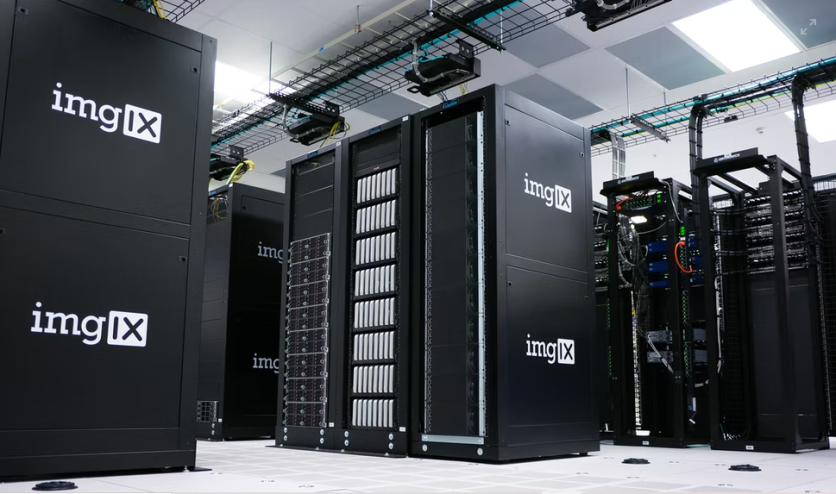
Data center Unsplash/imgix
KT Cloud announced on Thursday, Nov. 26, Seoul time (Wednesday, Nov. 25, ET) that it is joining Singapore-based asset manager Keppel as a partner on Ansan 2, a 60MW AI data center in Ansan, South Korea, but reports from four Korean outlets do not disclose KT Cloud's stake, its lease terms or how much of the 60MW can reach servers. That gap matters because Korean reports give the 60MW as receiving capacity, a grid-supply figure that is separate from the power servers use, and anyone sizing KT Cloud's planned 110MW Ansan campus needs to know how much of it servers can actually use.
KT Cloud Says It Is Keppel's Partner in Ansan, but No Stake, Tenant or Terms Appear in Reports
Ansan 2 would sit in Gyeonggi Province, within the Seoul Metropolitan Area, about 2.5 km (1.6 miles) from Ansan 1, the 50MW site KT Cloud is already building. KT Cloud said construction is set to begin in November, with service targeted by 2030, in a building of about 52,622 m² (566,000 sq ft) with two basement levels and eight above-ground floors. The company said liquid-cooling infrastructure will serve every floor.
Keppel's side of the project predates the announcement. On June 9, Keppel said its private fund, Keppel Data Centre Fund III, had secured land for a 60MW greenfield data center in Ansan, its entry into the Korean market, with construction permits and power approvals already in hand. Keppel said the fund would acquire an effective stake of about 73% in the vehicle that owns the land, with developer Shinyoung, NH Securities and Hyundai E&C holding the remainder. Keppel named no anchor tenant, listed hyperscalers, cloud providers and corporates as target customers, and did not mention KT Cloud in that release. The two companies' descriptions line up on size, location, the 2030 service target and the project being Keppel's first in Korea, so the two appear to be the same project, though Keppel has not confirmed KT Cloud's role.
Reports from AI Times, Smart Biz, Sidae and Seoul Economic Daily do not disclose ownership terms, investment amounts or lease structure for KT Cloud. Sidae describes the plan as pairing KT Cloud's self-built Ansan 1 with an outside investor's center. KT Cloud is a design-build-operate partner at Gunsan and holds the same role at Cheongna, but its role at Ansan 2 is not specified.
How Much of 60MW Grid Intake Can Servers Actually Use?
Korean reports give the 60MW as receiving capacity, a grid-supply figure, not the power available to servers. Servers use only the IT load. Cooling, power-delivery losses and other overhead sit on top of it, which is why operators track power usage effectiveness, or PUE: total facility energy divided by the energy reaching computing equipment, with 1.0 as the ideal.
Ansan 1 shows the gap. CJ Logistics' construction division, which won the Ansan 1 build, announced the building has 50MW of receiving capacity and a 32MW IT load, so the IT load is 64% of receiving capacity. The contract, reported at 315 billion won (approximately $234 million USD), covers a roughly 38-month build of a 36,878 m² (397,000 sq ft) building with two basement levels and nine above-ground floors, due in 2029.
Applying that 64% ratio to Ansan 2 would put its server load near 38MW and the combined campus near 70MW, not 110MW. That is a TechTimes calculation, not a figure either company reported, and Ansan 2's ratio could differ. Ansan 2 also has less grid intake per unit of floor area than Ansan 1: about 106 watts per square foot against 126 watts, roughly 16% lower, and the reports do not say why. None of them gives a PUE or IT load for Ansan 2.
Read more: LG Uplus Paju AI Data Center Phase 3 Wins $592 Million Approval, Lifting Total Past $2 Billion
Liquid Cooling on Every Floor Targets Racks Far Denser Than Typical Data Halls
Direct-to-chip liquid cooling mounts cold plates on processors so circulating liquid carries heat away at the source. In NVIDIA's liquid-cooling design for AI factories, the coolant is 75% water and 25% propylene glycol, enters at up to 45°C (113°F) and exits at roughly 55°C (131°F).
The density gap explains the design. Uptime Institute's 2026 Global Data Center Survey puts the most common rack density at 11 kW, with an average of 7.8 kW excluding facilities built above 30 kW. Lenovo's guide lists a Vera Rubin NVL72 rack at up to 227 kW, with about 96% of its heat going to liquid and about 4% to air. Air cooling usually handles up to about 23 kW per rack.
Liquid cooling has costs. Leaks can destroy electronics, and the plumbing adds complexity and maintenance. An Uptime Intelligence opinion piece from January said direct liquid cooling remains concentrated where air cooling is no longer a practical alternative, with unresolved operational issues still hindering wider adoption. The reports on Ansan 2 do not name the coolant type, rack density or accelerator generation. By contrast, KT Cloud said its Gunsan design, with liquid cooling on all floors, can accommodate Nvidia's Vera Rubin accelerators.
Only 10 of 522 Seoul-Area Grid Applications Won Final Approval, CBRE Korea Data Shows
Power access is the reason a site with approvals in hand carries weight. According to CBRE Korea data reported by Hankyung, applications for the first technical review of Seoul-area grid impact assessments totaled 522 through March, and 10 projects had won final approval to receive power, a 1.9% rate. Keppel cited a Seoul-area vacancy rate of 1.4% (JLL, March 2026) with the 2025 to 2027 pipeline fully pre-leased, and said recent regulations restrict power applications for projects over 10MW.
The rule behind those numbers is South Korea's Power Grid Impact Assessment, which applies to users of 10MW or more. The Ministry of Climate, Energy and Environment announced draft operating rules on July 9, and the draft sets a data center passing score of 75 points in the capital region against 70 elsewhere, according to law firm Kim & Chang.
KT said on July 6 that it would expand Seoul-area AI data center capacity first at existing sites where permitting and power supply are already resolved, and that outside the capital region it would secure tenants before building, according to Newsis. The reports on Ansan 2 do not say whether power access drove KT Cloud's partner structure.
KT Cloud's 1GW Goal Leaves About 800MW to Pipeline Sites and Partners, With 80% Planned as Leased
At its Sept. 15 summit, KT Cloud said it would supply more than 1GW at about 20 sites by 2031, with about 200MW secured and a roughly 1.1GW land pipeline for the remaining 800MW. Sidae reports that KT Cloud expects the rest to come from partnerships with investors, construction firms and other operators. Parent company KT earlier said it would invest 5 trillion won (approximately $3.7 billion USD) over five years in AI data centers.
On KT's Nov. 10 earnings call, Bong-gyun Kim, head of KT Enterprise, said about 80% of the planned 1GW would be leased and 20% owned, on top of 152MW today. Korea Herald reported that KT Cloud describes Ansan 1 as a facility it owns and operates. Whether Ansan 2 counts as leased capacity is not stated.
Other named projects show where KT Cloud acts as partner. At Gunsan it is the design, build and operate partner on SGC Energy's 60MW first phase, expandable to 300MW and targeted for operation in the first quarter of 2028. At Cheongna in Incheon it holds the same role on a 50MW site due in the first quarter of 2030.
Neither Company Names Any Tenant, and Keppel's June Release Omits KT Cloud
Keppel named no anchor tenant in June, and the reports on KT Cloud's announcement name none either. KT Cloud CEO Kim Bong-gyun said the combined Ansan campus will support customers' phased expansion, and that an AI data center's competitiveness lies in on-time delivery matched to real demand and stable operation rather than scale alone. Ajunews argued in September that construction starts, customer contracts and utilization, not announcements, will decide whether KT's shift to AI infrastructure succeeds.
Timing also splits the campus. Ansan 1 is slated for completion in 2029 and Ansan 2 for service by 2030, so the 110MW will not arrive at once. For anyone weighing KT Cloud capacity, three numbers decide what the campus is worth: Ansan 2's server load, KT Cloud's ownership or lease terms and the tenants signed. Until those appear, the 110MW is a measure of grid intake rather than server capacity, and if Ansan 1's ratio holds it translates to roughly 70MW of servers.
Exchange rate as of Nov. 25, 2026; conversions are approximate.
Frequently Asked Questions
What is the difference between grid intake and server load at a data center?
Grid intake, called receiving capacity in Korean reports, is the amount of power a facility is set up to receive from the grid. Server load, or IT load, is the part that reaches computing equipment; cooling and power-conversion overhead make up much of the difference, and PUE expresses total facility energy as a multiple of IT energy. For Ansan 1, CJ Logistics reported 50MW of receiving capacity and a 32MW IT load. Ansan 2's IT load has not been reported.
When will KT Cloud's Ansan data centers open?
KT Cloud targets 2029 completion for Ansan 1. For Ansan 2, it said construction is set to begin in November and service is targeted by 2030.
Why does KT Cloud use liquid cooling on every floor of Ansan 2?
KT Cloud says the liquid cooling is meant to meet demand for high-density, high-heat AI servers. A Vera Rubin NVL72 rack is listed by Lenovo at up to 227 kW, far above the 11 kW most common rack density in Uptime Institute's 2026 survey, and air cooling usually handles up to about 23 kW per rack. The reports do not name the accelerator generation planned for Ansan 2.
Has Keppel named KT Cloud or a tenant for its Ansan data center?
No. Keppel's June 9 release names neither KT Cloud nor a tenant. KT Cloud's announcement describes it as a partner in Keppel's first Korean data center development, and no ownership terms have been disclosed.

-
 C114 Communication Network
-
 Communication Home
