
 Search


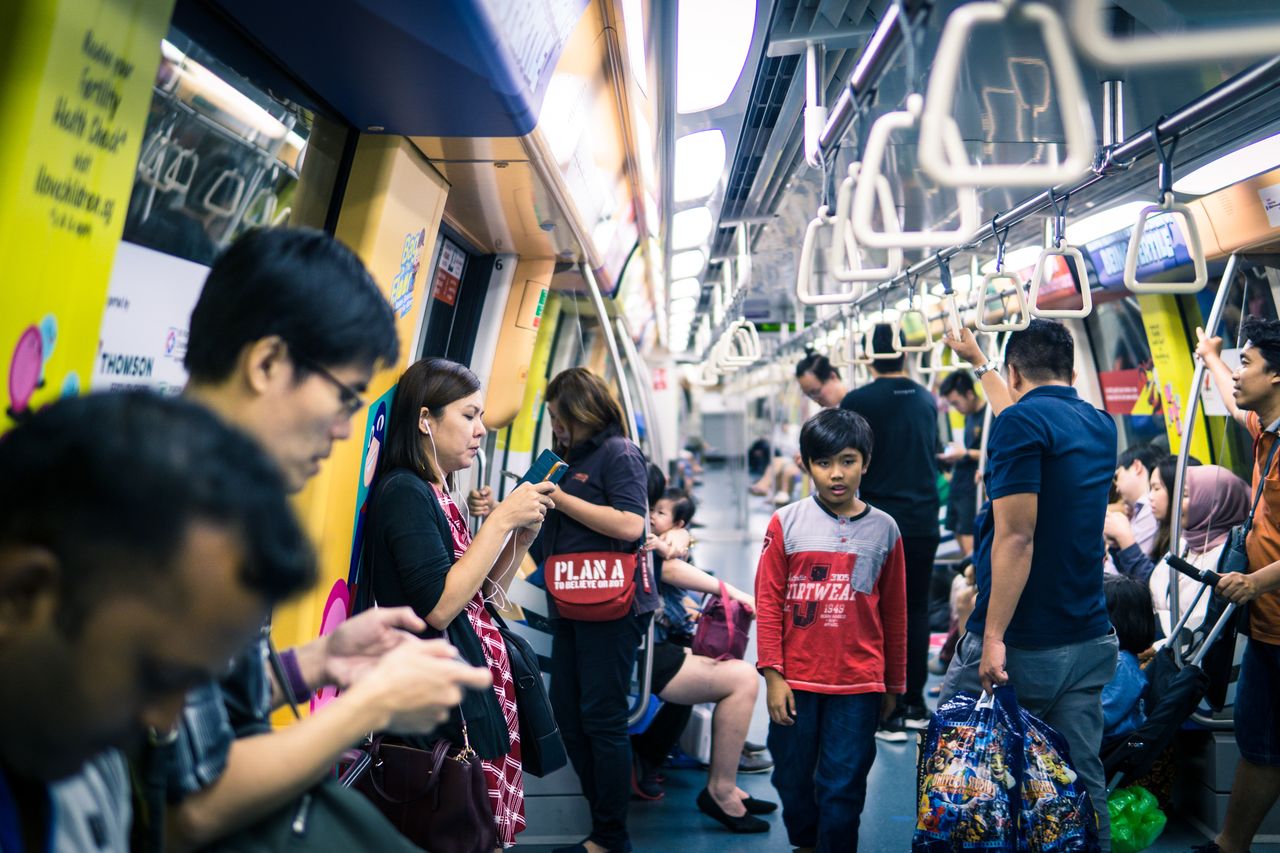
(Source: Kit Suman on Unsplash)
StarHub and M1 have signed definitive agreements for an all-share merger worth 1.1 billion Singapore dollars (US$851.88 million). The announcement was made on Tuesday when StarHub revealed in a separate stock exchange filing that it was exercising its option to acquire the Singapore operations of mobile virtual network operator (MVNO) Circles Life.
The proposed merger of StarHub and M1, coupled with StarHub's acquisition of Circles Life Singapore, would be a significant turning point for Singapore's telecom industry. If the deal secures all the necessary approvals, it would mark the end of a three-decade era of market liberalization that led to a hyper-competitive four-player market.
Too many players in a small market
For years, the city state's mobile landscape has been shaped by a clear imbalance: Singtel sits comfortably at the top with around 43% of mobile subscribers, while M1, StarHub, and Simba have jostled for the remaining market, holding roughly 22%, 21%, and 14% respectively – a fragmented group of smaller rivals trailing the dominant incumbent.
Although consumers benefited from some of the cheapest mobile data rates in the world, the presence of four physical networks and around a dozen MVNOs in a small market of approximately six million people resulted in a severe "race to the bottom."
With MVNOs offering contract-free, SIM-only plans with massive data bundles, average revenue per user (ARPU) and profit margins fell steadily across the board, even as telcos faced heavy capital expenditure requirements to roll out nationwide 5G networks.
"That chapter is now closing. Four operators competing for the same mature market will no longer deliver the infrastructure Singapore needs next, and consolidation is the answer," said StarHub CEO Nikhil Eapen. "Bringing StarHub and M1 together is how two challengers become a builder of Singapore's digital future. Singapore's next decade will be shaped by the agility, quality and resilience of the digital infrastructure beneath it. We intend to build it."
According to the two companies, their combined entity will have greater scale and cash flow, allowing them to invest in 5G and other technologies, such as fiber, cloud and cybersecurity. It will also enable them to improve customer service and provide differentiated networks.
Furthermore, a potential merger between StarHub and M1, coupled with the acquisition of Circles Life, would result in the formation of a new entity with a customer base of over 4.1 million, placing it on a par with Singtel in terms of mobile subscriber share.
The proposed deal of StarHub and M1 is expected to be completed by the first half of 2027, subject to regulatory approval from the IMDA and the Ministry of Digital Development and Information. The deal also requires the approval from StarHub and M1 shareholders at separate extraordinary general meetings.
StarHub expects to finalize the acquisition of Circles Life Singapore alongside the planned combination with M1.
StarHub and M1 will continue to operate and compete independently until the transaction is completed. According to the two companies, customers will retain their existing plans, services and points of contact.
Key details of the deal
StarHub will issue around 651.7 million new shares to M1's shareholders, accounting for around 27.4% of StarHub's increased share capital. Through its interest in M1's shareholders, Keppel will effectively hold 23% of this interest, while the remaining 4.4% stake will be held by M1’s other shareholders.
StarHub will take on up to S$380 million ($294.28 million) of M1's net debt. The companies project S$110 million ($85.19 million) in annual run-rate cost synergies by 2030. Annual run-rate cost synergies refer to the recurring yearly expense savings a combined company expects to achieve once all post-merger integration or restructuring plans are fully in place.
Keppel, the Singapore-based global asset manager, has committed to holding onto its shares for at least 12 months to support the integration process. The company noted that an all-share transaction would enable the combined entity to preserve cash for integration and growth purposes while allowing Keppel to benefit from the transaction's potential upside.
While retaining a 23% stake in the combined entity during the transition, Keppel said that its deal with StarHub provided a clear path to unlock capital from a non-core business.
"This is a two-stage divestment. First, through the proposed transaction, Keppel will deconsolidate M1, including an expected S$324 million ($250.92 million) of net debt, 10-15% of which will be included in the computation of the Company's special dividends when the transaction is completed. The next stage is when Keppel's shares in the combined entity are monetized in future, which will also be added to the consideration for special dividends," the company said in a statement on Tuesday.
The proposed StarHub-M1 merger offers a sense of stability after months of uncertainty, following the collapse of Keppel's S$1.4 billion ($1.08 billion) sale of M1 to Simba in May 2026 – a deal that was halted after the IMDA launched an investigation into Simba's alleged unauthorized use of spectrum.

-
 C114 Communication Network
-
 Communication Home
