
 Search

gettyimages.com
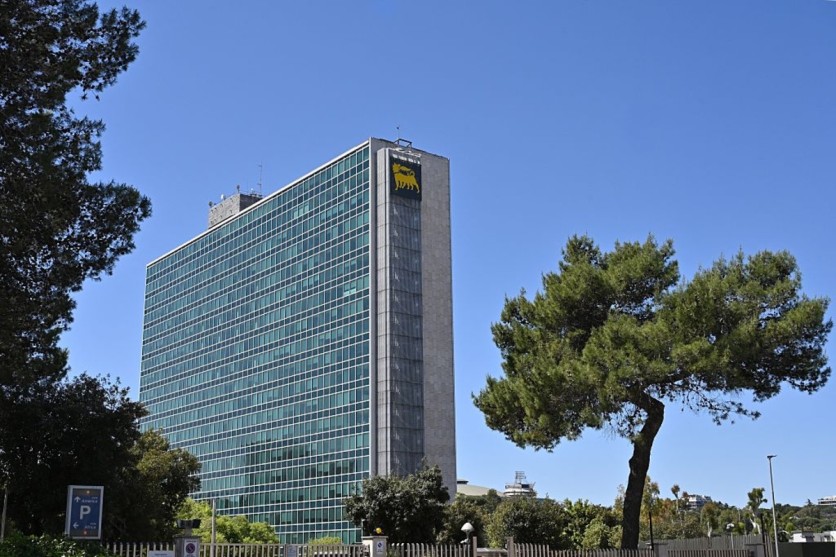
Italian energy giant Eni today opened its combined HPC6 and HPC7 supercomputing infrastructure — the world's most powerful high-performance computing platform operated by any private industrial organization — to outside companies, startups, and research institutions for AI development work. The move marks the first time a non-government, non-national-lab entity has offered exascale-class compute access as an external service, and it arrives five days before a key deadline under the EU AI Act — the date on which Article 50 transparency obligations requiring AI systems to disclose synthetic content take effect — a regulatory moment that is concentrating European minds on exactly the kind of sovereign infrastructure Eni is now offering.
What "Exascale" Means: Why Eni Got There First Among Industry
The word "exascale" gets used loosely in technology coverage, so it is worth stating precisely what Eni has accomplished. An exascale system delivers at least one exaflop — 10¹⁸ floating-point operations per second — of sustained performance on the standard Linpack benchmark. To put that in terms a programmer can picture: a 70-billion-parameter language model in 16-bit precision holds roughly 140 gigabytes of weights. Moving those weights from CPU memory to GPU memory over a standard PCIe 5.0 bus takes approximately two seconds per pass. On Eni's architecture, that two-second penalty disappears.
Until the June 2026 TOP500 list, every confirmed exascale system in the world was a national laboratory or government-funded facility: Frontier and El Capitan in the United States, Aurora at Argonne, JUPITER at Jülich in Germany. Eni's HPC7, commissioned in June 2026, entered that list at number six globally and second in Europe. Its predecessor, HPC6, launched in November 2024 and holds the eighth position. Combined, HPC6 and HPC7 deliver 1,048 petaflops (approximately one exaflop) of sustained performance and 1,467 petaflops of peak performance.
No private industrial company — in energy, aerospace, chemicals, pharmaceuticals, or finance — had previously crossed that line.
Read more: ISC High Performance 2026 Opens: Post-Moore HPC Faces Open-Source Reckoning
Inside HPC7's Architecture: Why AMD MI300A Changes AI Training Economics
HPC7's technical story begins at the node level. The system is built on HPE's Cray EX255a platform with 3,480 compute nodes, each containing four AMD Instinct MI300A Accelerated Processing Units (APUs).
The MI300A is not a conventional GPU. It is an APU — a device that integrates 24 AMD EPYC Zen 4 CPU cores, 228 CDNA3 GPU compute units, and 128 gigabytes of HBM3 (High Bandwidth Memory 3) per unit onto a single silicon package. Each node therefore carries 96 CPU cores, 912 GPU compute units, and 512 GB of HBM3 memory — all sharing the same memory pool with no PCIe transfer required.
This matters enormously for AI training. In a standard cloud GPU instance, the CPU and GPU have separate memory pools connected by a PCIe 5.0 link — fast, but still a bottleneck when large model checkpoints need to move back and forth. HBM3 on the MI300A delivers aggregate memory bandwidth of roughly 5.3 terabytes per second per APU, accessible simultaneously by both CPU and GPU logic. For large language model training runs that iterate over billions of parameters multiple times per step, eliminating that PCIe handoff is not a minor optimization — it changes what workloads are economically feasible.
HPC7's 3,480 nodes connect via HPE Slingshot-11 fabric at 200 gigabits per second per link, arranged in dragonfly topology. Dragonfly interconnects minimize the number of network hops between any two nodes in a large cluster, which is critical for the AllReduce operations that synchronize gradient updates across GPUs during distributed training. Standard cloud GPU clusters use InfiniBand or Ethernet at nominally similar speeds but with shared bandwidth in multi-tenant environments; Eni's fabric is dedicated.
Total node count: 3,480. Total HBM3 memory across the system: approximately 1.78 petabytes. The system runs Red Hat Enterprise Linux 9 and has a maximum power draw of 9.4 megawatts including cooling and supporting infrastructure.
Green Machine: HPC7 Ranks 11th Globally on Energy Efficiency
Eni has positioned sustainability as a structural feature of the platform rather than a marketing footnote, and the Green500 ranking backs that claim. HPC7 achieved 65.426 gigaflops per watt, placing it eleventh globally in the Green500 and first among machines in its performance class. Both HPC6 and HPC7 sit inside Eni's Green Data Center in Ferrera Erbognone, in the province of Pavia in northern Italy — approximately 40 kilometers (25 miles) south of Milan.
The Green Data Center spans approximately 5,200 square meters (about 55,972 square feet). It is partly powered by a 1-megawatt photovoltaic plant built on adjacent industrial land, and for at least 92 percent of the year the machines are cooled by outside air circulated at low speed — a free-cooling design made feasible by the facility's northern Italian climate — with direct liquid cooling handling 96 percent of the heat generated during the periods when active cooling is required.
For European organizations under pressure to meet Scope 2 emissions targets, the energy efficiency credentials of the compute platform they train on are becoming a procurement consideration, not just an afterthought. A Power Usage Effectiveness ratio of 1.2 — Eni's stated figure for the Green Data Center — is at the top of what large-scale HPC facilities achieve globally.
Read more: NVIDIA Vera Rubin Supercomputer: One Rack, TOP500 Power, 35 European Labs Now Deploying
Eni's Inaugural Partners: What Each Reveals About Target Use Cases
Among the first organizations to join the initiative, Eni named Domyn, Mercuria, Dompé, Almawave, Reply, and the Bruno Kessler Foundation. Additional companies, research centers, and institutions will be able to apply through project proposals of mutual interest.
The partner list is worth reading as a signal of the use cases Eni is targeting. Mercuria is one of the world's largest independent energy and commodities trading firms, where AI is increasingly applied to market simulation, logistics optimization, and price forecasting at scale — workloads that can be prohibitively expensive on cloud infrastructure billed by the GPU-hour. Dompé is an Italian pharmaceutical company with a documented AI-driven drug discovery practice; molecular dynamics simulations and protein folding runs are among the most compute-intensive workloads in life sciences. Almawave and Reply represent Italy's enterprise AI services sector, while the Bruno Kessler Foundation, one of northern Italy's most prominent research institutions, lends academic credibility to the initiative.
Domyn, the least publicly prominent name, is the pure-play AI startup representative — precisely the category of organization that faces the steepest practical barriers to accessing frontier compute through conventional cloud channels: GPU instance queues, cost unpredictability, and multi-tenant performance variability.
Eni Is Not a Hyperscaler: Why That Distinction Matters for Sovereignty
The framing Eni has applied to this initiative is "digital sovereignty," and the word choice is deliberate. But the sovereignty argument runs deeper than server geography.
European organizations that train AI models on AWS, Azure, or Google Cloud face a structural conflict that does not disappear even when those providers operate EU-sovereign cloud offerings. The operator of the infrastructure also competes in the market for AI models and AI services. Every training run on that infrastructure generates metadata — utilization patterns, checkpoint sizes, job durations — that the infrastructure provider can, and in some cases must, retain. More fundamentally, all three US hyperscalers are subject to the US CLOUD Act, which allows US law enforcement to compel disclosure of data stored on servers operated by US companies, regardless of where those servers are physically located.
Eni does not have a foundation model business. Eni does not sell AI services in competition with the startups that would use its infrastructure. Eni has no secondary business interest in the model weights trained on its hardware. That structural absence of conflict is not something an AWS European Sovereign Cloud or an Azure Netherlands region can replicate — it is an inherent property of having an industrial company, rather than a technology platform company, as the compute provider.
The Alice Labs EU AI Infrastructure Report (June 2026) identified three requirements that European organizations consistently name for sovereign compute options: contractual IP ownership, EEA data residency, and access to an operator that does not commercialize their data. Eni's positioning implicitly addresses all three.
European startups and research institutions currently build almost entirely on US-based cloud infrastructure because no domestic alternative existed at frontier scale. That is changing: the EuroHPC Joint Undertaking now oversees 19 AI Factories across Europe, including the HammerHAI facility in Germany and others offering GPU-hour access to startups with approval times as short as four days. What Eni's offering adds is exascale-class, dedicated, industrial-grade capacity outside the public-sector procurement framework — available to organizations whose workload requirements or competitive sensitivity make a government-operated cluster an awkward fit.
Eni's Strategic Logic: Monetizing Latent Capacity
For Eni, the business case for opening the infrastructure externally has two components, and both are explicit in the company's communications. The first is straightforward: the infrastructure has excess capacity relative to Eni's own workloads, and monetizing it through AI services generates returns that help justify the capital expenditure. The second is more strategic: building an external innovation ecosystem around Eni's computing platform deepens the company's expertise in AI applications, attracts partners whose work may be relevant to energy transition use cases, and positions Eni as a digital innovation hub that extends beyond the energy sector.
Since 2013, when it opened the Green Data Center, Eni has developed in-house HPC expertise applied to seismic data processing, subsurface modeling, industrial plant optimization, geological fluid dynamics for CO₂ storage, and advanced energy technologies. That operational experience — running some of the world's most demanding industrial simulation workloads at sustained exascale performance — is itself a form of value that an external partner accessing cloud GPU instances does not inherit. Eni's team knows how to tune these machines for real workloads.
The company has previously offered limited external access through its Call4Innovators program. Today's announcement formalizes and significantly expands that model, moving from curated one-off engagements to an ongoing AI-services offering.
What Makes This Moment Timely: Europe's AI Infrastructure Inflection
Eni's announcement lands at a moment of unusual convergence in European AI infrastructure policy. The EU AI Act's Article 50 transparency obligations take effect August 2, 2026 — five days from today — creating compliance pressures that increase the premium on compute operated under EU legal frameworks. The EuroHPC Joint Undertaking's mandate was expanded to include AI Gigafactories, potentially equipped with roughly 100,000 advanced processors each. A deeptech.build analysis estimated cumulative European data center investment at approximately €176 billion (approximately $201 billion USD) between 2026 and 2031.
Into this expanding landscape, Eni's initiative introduces a model that no government program and no hyperscaler can replicate: an exascale platform built and operated for industrial use cases, opened to external partners by an organization with 13 years of in-house HPC operations and no competing AI-product business. Other large industrial organizations — in aerospace, automotive, chemicals, and financial services — that have invested in proprietary HPC capacity may find the model worth emulating.
For European AI startups evaluating their compute strategy, Eni's infrastructure now represents a concrete third option alongside hyperscaler clouds and EuroHPC public access: dedicated exascale capacity, European data residency, no secondary-business-interest conflict, and an operator whose core expertise is running exactly the kinds of sustained, large-scale scientific and industrial workloads that frontier AI model training resembles more than it resembles web server traffic.
Frequently Asked Questions
What is an exascale supercomputer, and why does it matter for AI?
An exascale system delivers at least 10¹⁸ floating-point operations per second — one quintillion calculations every second. That threshold matters for AI because the largest modern foundation model training runs now require more than a petaflop-day of sustained compute, and reducing training time from weeks to days requires either more GPUs or more efficient data movement between them. Exascale systems like Eni's HPC6+HPC7 combination achieve this through architectural choices — unified CPU-GPU memory, dedicated high-bandwidth interconnects — that cloud GPU instances replicate only imperfectly. The result is that workloads that are technically feasible on cloud infrastructure but economically prohibitive become tractable on dedicated exascale hardware.
How do Eni's HPC6 and HPC7 compare to other supercomputers?
In the June 2026 TOP500 global ranking, HPC7 alone sits at number six worldwide and second in Europe, with 861 petaflops of peak performance. The five systems above it — China's LineShine, El Capitan, Frontier, Aurora, and JUPITER Booster — are all operated by national supercomputing centers or government laboratories. Combined, HPC6 and HPC7 deliver over 1,048 petaflops of sustained performance, making Eni the industrial organization with the world's greatest supercomputing capacity.
Can any AI startup access Eni's supercomputing infrastructure?
Eni's announcement specifies that additional organizations will be able to join over time through project proposals of mutual interest. The initial six inaugural partners — Domyn, Mercuria, Dompé, Almawave, Reply, and the Bruno Kessler Foundation — were named at launch. The access model differs from a public cloud: Eni will provide access through AI services rather than self-service GPU provisioning, and entry appears to require a project proposal rather than a credit card. This makes it better suited to organizations with specific, sustained AI development needs than to teams running exploratory experiments.
If cloud providers already offer "European sovereign" options, why does it matter that Eni is Italian?
The structural difference is not server location — it is the operator's business model. US hyperscalers subject to the CLOUD Act can be compelled to disclose customer data to US authorities regardless of where the servers sit. More practically, AWS, Microsoft, and Google all compete in AI model markets. Eni does not. An organization training a proprietary pharmaceutical discovery model or a trading algorithm on Eni's infrastructure is working with an operator that has no business interest in the model weights being produced. That is a structurally different risk profile from training on infrastructure operated by a company that sells competing AI services — regardless of what sovereign-cloud contractual terms say.

-
 C114 Communication Network
 -
 Communication Home
