
 Search

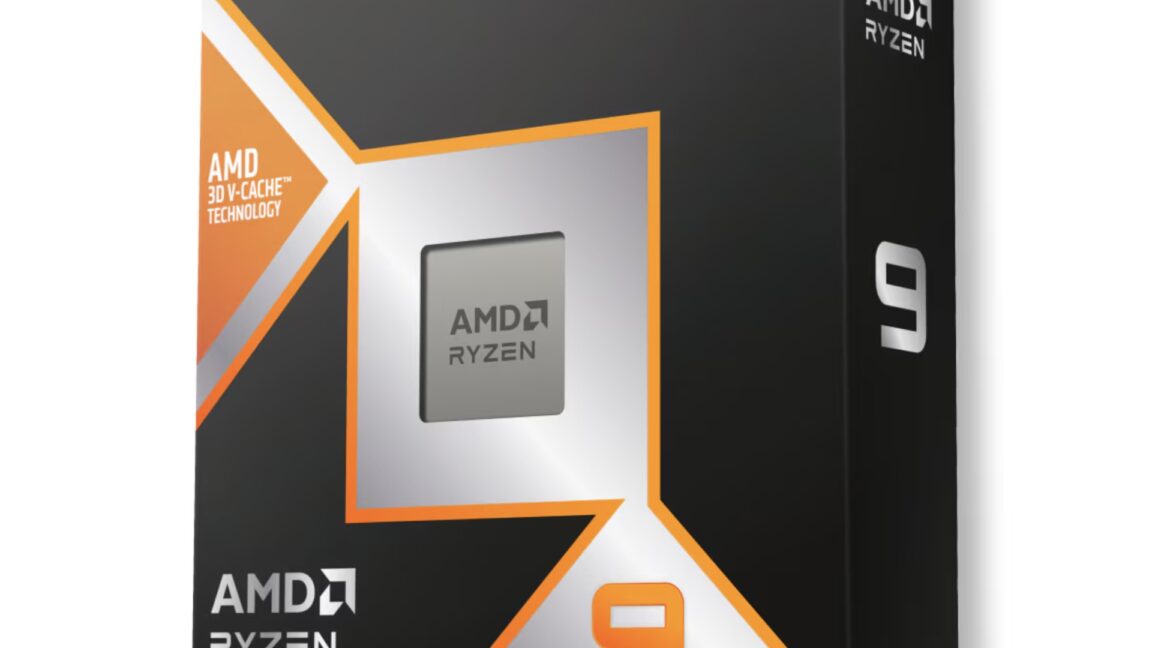
Credit: AMD
AMD's Ryzen 7 9800X3D is probably the best CPU you can buy if you're trying to put together a fast gaming PC, thanks to its eight Zen 5 CPU cores and extra helping of 3D V-Cache. You don't really need more CPU cores than this to play games, and most games benefit from the extra cache more than they do from a bit of extra clock speed.
AMD announced today that it's following up the 9800X3D with two higher-end X3D processors next week. The 12-core Ryzen 9 9900X3D and 16-core Ryzen 9 9950X3D are both launching on March 12 for $599 and $699, respectively, the same as the launch pricing for the last-generation 7900X3D and 7950X3D but a couple hundred dollars more expensive than the current street pricing for the Ryzen 9900X and 9950X.
AMD recommends the 9900X3D and 9950X3D to people whose gaming PCs also do other heavy-duty non-gaming work or for streamers whose gaming PCs are simultaneously running other apps. But they might also appeal to people who would normally just buy a 9800X3D because that processor has been difficult to find at its $479 MSRP since launching last fall. If a 9800X3D already costs nearly $600, why not spring for a faster chip if you can get one?
Like the 7950X3D and 7900X3D, these new X3D chips combine a pair of AMD's CPU chiplets, one that has the extra 64MB of cache stacked underneath it and one that doesn't. For the 7950X3D, you get eight cores with extra cache and eight without; for the 7900X3D, you get eight cores with extra cache and four without.
It's up to AMD's chipset software to decide what kinds of apps get to run on each kind of CPU core. Non-gaming workloads prioritize the normal CPU cores, which are generally capable of slightly higher peak clock speeds, while games that benefit disproportionately from the extra cache are run on those cores instead. AMD's software can "park" the non-V-Cache CPU cores when you're playing games to ensure they're not accidentally being run on less-suitable CPU cores.
We didn't have issues with this core parking technology when we initially tested the 7950X3D and 7900X3D, and AMD has steadily made improvements since then to make sure that core parking is working properly. The new 9000-series X3D chips should benefit from that work, too. To get the best results, AMD officially recommends a fresh and fully updated Windows install, along with the newest BIOS for your motherboard and the newest AMD chipset drivers; swapping out another Ryzen CPU for an X3D model (or vice versa) without reinstalling Windows can occasionally lead to CPUs being parked (or not parked) when they are supposed to be (or not supposed to be).

-
 C114 Communication Network
 -
 Communication Home
