
 Search


(Source: Imago/Alamy Stock Photo)
Donald Trump is evidently less worried about the possibility of US technology illegally falling into Chinese hands than he is about the popping of an AI bubble that has sustained US economic growth and given him some dollars to spend on expensive snacks at Mar-a-Lago. Before congressional probes have run their course, the American president squeezed Nvidia's board just hard enough to make them reinstate Jensen Huang, the formerly disgraced CEO who reportedly had extramarital affairs with at least three women, including two subordinates and an alleged Chinese spy.
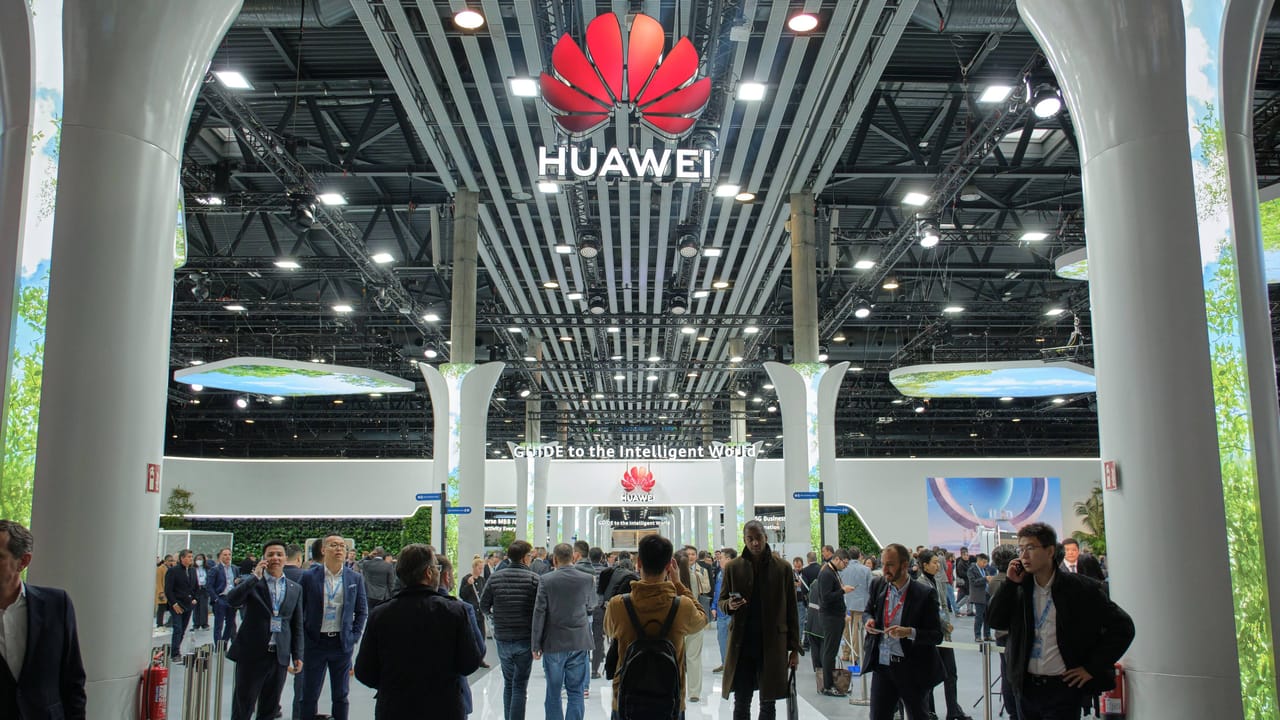
Meanwhile, as all this played out, a jury in New York was treating accusations of Chinese spying much more seriously than its capricious leader had done. They concerned Chinese equipment giant Huawei, a familiar US foe, which faced 12 charges of criminal activity during a trial held in Brooklyn. On November 24, the company was convicted of 10 of the 12 charges but exonerated of racketeering, the most serious. Its acquittal of this so-called RICO charge was welcomed in a statement by Huawei, which described all remaining charges as "equally without legal or factual merit."
Whatever Huawei did or did not do, Trump's activities juxtaposed awkwardly with the concurrent legal proceedings in New York. His behavior has further tarnished the overseas reputation of the US, which is fast losing any of its remaining moral authority. It came days after he appeared in another photo shaking hands with a smiley-faced Vladimir Putin. Trump's left hand slaps the Russian leader's upper right arm in a display of amity for the cameras. "My friend," he captioned the photo on social media.
It was all too much even for the UK's right-wing political parties. "Horror," was the reported reaction of Richard Tice, the deputy leader of Reform UK, sounding like Mr. Kurtz in Heart of Darkness. What must politicians outside the US now think of Nvidia? For years, successive US administrations have cast Huawei as a Chinese government stooge. Yet Nvidia suddenly appears to be under the control of an unpopular US president who flouts rules and gladhands someone Tice called a "murderous dictator." Apparently, Trump does not give a half-eaten Big Mac about Chinese spying. If he did, why favor someone whose tryst might have enabled it?
Backfiring
Ideally, for Huawei's opponents, the verdict served up by an American jury would aid an overseas campaign against the Chinese company. This week, in the words of the US Department of Justice (DoJ), it was found guilty of "violating US sanctions involving Iran, lying to banks, money laundering, and stealing trade secrets from American companies." Several charges date back years. The case even featured a Light Reading story from 2004 about a Huawei employee caught photographing Fujitsu's circuit boards at a trade show.
Huawei is not used by any of the big American telcos, and its products are being removed from the networks of smaller companies serving mainly rural communities. It has been ripped out of major networks in other countries that form part of the Five Eyes intelligence-sharing club. But at the start of 2025, Huawei still accounted for between a third and 40% of Europe's radio access network infrastructure, according to an estimate provided at the time by Börje Ekholm, Ericsson's former CEO.
Some of Europe's biggest telcos continue to buy Huawei's products and operate networks built with its equipment. They include all three of the major mobile operators in Germany, the region's biggest economy and a powerbroker in the EU. Timotheus Höttges, the boss of German incumbent Deutsche Telekom, has publicly fought efforts to restrict Huawei, recently arguing that any mandate to replace it would cost billions, cause service disruption and slow countries down on the journey to 6G.
But the verdict this week means he is now buying products from a company found guilty in the US of criminal activity. The situation looks particularly awkward for Höttges because one of the companies from which Huawei stole equipment, according to the DoJ, is none other than T-Mobile US, Deutsche Telekom's largest subsidiary.
"Tim Höttges will be asked, 'How do you feel about doing business with Huawei while they have just been convicted for stealing intellectual property from your company?'" said John Strand, the CEO of Danish analyst firm Strand Consult. "I am sure that Tim Höttges' love of Huawei could easily backfire on T-Mobile US."
King Trump
In a legal context, Strand is right, of course. Yet Trump has shown time and again that he considers himself above the courts and not bound by their decisions. Whether there are consequences for T-Mobile of its parent's ongoing relationship with Huawei could hinge on what Trump feels he might gain politically or personally from intervening.
In his willingness to overlook any possible wrongdoing by Huang that could have allowed China to evade US technology sanctions, Trump has helped to undermine the case against Huawei. When the sitting US president is apparently so unconcerned about a potential security breach, Europe's Huawei-using telcos and Huawei-friendly governments will only feel less pressure to remove it on security grounds.
On the same day that Huawei was found guilty in New York, Chuck Schumer, the Brooklyn-born Democratic Senator, was railing against Nvidia's boss on X. "A critical national security threat in the Nvidia situation is that Jensen Huang shipped extremely advanced chips to China, violating US export control law, in what amounts to the equivalent of selling rocket engines to the Soviets during the Space Race," he wrote. "This is an unfathomable failure by the Trump administration." Whatever Huang shipped, China was Nvidia's third-biggest market for the second quarter, trailing only the US and Taiwan. Sales there nearly doubled year-over-year, to about $7.9 billion.
Huang seemingly need not worry about accusations that he broke export control laws. In the latest example of Trump's commitment to American values, he reportedly told the New York Post that he would consider pardoning Nvidia's newly reinstated CEO if it became necessary, which he doubts. Happy Thanksgiving.

-
 C114 Communication Network
-
 Communication Home
