
 Search

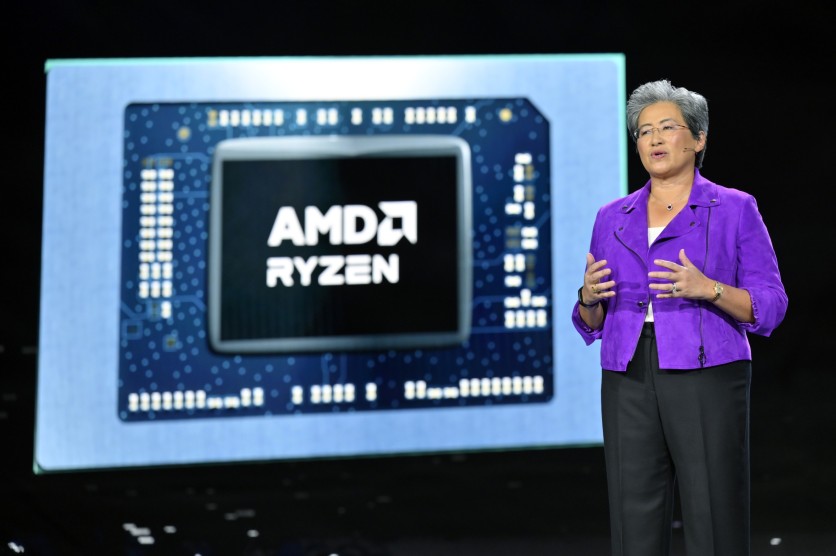
AMD Chair and CEO Dr. Lisa Su delivers a keynote address at CES 2023 at The Venetian Las Vegas on January 04, 2023 in Las Vegas, Nevada. CES, the world's largest annual consumer technology trade show, runs from January 5-8 and features about 3,100 exhibitors showing off their latest products and services to more than 100,000 attendees. David Becker/Getty Images
AMD quietly added three processors to its official product pages this week — and if you are shopping for a budget laptop in the months ahead, you need to know what they are before you spend any money. The company confirmed to PCWorld that its Ryzen 3 3100U and Ryzen 5 3501U are brand-new products for the 2026 market, carrying a Q2 2026 availability date, while built entirely on the Zen+ "Picasso" architecture and GlobalFoundries 12nm manufacturing process from 2019. A third chip, the Ryzen 7 4700LE desktop processor, appeared alongside them on a similar OEM-exclusive basis. The move, confirmed in a statement from an AMD representative, signals that the budget laptop market in 2026 is being shaped not by what silicon can do, but by what silicon costs — and by how much a memory crisis has changed the economics of building a cheap PC.
AMD Adds Three Legacy Processors to Its Lineup
The Ryzen 3 3100U is the most basic of the pair. It carries two cores and two threads — no simultaneous multithreading — with a base clock of 1.9 GHz and a maximum boost of 3.2 GHz. Paired with Radeon Vega 8 integrated graphics running at 1.2 GHz, 4 MB of L3 cache, and a default 15W configurable TDP, it is a chip engineered for the absolute floor of functional computing. The Ryzen 5 3501U steps up to four cores and eight threads, a 2.1 GHz base and 3.7 GHz boost, and the same Vega 8 graphics. Both support DDR4-2400 memory and use the FP5 socket.
The Ryzen 7 4700LE takes a slightly different path. It is a desktop part based on the somewhat newer Zen 2 "Renoir" architecture, offering eight cores and 16 threads at a 65W TDP on the AM4 socket. AMD lists it as OEM-only and without integrated graphics, requiring a discrete GPU in any system that uses it. No pricing has been disclosed for any of the three chips, consistent with their OEM-channel-only distribution.
Read more: Ryzen 7 5800X3D Returns June 25 at $349: AMD's DDR4 Lifeline vs $329 7700X3D Buying Guide
Why a Seven-Year-Old Fab Line Makes Economic Sense
To understand why AMD is doing this, you need to understand one specific concept: the fully depreciated process node.
The Zen+ Picasso chips are manufactured on GlobalFoundries' 12nm Leading-Performance (12LP) node, an enhanced version of the 14nm process the fab developed alongside AMD in 2017 and 2018. That node has been in production for the better part of a decade. The capital equipment that built every Picasso wafer — the lithography machines, the etch chambers, the deposition tools — was paid off years ago. By approximately 2022, the 12LP node was fully amortized. That means every wafer GlobalFoundries runs today on that node carries a dramatically lower cost than a wafer on TSMC's current 4nm or 5nm nodes, where the equipment investment is still being recovered. AMD pays a depreciated-node wafer price for Picasso silicon. That dramatically lower chip cost is what makes sub-$300 laptops viable when every other component in a laptop is getting more expensive.
That cost math matters more in 2026 than it did even two years ago. AI datacenters have consumed enormous DRAM wafer capacity since 2024, redirecting production from consumer memory toward high-bandwidth memory for AI accelerators. The result has been a memory pricing crisis: 32GB DDR5 kits that sold for around $100 in 2024 now start near $375, a roughly 300% increase, according to Tom's Hardware's RAM price tracker. The Picasso chips support DDR4-2400 — a memory standard that predates DDR5 and uses a different manufacturing pipeline. DDR4 is affected by the crisis too, rising from around $60 for 32GB to $150-$180, but it remains substantially cheaper than DDR5 and is a compatible pairing for this silicon. An OEM building a laptop on Zen+ hardware does not need to absorb the DDR5 premium at all.
How Far Behind Is Zen+ From Modern AMD Silicon?
For a buyer who encounters one of these chips inside a finished laptop at a store, the performance gap is worth understanding precisely, because it spans four full architecture generations.
Zen+ delivered approximately 3% higher instructions per clock (IPC) over the original Zen architecture — it was a refinement, not a redesign, using the same die layout but with improved cache latencies and better power delivery. According to AMD's own published architecture data, Zen 2 brought a 15% IPC uplift, Zen 3 added 19%, Zen 4 contributed 13%, and Zen 5 — AMD's current architecture in the Ryzen AI 400 laptop series — delivers a further 16% improvement. Compounded across four generations, the IPC gap between Zen+ and Zen 5 is roughly 80%. That figure does not include the frequency headroom that comes from moving from GlobalFoundries' 12nm process to TSMC's 4nm node, or the integrated NPU that Ryzen AI 400 chips carry for on-device AI workloads. A Ryzen AI laptop from 2025 is, in raw computational terms, approximately twice as fast per core as a Zen+ machine at the same clock speed — and the clock speeds themselves are also considerably higher on current silicon.
None of that means a Zen+ laptop is unusable. Web browsing, document editing, video calls, streaming, and online coursework are workloads that have not materially changed since 2019. A dual-core Zen+ chip running at 3.2 GHz with adequate RAM and fast storage can handle all of them, as millions of laptops with exactly this configuration have done for years. What it cannot do is handle video editing, gaming, or any AI-accelerated Windows feature at reasonable speeds. Copilot+ PC certification — Microsoft's baseline for AI features in Windows 11 — requires an NPU delivering at least 40 trillion operations per second. Picasso has no NPU. For a buyer who needs any of those capabilities, a Zen+ laptop is the wrong purchase regardless of its price.
Why Now: DDR5 Costs and Competitive Pressure in the Budget Laptop Processor Market
AMD's timing is not accidental. Qualcomm announced its Snapdragon C platform at Computex 2026 in May, positioning it specifically against budget Windows laptops starting at $300. Like AMD's Picasso revival, the Snapdragon C does not use the company's newest architecture — it relies on older Kryo cores repurposed from smartphone silicon, the same platform reuse logic AMD is applying to Zen+. Acer, HP, and Lenovo confirmed they were preparing Snapdragon C devices, expected to arrive later in 2026.
Intel is reportedly weighing similar legacy revivals for the same segment. The pattern reflects a common pressure: AI-capable chips have moved up in price, DDR5 platforms cost more than many buyers can justify, and the sub-$300 laptop market that historically served students and emerging markets is under threat of disappearing. Tom's Hardware reported analyst projections from Gartner warning that combined DRAM and SSD pricing could rise 130% by year-end, pushing average laptop prices up 17% and potentially eliminating the sub-$500 segment by 2028.
AMD's answer, at least for OEMs targeting the lowest price tiers, is to reach back into a depreciated fab node and offer chips that cost dramatically less to produce — not because they perform better, but because their manufacturing costs have already been recovered.
Read more: AMD Unveils Ryzen AI Max 300 Series and Ryzen 7 9850X3D for Compact PCs and Gamers
What Budget Laptop Buyers Should Check Before Purchasing
AMD has not announced which specific laptops will use these chips. They will appear inside finished systems from regional and value-focused OEMs, with no fanfare and no retail chip sales. A consumer shopping for a budget laptop in the coming months may encounter one of these processors without any indication of its age.
Before buying any budget laptop in 2026, check the processor model name. Any laptop listing "Ryzen 3 3100U" or "Ryzen 5 3501U" is shipping Zen+ silicon from the 2019 era. For buyers who need only basic computing — web browsing, office work, video calls, and streaming — the performance may be adequate if the laptop is otherwise well-specced with at least 8GB of RAM and a solid-state drive. For buyers who need AI features, gaming, or productivity in heavier applications, these chips are not the right fit regardless of how new the laptop looks on the shelf.
The GPU situation also warrants attention: the Vega 8 integrated graphics in both mobile chips are not capable of modern PC gaming, cannot accelerate AI workloads, and lack hardware ray tracing. A laptop built on Zen+ hardware is a tool for basic computing, priced accordingly — and that is precisely what AMD and its OEM partners intend it to be.
Frequently Asked Questions
Why is AMD releasing new laptop chips based on seven-year-old technology?
The Zen+ Picasso architecture runs on GlobalFoundries' fully depreciated 12nm node, which has been in production since 2018 and whose manufacturing equipment costs have long since been recovered. That makes each chip dramatically cheaper to produce than newer AMD silicon on TSMC's 4nm or 5nm nodes. Combined with the Zen+ design's support for DDR4 memory — which is significantly cheaper than DDR5 in 2026's memory-crisis market — AMD can offer laptop processors to OEMs at prices that allow finished systems to sell below $300, a price point modern AI chips cannot reach.
How much slower is Zen+ compared to current AMD Ryzen AI processors?
Across the four architecture generations that separate Zen+ from AMD's current Zen 5 in the Ryzen AI 400 series, the compounded instructions-per-clock improvement is approximately 80%. AMD's own published data confirms individual uplifts of roughly 15% for Zen 2, 19% for Zen 3, 13% for Zen 4, and 16% for Zen 5. Current chips also benefit from three major process node improvements, going from GlobalFoundries' 12nm to TSMC's 4nm, which provides additional frequency headroom and power efficiency. Ryzen AI 400 chips also include an integrated NPU for AI workloads; Zen+ chips do not.
Should I buy a budget laptop with a Ryzen 3 3100U or Ryzen 5 3501U in 2026?
If your needs are limited to web browsing, document editing, email, video calls, and streaming, and the price is right, these chips can handle those tasks. The Ryzen 5 3501U with four cores and eight threads is the more capable option for multitasking. Neither chip is suitable for gaming, video editing, or any AI-accelerated Windows 11 feature. Before purchasing, confirm the laptop ships with at least 8GB of RAM and a solid-state drive; on slow storage or with only 4GB of RAM, even basic tasks will feel sluggish.
How does AMD's Zen+ revival compare to Qualcomm's Snapdragon C?
Both strategies reach back to older architectures to hit sub-$300 price points. AMD's Zen+ chips use CPU cores from 2018 paired with Vega integrated graphics; Qualcomm's Snapdragon C uses Kryo cores originally designed for smartphones. The Snapdragon C includes a low-power NPU for light AI tasks and offers ARM-based efficiency, though it does not qualify for Microsoft's Copilot+ PC certification. AMD's chips run standard Windows on x86, offer broader software compatibility, and pair with cheaper DDR4 memory. Neither option is a performance machine; both are tools for the most cost-sensitive tier of the laptop market.

-
 C114 Communication Network
 -
 Communication Home
