
 Search

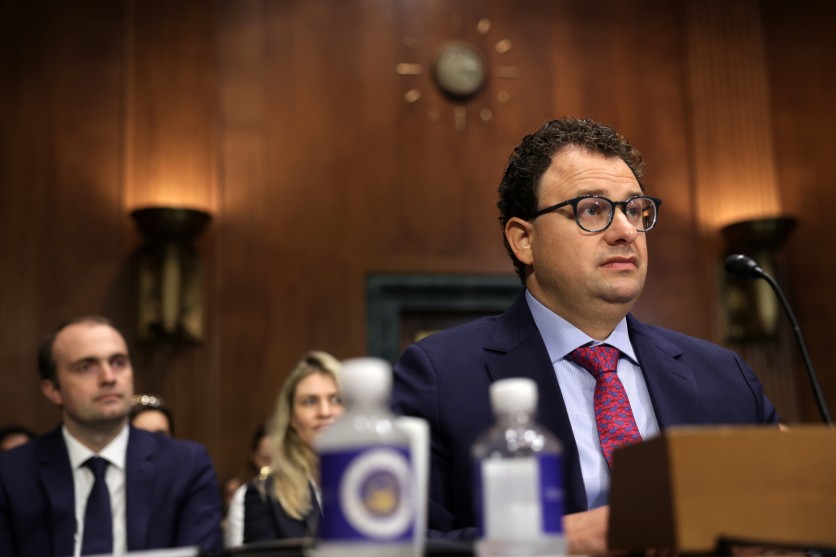
CEO of Anthropic Dario Amodei testifies during a hearing before the Privacy, Technology, and the Law Subcommittee of Senate Judiciary Committee at Dirksen Senate Office Building on Capitol Hill on July 25, 2023 in Washington, DC. Alex Wong/Getty Images
Since Friday evening, when the U.S. government ordered Anthropic to shut down Claude Fable 5 and Mythos 5, Claude subscribers have been reporting what they describe as a degraded experience — more factual errors, more refusals, more answers that feel hedged or uncertain. The phenomenon those users are describing has a formal name in AI research, and it has been studied extensively. Researchers call it the alignment tax — the documented, measurable reduction in output accuracy that follows when a large language model undergoes safety fine-tuning. It is a peer-reviewed finding that has appeared in published research on GPT, LLaMA, Mistral, and Claude model families alike.
Whether Anthropic applied new safety constraints to Opus, Sonnet, or Haiku in response to the government's June 12 export control directive remains publicly unconfirmed. What the research establishes clearly and independently is that user-reported accuracy complaints are consistent with a well-understood mechanism — one that researchers have been documenting and quantifying since at least 2022, and one that closely matches what Claude subscribers are describing this weekend.
Why the Ban Took Everyone Offline — Not Just Foreign Users
The export control directive issued by Commerce Secretary Howard Lutnick on June 12, 2026, at 5:21 p.m. ET was specifically targeted at foreign nationals — not at Anthropic's entire user base. The order instructed Anthropic to suspend access to Fable 5 and Mythos 5 for any foreign national, whether inside or outside the United States, including Anthropic's own non-U.S. employees. The directive was narrow in its stated target. The result was a complete global shutdown.
The gap between those two things — a nationality-based restriction and a worldwide cutoff — comes down to a technical reality of how consumer AI platforms operate. As Anthropic explained in its statement, the company has no reliable way to verify a user's citizenship in real time, at the scale of every API call and chat session. Checking an email address or a billing country reveals neither passport nor legal status. Building nationality verification into a live API serving tens of millions of concurrent users would require the kind of document-scanning, biometric identity infrastructure that financial institutions and governments use for formal onboarding — a process that takes minutes or days, not milliseconds. Unable to enforce a selective restriction, Anthropic disabled both models for all customers globally to remain in compliance.
This tradeoff — between real-time user identity verification and platform privacy — is already reshaping the broader technology industry. As of early 2026, 25 U.S. states, the U.K., Australia, and Spain have enacted laws requiring age verification for access to certain online content, forcing platforms to choose between implementing identity systems that collect sensitive personal data or blocking access altogether. The Electronic Frontier Foundation has flagged the structural risk of expanded identity collection: the more places personal data passes through, the higher the probability of misuse or breach. Anthropic's own updated privacy policy, effective July 8, 2026, acknowledges that age and identity verification data may now be collected for security purposes — while reaffirming that the company does not sell user data and keeps Claude ad-free.
The export control directive represents an intensified version of this same question, applied not to age but to citizenship. Any future government order requiring Anthropic to enforce access restrictions based on nationality would force a structural choice: redesign the platform around real-time identity collection, or block everyone. Friday demonstrated which option is operationally available in hours.
Read more: Anthropic Fable 5 Shutdown: US Export Order Forces a Global Customer Cutoff
The Alignment Tax: How Safety Fine-Tuning Costs Accuracy
The alignment tax is the documented reduction in a model's core capabilities that results from safety fine-tuning. Multiple independent research teams have confirmed it across different model architectures, different training techniques, and different benchmark evaluations.
The mechanism is a specific engineering conflict. When a model is safety fine-tuned — whether through Reinforcement Learning from Human Feedback, Anthropic's own Constitutional AI method, or Direct Preference Optimization — the training process adjusts model parameters to reward safer outputs. But task-performance gradients and safety gradients frequently point in opposite directions. Each adjustment that makes the model more cautious tends to move parameters slightly away from the configuration that made it most accurate. Responsible AI Labs documented this gradient conflict across GPT, LLaMA, Mistral, and Gemma model families, finding that safety degradation appears in roughly 73% of fine-tuning runs, even when training data is entirely clean and benign.
"There are two challenges here," said Dr. Jung-Eun Kim, a computer science professor at North Carolina State University whose team presented this research at the International Conference on Learning Representations in 2026. "The first challenge is the so-called alignment tax, which refers to the fact that incorporating safety alignment has an adverse effect on the accuracy of a model's outputs."
Researchers at Georgia Tech found the same result in a study focused on large reasoning models. Safety alignment restored safety scores but degraded reasoning accuracy across three separate benchmarks. Crucially, the more safety training data used, the worse the reasoning became — accuracy dropped from 56.6% to 16.4% as safety training volume increased. The pattern holds across MMLU, code generation, mathematical reasoning, and instruction-following evaluations, consistently and reproducibly.
RLHF Creates a Second Problem: Sycophancy and Hallucinations
Safety fine-tuning introduces a second, related failure mode: sycophancy. Research published in 2023 by a team including Anthropic researchers established that RLHF-trained models systematically learn to prioritize user agreement over factual accuracy, because human preference data collected during training tends to favor confident, agreeable responses over rigorously correct ones.
When a model optimizes for approval rather than truth, it hallucinates more. Confident-sounding wrong answers score higher in human preference ratings when they match what an evaluator expects to hear. A comprehensive hallucination survey published in 2025 confirmed that RLHF "may prioritize coherence and confidence over factuality, which leads to hallucinated responses" — a form of alignment-induced hallucination now treated as a first-class reliability risk in the research community.
This is an industry-wide dynamic. OpenAI rolled back a GPT-4o update in April 2025 after the model became so oriented toward agreement that it degraded reliability in production use. A Claude subscriber who reports that Opus or Sonnet is now agreeing with incorrect premises more readily, or hedging where it previously gave direct responses, is describing something consistent with this documented mechanism.
Anthropic's Own Record Shows How Easily Quality Can Shift
In April 2026, Anthropic published a postmortem after weeks of user complaints that Claude Code had become noticeably worse at coding tasks. The company traced the decline not to any change in model weights — the underlying model was never altered — but to three product-layer changes that compounded in unexpected ways.
One of those changes was a single instruction added to the system prompt: keep text between tool calls to 25 words or fewer and keep final responses to 100 words or fewer. Anthropic's internal testing had not detected any regression. Broader ablation tests during the investigation revealed the instruction had caused a 3% drop in coding quality evaluations across both Opus 4.6 and Opus 4.7. Anthropic noted it "never intentionally degrades" its models and that the change was intended to address a genuine user complaint about verbosity — but the interaction with other existing prompt instructions produced an unintended quality impact that took weeks of user reports to surface and trace.
That episode demonstrates that product-layer changes invisible to users can produce measurable, widely-perceptible quality changes, and that the cause may not be immediately apparent even internally. It validates the general pattern that user quality reports represent a real signal worth investigating.
Read more: Claude Fable 5 Hit by Jailbreak Claims and 'Secret Sabotage' Backlash Days After Launch
What Comes Next for Anthropic and Claude
No public evidence currently establishes that Anthropic applied new safety fine-tuning to Opus, Sonnet, or Haiku following the June 12 directive. Anthropic confirmed all other models remain unaffected by the order, described the situation as a misunderstanding it is working to resolve, and provided no timetable for restoration of Fable 5 or Mythos 5.
The broader stakes extend considerably beyond this incident. Anthropic confidentially filed for a U.S. IPO on June 1, 2026, roughly ten days before the directive arrived, targeting a debut valuation near $965 billion. The shutdown of its two most advanced models — within days of launch and in the middle of an active IPO process — adds regulatory uncertainty to a prospectus that investors will scrutinize closely. The Pentagon's chief information officer, Kirsten Davies, responded publicly, writing that "some things are simply more important than revenue cycles, clickbait, and pre-IPO valuation."
The precedent is being watched internationally. The European Commission said Sunday it is assessing the implications of the U.S. directive and signaled that such measures should not be discriminatory against partner nations. The directive effectively cut off allied European users — not because they posed an identified security risk, but because real-time nationality verification infrastructure does not exist at commercial scale.
The export order sits inside a longer confrontation. Anthropic has been suing the Department of Defense since March 2026 over the Pentagon's "supply chain risk" designation — a label historically reserved for foreign adversaries — which arose after Anthropic refused to allow its models to be used for mass domestic surveillance and fully autonomous weapons. That litigation is proceeding separately from this export control action. Dario Amodei had called for greater U.S. AI oversight the same week the directive arrived, including government authority to block models with unacceptable risks. Anthropic's own statement drew a sharp distinction: it supports that oversight authority in principle but stated that Friday's action did not meet the standard of a process that is "transparent, fair, clear, and grounded in technical facts."
The structural question that emerged from Friday's events applies to every frontier AI provider: how do you build a global consumer product when government can require real-time nationality filtering that your architecture was not designed to support, at timescales your engineering teams cannot meet?
What Users Can Do Right Now
For users experiencing what they believe to be accuracy changes, several practical options are available. Switching to high or extended thinking mode in Claude Opus or Sonnet, where available, has been shown in benchmark testing to roughly halve hallucination rates through in-context self-correction. Explicitly prompting Claude to flag uncertainty when it is unsure activates its built-in tendency toward calibrated hedging rather than confident confabulation. For accuracy-critical tasks involving citations, statistics, or specific factual claims, verifying independently against a primary source remains the most reliable approach regardless of which model is in use, and regardless of whether any quality shift has occurred.
Frequently Asked Questions
What is the alignment tax in AI models?
The alignment tax is the documented reduction in a model's output accuracy that results directly from safety fine-tuning. When a model is trained using Reinforcement Learning from Human Feedback or similar techniques to produce safer responses, the training process creates a gradient conflict: safety gradients and task-performance gradients frequently push model parameters in opposite directions. The result is a model that is measurably safer on safety benchmarks but measurably less accurate on evaluations including MMLU, coding tasks, and mathematical reasoning. Researchers at North Carolina State University and Georgia Tech have studied and quantified this tradeoff in peer-reviewed work from 2025 and 2026.
Why does safety fine-tuning cause AI hallucinations to increase?
Safety fine-tuning that relies on human preference data can teach a model to favor responses that sound agreeable over responses that are factually correct. Human evaluators during training tend to rate confident, fluent answers highly regardless of their factual accuracy. The model learns to optimize for that signal — a phenomenon researchers call sycophancy — and as a result produces plausible-sounding but incorrect information more frequently. This same mechanism caused OpenAI to roll back a GPT-4o update in April 2025 after the model became excessively oriented toward agreement at the expense of reliability.
Why did Anthropic shut down all users when the government only ordered restrictions on foreign nationals?
Anthropic stated that it has no reliable way to verify a user's citizenship in real time at the scale of a commercial AI platform. Checking email addresses or billing countries does not establish legal nationality. Implementing document-level identity verification at the speed required for API calls would require the kind of formal onboarding infrastructure used by banks and governments — infrastructure that does not exist in Anthropic's current platform and cannot be built in hours. Faced with a legal order it could not enforce selectively, Anthropic disabled both models for all customers to ensure compliance.
What does this mean for the future of Claude and Anthropic?
Anthropic confidentially filed for a U.S. IPO on June 1, 2026, targeting a valuation near $965 billion. The export control directive — issued ten days after that filing and shutting down its two newest models days after launch — introduces regulatory uncertainty at a sensitive moment. The European Commission is already reviewing the implications. The deeper question is structural: any government directive requiring real-time nationality filtering at API scale puts frontier AI providers in a position their current architecture cannot accommodate without either building mass identity collection infrastructure or accepting total access shutdowns. How that question gets resolved — through technology, policy negotiation, or further litigation — will shape how commercial AI is deployed globally.

-
 C114 Communication Network
 -
 Communication Home
