
 Search

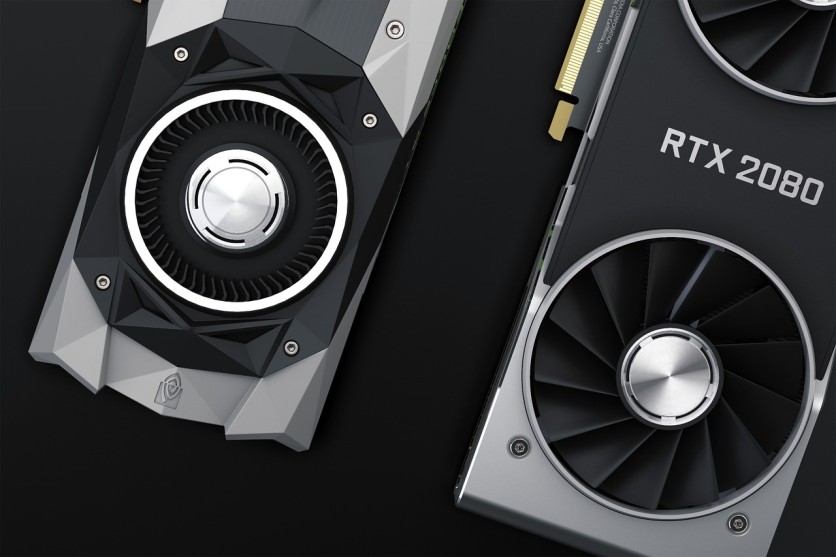
Discover photonic acceleration tips, light-speed rendering hacks, and GPU photonics mods to optimize scenes, boost GPU performance, and prepare workflows for next‑generations photonic hardware. Pixabay, nanadua11
Photonic acceleration tips, light-speed rendering hacks, and GPU photonics mods are reshaping how high-end visualization and 3D pipelines think about speed. Most teams still rely on traditional GPUs, but ideas from photonic computing already inform the smartest optimization habits.
By combining disciplined scene setup with hardware-aware settings and an eye on emerging photonic hardware, users can unlock more performance today while preparing for tomorrow's render backends.
What Is Photonic Acceleration for GPUs?
Photonic acceleration uses light, rather than only electronic signals, to move data and perform specific computations in or around GPUs. This can involve silicon photonics, optical interconnects, or dedicated photonic accelerators that sit alongside conventional chips.
The promise lies in extremely high bandwidth and low latency for moving large volumes of rendering data more efficiently.
Modern rendering is often limited by memory bandwidth and data movement, not just raw compute. Path tracing, global illumination, and complex shading models all rely on massive scene, texture, and lighting datasets flowing smoothly through the system.
Photonic acceleration aims to relieve these bottlenecks, and even before such systems are common, the same principles guide effective light-speed rendering hacks: reduce wasteful data motion and avoid bandwidth-heavy configurations.
Five Photonic Hacks to Boost GPU Rendering
The idea behind "Five Photonic Hacks Triple Your GPU Rendering Overnight" is less about marketing and more about stacking realistic improvements. Significant gains come from aligning scenes, settings, and hardware with bandwidth-aware design.
Hack 1 – Optimize Scenes for Light-Speed Pipelines
Scene complexity is often the easiest win. Excessive polygon counts, tiny unseen details, and uncontrolled instancing multiply work for the renderer. Level of detail systems, proxy geometry, and normal maps can preserve visual quality while cutting ray and shading load.
Simplifying shaders, especially heavy multilayer materials, deep refractions, or extreme subsurface scattering, and baking procedural textures where possible function as practical GPU photonics mods that respect GPU bandwidth.
Hack 2 – Tune Lighting and GI for Faster Throughput
Lighting and global illumination settings frequently dominate render time. Each extra bounce and sample increases the number of rays moving through the scene.
Capping bounce counts intelligently, using light portals or guided skylight setups, and focusing higher sample counts only where the viewer will notice are effective photonic acceleration tips. Adjusting clamping and noise thresholds with awareness of final delivery (still, animation, preview) eliminates oversampling in low-value regions.
Hack 3 – Go GPU-First and Remove CPU Bottlenecks
Many pipelines retain CPU-centric habits from older engines. Reconfiguring renderers so the GPU is the primary workhorse often produces immediate gains. Enabling GPU-optimized backends, minimizing CPU-side preprocessing, and ensuring that the GPU is never idle improves utilization.
This approach mirrors emerging hybrid electro-optical architectures, where photonic co-processors handle dense math while silicon manages control, making GPU-first workflows inherently more photonic-ready.
Hack 4 – Choose Photonic-Ready Hardware and Interconnects
Some of the most practical GPU photonics mods are hardware choices. High-bandwidth memory, newer PCI Express standards, and advanced interconnect solutions reflect the same design logic as photonic acceleration.
Systems that emphasize memory bandwidth and fast inter-GPU communication often outperform machines that focus solely on peak compute numbers. Prioritizing platforms built around bandwidth and low latency positions a studio to adopt future photonic add-ons with minimal disruption.
Read more: DLSS 5 Controversy Explodes: New Blood CEO Calls for Nvidia Boycott Over AI 'Slop Filter' in Gaming Graphics
Hack 5 – Use High-Bandwidth Cloud Render Farms
Cloud render services with dense GPU clusters and fast networking can deliver "light-speed" results through parallelism and scale. Structuring scenes and assets for easy distribution, rather than creating monolithic, fragile project files, lets these farms split workloads efficiently.
Smart job queuing, autoscaling, and priority rules further compress turnaround times. For teams not yet near photonic hardware, these strategies act as functional proxies for light-speed rendering hacks.
What Are Photonic GPUs and Will They Replace Traditional GPUs?
Photonic GPUs or accelerators use optical components, waveguides, modulators, and interference patterns, to perform numerical operations, especially linear algebra.
In rendering, such devices are most likely to accelerate kernels used in neural denoising, upscaling, or simulation, while conventional GPUs continue to handle rasterization, shading control, and API integration. The realistic near-term model is hybrid: photonic units for specialized workloads, GPUs for orchestration.
Because electronic GPUs come with mature ecosystems, it is unlikely they will be fully replaced soon. Instead, photonic devices will augment existing stacks, much like tensor cores and ray tracing cores began as extensions before becoming standard.
Practices that improve GPU efficiency today, clean data flows, bandwidth-conscious algorithms, and modular scene construction, are exactly the habits that will pay off when photonic hardware enters mainstream pipelines.
Photonic Acceleration Tips for Future-Ready Rendering
As photonic research moves toward commercial products, the ideas behind photonic acceleration tips, light-speed rendering hacks, and GPU photonics mods are already shaping modern workflows.
Teams that streamline scenes, prioritize GPU-first rendering, and invest in high-bandwidth hardware are quietly aligning with the same principles that photonic systems will amplify.
By adopting these habits now, artists and engineers can extract more from current GPUs while staying ready to plug light-based accelerators into their pipelines when they arrive.
Frequently Asked Questions
1. Can photonic acceleration help real-time game rendering today?
Not directly; current consumer GPUs for games are still electronic, but photonic-style optimizations, like reducing bandwidth-heavy effects and optimizing scenes, can still improve real‑time performance.
2. Do artists need new software to benefit from future photonic GPUs?
In most cases, no; major engines will likely add support under the hood, so artists mainly need clean, GPU-friendly scenes that can be pushed to new backends as they appear.
3. Are photonic GPUs only for big studios and research labs?
Initially they will target high-end AI, research, and large studios, but practices that prepare for them, like bandwidth-aware scene design, are useful for freelancers and small teams too.
4. Will photonic acceleration reduce render noise as well as render time?
Indirectly; it mainly boosts throughput, but that extra performance can be traded for more samples, better denoising, or higher-quality settings, which in turn reduces visible noise.
Read more: Best Mobile GPUs for Laptop: NVIDIA RTX vs AMD Radeon Performance Guide in 2026

-
 C114 Communication Network
 -
 Communication Home
