
 Search

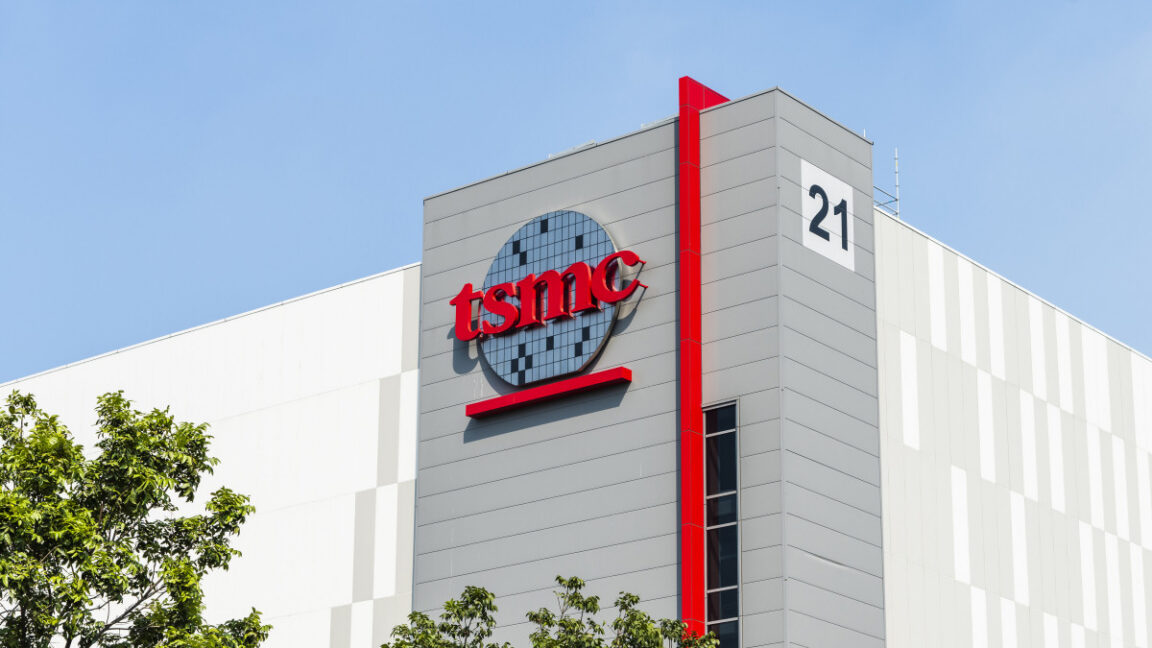
Credit: BING-JHEN HONG via Getty Images
On Thursday, Taiwan Semiconductor Manufacturing Company (TSMC) reported record fourth-quarter earnings and said it expects AI chip demand to continue for years. During an earnings call, CEO C.C. Wei told investors that while he cannot predict the semiconductor industry’s long-term trajectory, he remains bullish on AI.
TSMC manufactures chips for companies including Apple, Nvidia, AMD, and Qualcomm, making it a linchpin of the global electronics supply chain. The company produces the vast majority of the world’s most advanced semiconductors, and its factories in Taiwan have become a focal point of US-China tensions over technology and trade. When TSMC reports strong demand and ramps up spending, it signals that the companies designing AI chips expect years of continued growth.
“All in all, I believe in my point of view, the AI is real—not only real, it’s starting to grow into our daily life. And we believe that is kind of—we call it AI megatrend, we certainly would believe that,” Wei said during the call. “So another question is ‘can the semiconductor industry be good for three, four, five years in a row?’ I’ll tell you the truth, I don’t know. But I look at the AI, it looks like it’s going to be like an endless—I mean, that for many years to come.”
TSMC posted net income of NT$505.7 billion (about $16 billion) for the quarter, up 35 percent year over year and above analyst expectations. Revenue hit $33.7 billion, a 25.5 percent increase from the same period last year. The company expects nearly 30 percent revenue growth in 2026 and plans to spend between $52 billion and $56 billion on capital expenditures this year, up from $40.9 billion in 2025.
Checking with the customers’ customers
Wei’s optimism stands in contrast to months of speculation about whether the AI industry is in a bubble. In November, Google CEO Sundar Pichai warned of “irrationality” in the AI market and said no company would be immune if a potential bubble bursts. OpenAI’s Sam Altman acknowledged in August that investors are “overexcited” and that “someone” will lose a “phenomenal amount of money.”
But TSMC, which manufactures the chips that power the AI boom, is betting the opposite way, with Wei telling analysts he spoke directly to cloud providers to verify that demand is real before committing to the spending increase.
“I want to make sure that my customers’ demand are real. So I talked to those cloud service providers, all of them,” Wei said. “The answer is that I’m quite satisfied with the answer. Actually, they show me the evidence that the AI really helps their business.”
The earnings report landed the same day the US and Taiwan finalized a trade agreement that cuts tariffs on Taiwanese goods to 15 percent, down from 20 percent. The deal commits Taiwanese companies to $250 billion in direct US investment, and TSMC is accelerating the expansion of its Arizona chip fabrication facilities to match.

-
 C114 Communication Network
 -
 Communication Home
