
 Search

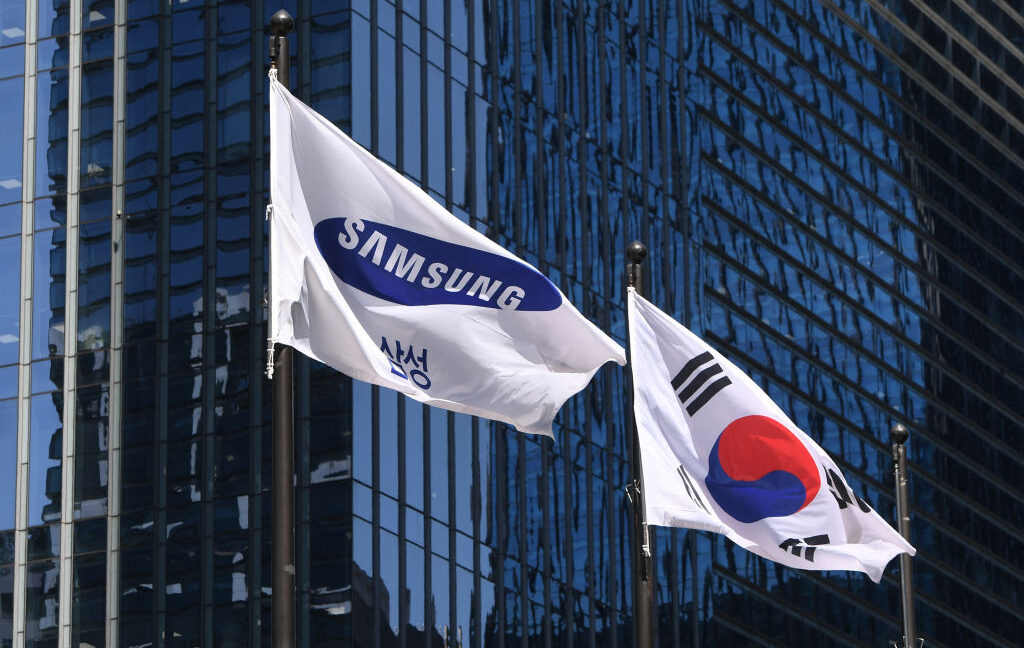
Credit: Jung Yeon-Je via Getty
Supply shortages and big price increases for RAM and storage have been a major drag for enthusiasts and PC builders in recent months. And while we haven’t yet seen large, widespread price increases for memory-dependent products like pre-built laptop PCs, smartphones, and graphics cards, most companies expect that to change this year if shortages continue.
In the meantime, memory manufacturers are riding high demand and high prices to record profits.
In revenue guidance released this week, Samsung Electronics predicts it will make between 19.9 and 20.1 trillion Korean won in operating profit (roughly $13.8 billion USD) in Q4 2025, compared to just 6.49 trillion won in Q4 of 2024.
Samsung is way more than just a memory business, of course, but its fortunes often rise and fall along with its memory division; Samsung’s profits were dropping dramatically in 2023 partly because of an oversupply of memory that made its memory division lose billions of dollars.
Less-diversified companies that primarily make memory are also raking in money lately. SK Hynix posted its “highest-ever quarterly performance” in Q3 of 2025 with 11.38 trillion Korean won (about $7.8 billion) in operating profit, up from 7.03 trillion in Q3 of 2024, and an operating margin that increased from 40 percent to 47 percent. SK Hynix credits “expanding investments in AI infrastructure” and “surging demand for AI servers” for its performance.
Micron—which recently decided to exit the consumer RAM and storage markets but is still selling its products to other businesses—also reported a big boost to net income year over year, from $1.87 billion in Q1 2025 to $5.24 billion in Q1 2026. This has generated the company’s “highest ever free cash flow.”
“Total company revenue, DRAM and NAND revenue, as well as HBM and data center revenue and revenue in each of our business units, also reached new records [in fiscal Q1],” wrote Micron CEO Sanjay Mehrotra.
Why is RAM so expensive right now?
Reading these upbeat earnings reports and forecasts will be cold comfort to people trying to build or upgrade a PC, who have seen the price of a 32GB kit of DDR5-6000 increase from $80 in August 2025 to $340 today. And if the current AI boom continues, it’s not likely to get better in the near term.
This is a problem with a lot of causes—including scalpers who are capitalizing on the shortages by buying up kits just to resell them—but the two biggest ones can be attributed to generative AI companies, and each problem compounds the other.
The first is just that consumers and PC manufacturers get to compete with OpenAI and its ilk for the standard DRAM used for traditional servers and consumer devices. By some estimates, OpenAI’s “Stargate” could use as much as 40 percent of the world’s DRAM output all by itself (though that figure uses production numbers as of 2024 and 2025 and doesn’t take production increases into account).
The second is that the HBM (high-bandwidth memory) used for Nvidia’s AI data center GPUs uses about three times as much space on a silicon wafer as the same amount of standard DDR5. So when memory manufacturers shift their production capacity to HBM instead of DRAM, it disproportionately reduces the amount of DRAM that they can make.
Either of these problems would drive up the prices of RAM a bit, but dealing with increased demand and reduced supply at the same time is what has kicked memory prices into the stratosphere.
As things currently stand, the AI industry’s gargantuan demand for these chips will keep memory prices elevated, possibly for years. According to Bank of America analysts cited by SK Hynix, the average selling price for DRAM will increase by as much as 33 percent in 2026, and the market for just HBM in 2028 could be larger than the entire RAM market was in 2024. Micron’s CEO expects both increased demand and constrained supply “to persist beyond calendar 2026,” suggesting that we could be waiting years and not months for the current crunch to end.
Of course, all of these companies’ forecasts rely on the continued demand for RAM in AI data centers. If there’s an AI bubble and it bursts or deflates, memory manufacturers could find themselves back where Samsung was in 2023—sitting on such big piles of unsold chips that they have to reduce prices to move all the inventory.

-
 C114 Communication Network
 -
 Communication Home
