
 Search


sc26.supercomputing.org
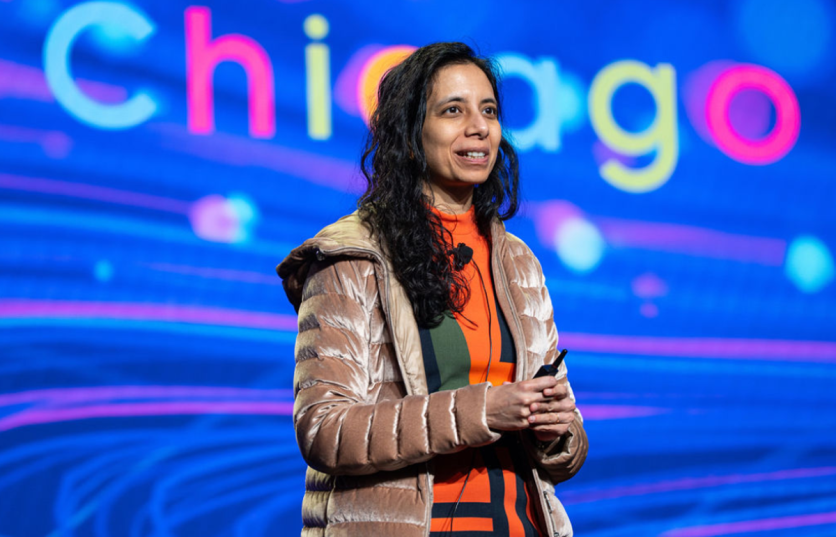
When Animashree Anandkumar stepped onto the SC26 stage Tuesday morning, she did not arrive with another incremental take on the dominant AI paradigm of the last five years. Her argument was structural: the transformer architecture that powers every major language model has a ceiling, and that ceiling appears the moment the subject shifts from language to the physical world.
The Keynote Argument: Where Large Language Models Hit a Wall
Traditional AI breaks down when confronted with weather systems, fusion reactors, or semiconductor stress testing. Insufficient physical training data, steep resolution demands, and model architectures built for text prediction rather than differential equations expose the limits of the current scaling playbook. Anandkumar made that case Tuesday morning to a room filled with engineers and infrastructure operators at McCormick Place, the opening venue for a conference running under the theme "HPC Unites."
Neural Operators: Learning Functions, Not Patterns
Her proposed replacement is a class of models called neural operators, which learn mathematical functions rather than text patterns. Instead of predicting the next word in a sequence, they predict physical phenomena across three-dimensional space and time — fluid dynamics, temperature gradients, electromagnetic behavior. Anandkumar first introduced the approach in 2020; since then, her lab has applied it to quantum chemistry, carbon capture modeling, and black hole simulation.
Her argument — developed in a paper published in Daedalus, the journal of the American Academy of Arts and Sciences — holds that genuine scientific discovery requires AI trained on data from the physical world, not text about it. As she stated earlier this year, "We have foundation models for language, not for physics" — a gap her lab has spent two decades working to close.
Accelerated Understanding: The Startup Behind the Keynote
Anandkumar did not arrive at SC26 simply as an academic. She arrived as a co-founder. She and Benedikt Jenik — her husband and an AI infrastructure engineer — had already turned down an offer to join Project Prometheus, including a 35% combined equity stake and over $2 billion in committed capital. Bezos and Prometheus went on to raise $12 billion in a Series B in June 2026. The two founded Accelerated Understanding instead, launching the company and its debut model on August 25.
5 Trillion Data Points, Zero Transformers
The model processed 5 trillion data points in a single prompt during testing — roughly five million times what leading language models typically handle in one exchange — while dispensing entirely with the transformer architecture underlying ChatGPT, Gemini, and their peers. Physics principles serve as guardrails, ensuring predictions remain anchored in physical reality rather than statistical correlation alone.
Target sectors include chip design, weather prediction, drug discovery, and fusion energy — industries where the question is never "write me a summary" but rather "will this design survive thermal stress at scale?"
The Show Floor: AI Infrastructure Takes Center Stage
SC26's programming spans AI for science, exascale computing, GPU and accelerator design, distributed systems, storage, interconnects, and large-scale deployment. The exhibition floor runs Tuesday through Thursday, November 17–19.
Penguin Solutions, SuperX AI, and the Federal Push
Penguin Solutions — now an NVIDIA AI Factory Specialized Partner — is showcasing what it calls its Full-Stack AI Factory Platform at booth #1723, with a session on sovereign AI infrastructure scheduled for Tuesday at 11 a.m. CST. The company posted $479 million in Q3 net sales, up 48% year-over-year, driven by surging demand for AI inference memory infrastructure.
SuperX AI Technology is making its U.S. exhibition debut at SC26, inviting AI cloud providers and infrastructure operators to booth #4550 to discuss workload requirements and regional deployment plans. Government IT distributor Carahsoft arrived alongside more than 50 vendor partners, reflecting the accelerating effort to bring HPC and AI infrastructure into federal and public-sector environments.
Why Chicago, Why Now
SC26 marks the conference's first time in Chicago, occupying McCormick Place through Friday, November 20. The city — voted Best Big City in the U.S. for a ninth consecutive year by Condé Nast Traveler — provides a pointed backdrop for a show whose central tension has shifted. The HPC community is no longer debating whether AI belongs in the supercomputing conversation; it is debating which architecture survives the next five years.
Anandkumar's answer, delivered Tuesday morning to more than 20,000 engineers, researchers, and infrastructure operators: the one that understands physics.

-
 C114 Communication Network
-
 Communication Home
