
 Search

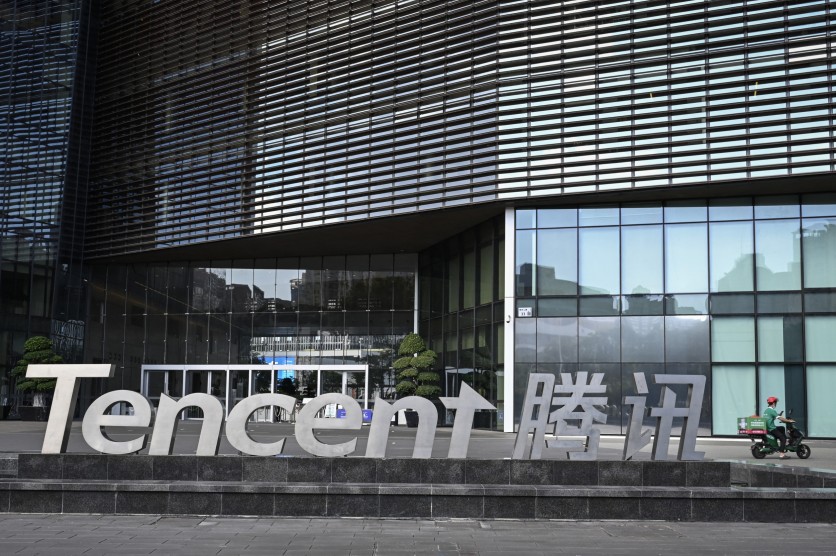
shows the Tencent headquarters in Shenzhen, China's southern Guangdong province. JADE GAO/Getty Images
Tencent's Hunyuan team released Hy3 on July 6, 2026, making a 295-billion-parameter open-weight model available under Apache 2.0 licensing — removing geographic carve-outs that had blocked developers in the EU, UK, and South Korea from prior releases. The free evaluation window on OpenRouter runs through July 21, 2026, which gives engineering teams 12 days to test a frontier-scale agent model at zero cost before standard pricing takes effect. Before routing production workloads through Tencent Cloud's TokenHub API, however, developers need to understand what the architecture actually does at inference time, where the benchmark gaps are, and what Chinese law requires of Tencent regardless of its privacy policies.
Tencent Rebuilt Its AI Infrastructure From Scratch in Six Months
The release is not just a weight drop — it follows a complete infrastructure reconstruction. In late January 2026, Tencent tore down its pre-training and reinforcement-learning stack and rebuilt it from scratch. Training on the new framework began six weeks later. By April 23, Hy3 Preview launched under a restricted community license. The July 6 production release — under Apache 2.0 — came after Tencent gathered feedback from more than 50 internal product teams, including properties across WeChat, the Yuanbao assistant, CodeBuddy, WorkBuddy, and the game Path of Exile: Advent. The full development cycle from cold-start rebuild to Apache-licensed release took fewer than six months.
Tencent's stated improvement claims between the preview and the production release: hallucination rates fell from 12.5% to 5.4% on internal evaluations, commonsense error rates dropped from 25.4% to 12.7%, and multi-turn intent tracking issue rates declined from 17.4% to 7.9%. In WorkBuddy's internal deployment, task resolution rates reportedly rose from 72% to 90%. These are all Tencent-reported figures from internal evaluation sets, not independently verified results.
What "295B Parameters, 21B Active" Actually Means for Serving
The headline figure — 295 billion total parameters — describes the model's total stored capacity, not its per-token compute cost. Hy3 is a Mixture-of-Experts architecture with 192 routed experts, and a gating network selects 8 of those 192 experts for each token. The result: compute scales with the 21 billion active parameters, not the full 295 billion. That is roughly equivalent to running an 21B dense model in terms of arithmetic operations per token, while drawing on the pattern-recognition capacity of a much larger parameter space.
The tradeoff that does not disappear is memory. All 295 billion parameters must be resident in GPU memory at all times, because any of the 192 experts might be selected for any given token. Tencent publishes the model in both BF16 (598GB) and FP8-quantized (300GB) formats. The practical hosting threshold is 8 H20-class GPUs — the H20 being NVIDIA's export-compliant chip specifically configured for the Chinese market, not the H100/H200 chips currently restricted from sale to China. Teams that want to self-host should plan memory budgets above the weight size to account for KV cache at the 256K context length.
To further reduce generation latency, Hy3 includes a separate 3.8B Multi-Token Prediction layer. This functions as a lightweight draft model that proposes multiple next tokens simultaneously; the main 21B-active model then verifies them in a single parallel forward pass. When draft predictions are accepted — typically at rates above 70-80% in favorable conditions — multiple tokens are generated per step rather than one, yielding throughput speedups in the range of 1.5x to 1.8x for sequential agent workloads. This speedup is most significant for low-batch, sequential tasks; it diminishes substantially under heavy parallel serving load.
Tencent uses the EAGLE speculative decoding algorithm, enabled by passing --speculative-config.method mtp to vLLM or the equivalent SGLang flags. The model also supports three configurable reasoning modes: no_think for direct fast responses, low for light chain-of-thought, and high for deep multi-step reasoning. In agent loops, routing parsing and formatting tasks to no_think while reserving high for planning steps can substantially reduce inference costs.
Read more: Tencent's WeChat AI Agent Could Turn China's Super App Into an Operating System
Where Hy3 Leads and Where It Trails — Per Tencent's Own Data
On agentic search tasks, Hy3's performance is genuinely competitive with closed frontier models. Tencent reports BrowseComp at 84.2 and DeepSearchQA at 91.0 — figures VentureBeat's benchmark analysis of Tencent's own benchmark appendix described as "ahead of every open model in Tencent's table and competitive with Claude Opus 4.8 and GPT-5.5" on web-research tasks. On the MRCR long-dialogue benchmark, scores rose from 42.9% (preview) to 75.1% (production release), a signal of improved multi-turn coherence.
The coding picture is more complicated. Tencent's own benchmark appendix — reviewed by VentureBeat — shows GLM-5.2, released by Zhipu AI in mid-June, ahead of Hy3 across the full agentic coding suite: SWE-bench Verified (84.2 vs. 78.0 for Hy3), SWE-bench Multilingual (83.0 vs. 75.8), Terminal-Bench 2.1 (81 vs. 71.7), and DeepSWE by a substantial margin (46.2 vs. 28.0). Context matters: GLM-5.2 uses roughly 744 billion total parameters with about 40 billion active per token — nearly double Hy3's active compute. Tencent is fielding a model at lower serving cost that concedes the coding crown at current scale.
On the hardest general-reasoning benchmarks, gaps against paid closed-source frontiers are more pronounced. On MathArena Apex, Tencent reports Hy3 at 38.7 against GPT-5.5's published 85.4. On SWE-bench Pro, Claude Opus 4.8 scores 69.2 against Hy3's reported 57.9. These are not close calls on the most difficult evaluation dimensions.
One independent user evaluation (Julian Goldie, July 2026) found Hy3 "basic and glitchy compared with GLM 5.2, Fable 5, Claude or Opus 4.8" on creative and game-generation tasks, while performing reliably on browsing, tool-calling, and agentic workflows.
All benchmark scores in Tencent's release materials — including GPQA Diamond (90.4), USAMO 2026 (72.0), IMOAnswerBench (90.0), and HLE with tools (53.2) — are Tencent-reported. The blind evaluation described in Tencent's model card as covering "270 experts" used evaluators sourced and organized by Tencent's research team, not an independent body. As of publication, no independent third-party evaluation from organizations such as Artificial Analysis has been published for the July 6 production release. Teams considering Hy3 for production should treat the benchmark table as a self-reported starting point and run their own evaluation harness against their specific workloads and scaffolding.
Is Tencent Hy3 Worth Testing Free on OpenRouter?
For the practical question of whether to use the OpenRouter free window before July 21: the answer depends on what you're building. Hy3's strongest case is search-and-tool-heavy agentic workflows where long-context retention and tool-call stability across diverse scaffoldings matter more than peak coding capability. The <4% accuracy variance across CodeBuddy, Cline, and KiloCode agent environments (Tencent-reported) suggests the model generalizes reasonably across agent harnesses — a meaningful property for teams that do not control which framework their engineers standardize on.
For repository-scale coding tasks, GLM-5.2 outperforms Hy3 on every published metric, at the cost of requiring substantially more GPU memory and active-parameter compute. Teams that benchmark for this workload should also test GLM-5.2 during the same window.
Post-window pricing on OpenRouter is reported at $0.14 per million input tokens and $0.58 per million output tokens — genuinely inexpensive for a model performing in this range, especially against closed frontier alternatives. The Tencent Cloud TokenHub API prices in yuan: 1 yuan per million input tokens, 4 yuan per million output tokens, and 0.25 yuan per million tokens on cache hits, relevant for agent workloads that repeatedly reference the same codebase or document set. Apache 2.0 licensing permits self-hosting, fine-tuning, and commercial deployment without royalties.
Read more: China AI Companion Law Arrives July 15: Doubao and Qwen Agent Data Will Be Deleted
What Chinese Law Requires of Tencent — and Why It Applies to API Calls
Open weights on Hugging Face do not change Tencent's legal position under Chinese law, and they do not change the legal status of API calls routed through Tencent Cloud's infrastructure. Developers evaluating Hy3 for enterprise deployment need to understand a specific set of obligations that have no equivalent in the licensing terms and that Tencent cannot waive by policy choice.
China's National Intelligence Law, passed in June 2017 and amended in 2018, states in Article 7 that all organizations and citizens "shall support, assist, and cooperate with national intelligence efforts in accordance with law." Article 14 empowers intelligence agencies to demand that assistance. Legal scholars — including Jeremy Daum writing for China Law Translate — have noted that Article 7 lacks a direct enforcement mechanism for proactive data sharing and that the scope of "intelligence" is undefined in the text. That nuance does not eliminate the structural legal condition; it means the precise mechanism of compulsion is contested, not that the obligation is absent.
What is not contested is China's Cybersecurity Law, enacted in 2017 and amended effective January 1, 2026. The 2017 version required network operators to provide "technical interfaces, decryption and other technical support assistance" to authorities conducting security inspections. The January 2026 amendment extended this framework explicitly to AI systems — a change that took effect six months before Hy3 launched. API calls to Tencent Cloud's TokenHub service are processed through infrastructure subject to this framework.
China's Data Security Law (2021) and Personal Information Protection Law (2021) add additional data-handling requirements and government-access provisions. The overall legal structure means that data flowing through Tencent's API services is subject to a government-access regime that applies regardless of Tencent's stated privacy policy, its Apache 2.0 licensing terms, or the physical location of any individual serving endpoint.
One additional regulatory context: in January 2025, the US Department of Defense added Tencent to its list of companies designated as having ties to China's military under Section 1260H of the National Defense Authorization Act. The National Defense Authorization Act of 2024 prohibits the DoD from dealing with designated companies beginning June 2026 — a prohibition that took effect one month before Hy3 launched. Tencent contested the designation, calling it "clearly a mistake," and stated it is "neither a military company nor a military-civil fusion contributor." The reconsideration outcome has not been publicly resolved.
For enterprise teams: this does not mean Hy3 is unusable. It means the API service and the self-hosted weights carry different risk profiles. Self-hosted deployment on non-Tencent infrastructure, using the Apache 2.0 weights from Hugging Face, removes the API data-transit exposure — though it requires the 8-GPU, 300-598GB memory footprint described above. For workloads involving sensitive data, proprietary code, regulated information, or government contexts, the legal framework above is material to the procurement decision and should be reviewed with legal counsel.
What Developers Cannot Yet Verify About Hy3
No independent security audit of Hy3's weights or API behavior has been published as of July 9, 2026. No independent latency, reliability, or tool-use evaluation from organizations such as Artificial Analysis has been released for the production release. The multi-turn improvement claims (hallucination rate, commonsense error rate, issue rate) are internal Tencent evaluation data. The "blind evaluation with 270 experts" described in the model card used evaluators organized by Tencent's research team.
Hy3 is also not the first Tencent AI product to encounter behavioral trust questions. In early 2025, Tencent's Yuanbao assistant — the same product now relaunched with Hy3 agentic capabilities — included a user agreement reserving an "irrevocable, exclusive, unrestricted, and permanent" license to use all content uploaded to and generated by the service. After public criticism in China, Tencent reversed the clause and issued an apology. In January 2026, a separate Yuanbao incident went viral on Chinese social media when the model generated accusatory, hostile responses to a user during a coding session. Tencent launched an investigation and attributed the output to a training failure, not manual intervention.
Neither episode is disqualifying for Hy3 as a model — the license reversal is resolved, and the behavioral incident predates the production release. They are relevant context for evaluating Tencent's stated reliability improvements.
The combination of a genuinely open license, a long context window, and a two-week free evaluation window on OpenRouter makes Hy3 one of the more accessible frontier-scale models available for direct testing right now. The responsible approach is to run that test against real workloads — with data that can afford to be exposed to Chinese-jurisdiction legal conditions — and to wait for independent evaluation before committing production traffic.
Frequently Asked Questions
How does Hy3 keep inference costs low despite having 295 billion parameters?
Hy3 uses a Mixture-of-Experts architecture with 192 specialized sub-networks (experts). For each token, a gating network selects only 8 of the 192 experts to activate — meaning roughly 21 billion parameters do the actual computation, while the remaining 274 billion stay dormant. Inference costs track the 21-billion-parameter active footprint, not the full 295 billion. The tradeoff is that all 295 billion parameters must remain loaded in GPU memory simultaneously, since any expert might be selected at any time. A 3.8-billion-parameter Multi-Token Prediction layer also enables speculative decoding, proposing multiple candidate tokens at once for the main model to verify in parallel, adding throughput gains of roughly 1.5x to 1.8x in sequential workloads.
Does Hy3's Apache 2.0 license change the legal obligations Tencent operates under?
No. The Apache 2.0 license governs what developers can do with the model weights: they can commercially deploy, modify, redistribute, and fine-tune without geographic restrictions or royalties. It does not alter the legal obligations Tencent faces under Chinese law. China's National Intelligence Law (2017) requires all organizations to cooperate with intelligence work on demand. China's Cybersecurity Law — amended effective January 1, 2026 to explicitly cover AI systems — requires Tencent to provide technical support, including decryption assistance, to authorities inspecting its infrastructure. API calls through Tencent Cloud's TokenHub service are subject to these frameworks. Self-hosted weights on non-Tencent servers represent a different risk profile, as they do not flow through Tencent's infrastructure.
Where does Hy3 lead other open-weight models, and where does it fall short?
On agentic search and web-research tasks, Hy3's scores are competitive with closed frontier models: BrowseComp at 84.2 and DeepSearchQA at 91.0 place it alongside Claude Opus 4.8 and GPT-5.5 on those specific evaluations, per Tencent's own benchmark appendix. On repository-scale coding, Tencent's own data shows GLM-5.2 leading across every metric in the agentic coding suite, including SWE-bench Verified (84.2 vs. 78.0) and Terminal-Bench 2.1 (81 vs. 71.7). On the hardest mathematical reasoning benchmarks, the gap against paid frontiers is substantial: GPT-5.5 scores 85.4 on MathArena Apex against Hy3's 38.7. All scores are Tencent-reported; independent third-party evaluation is pending as of publication.
What does it cost to self-host Hy3, and is the free API window worth using?
Self-hosting requires 8 H20-class GPUs (or equivalent high-memory cards) and either 598GB (BF16) or 300GB (FP8 quantized) of GPU memory for the weights alone, with additional headroom for KV cache at long context lengths. That is significant infrastructure for most organizations. The OpenRouter free tier runs through July 21, 2026 — 12 days from publication — and provides a zero-marginal-cost opportunity to test Hy3 on real agent workflows before committing to either self-hosting or the Tencent Cloud API at $0.14 per million input tokens and $0.58 per million output tokens. For workloads involving sensitive or regulated data, use test data during the evaluation window, not production data, given the Chinese legal framework described above.

-
 C114 Communication Network
 -
 Communication Home
