
 Search

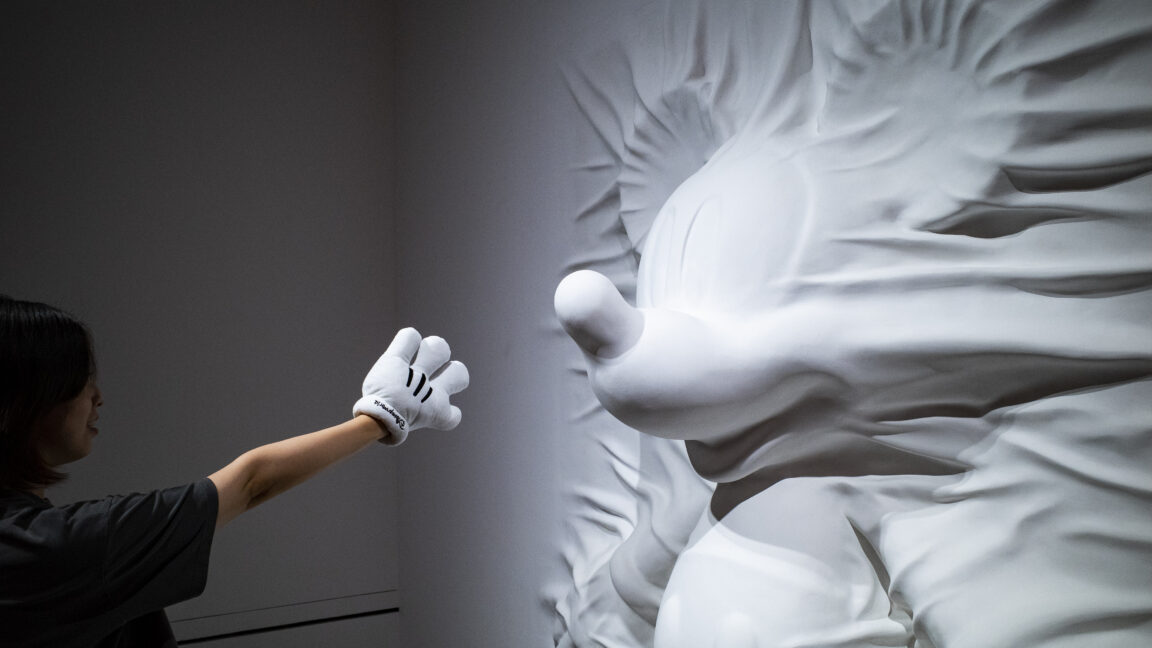
Credit: China News Service via Getty Images
OpenAI’s recently announced plans to shutter its Sora video-generating app have also scuttled the company’s planned $1 billion licensing partnership with Disney, according to multiple press reports.
“As the nascent AI field advances rapidly, we respect OpenAI’s decision to exit the video generation business and to shift its priorities elsewhere,” Disney said in a statement provided to media outlets. “We appreciate the constructive collaboration between our teams and what we learned from it, and we will continue to engage with AI platforms to find new ways to meet fans where they are while responsibly embracing new technologies that respect IP and the rights of creators.”
Disney and OpenAI announced the blockbuster three-year licensing deal in December, saying that over 200 Disney-owned characters would be available for use in Sora-generated videos. At the same time, Disney said it would be making a $1 billion equity investment in the AI company.
While that agreement was presented publicly as all but a done deal, an OpenAI statement at the time said it was “subject to the negotiation of definitive agreements, required corporate and board approvals, and customary closing conditions.”
Now, Axios cites “a source familiar with the situation” in reporting that no money ever changed hands in the planned deal. The Financial Times reports that the deal never got off the ground as OpenAI shifted its strategic direction, according to “two people familiar with the matter.” And Deadline cites a Disney insider who said point-blank that “the deal is not moving forward.”
Reuters cites an anonymous “person familiar with the matter” who described the Sora shuttering as “a big rug-pull” that blindsided the massive entertainment conglomerate. OpenAI published an updated version of Sora’s safety standards as recently as Monday, suggesting that many inside the company were not prepared for the late Tuesday announcement.
That said, Reuters’ source also suggested that Disney and OpenAI were still discussing whether there was another way the companies could partner with or invest in each other.
No more shockwaves
The December announcement of the planned Disney/OpenAI partnership sent shockwaves through Hollywood, with many publicly worrying about what it meant for the future of physical actors and human-created cinematic content. By January, Disney CEO Bob Iger was talking about Sora-generated content appearing on Disney+ as part of an effort to make the service a destination for daily short form video.
“The demand for Disney characters in particular from our users is sort of off the charts,” OpenAI CEO Sam Altman told CNBC in December.
In the months since, though, Hollywood’s worries and attention have largely shifted from Sora to upstart AI video apps like SeeDance 2.0, which went viral with detailed videos of familiar characters in Hollywood-style scenes, complete with realistic cuts and camera angles. Disney was among the companies that sent a cease-and-desist letter to SeeDance-maker ByteDance last month, calling the app a “virtual smash-and-grab of Disney’s IP [that] is willful, pervasive, and totally unacceptable.” Disney has also made legal threats to Google and other companies it says trained on its copyrighted works without permission.
When the Sora 2 model launched in October, OpenAI initially asked copyright holders to actively opt out of having their works used as the basis for generated videos. Following a public outcry, OpenAI quickly changed direction and instead asked IP owners to opt in to work with Sora, with vague promises of future profit-sharing.
Sora quickly became a hit on mobile platforms following its October launch as a standalone app. But the outsize attention from users was short-lived—estimates from Appfigures Intelligence provided to Ars Technica suggest the app peaked at about 3.3 million downloads across iOS and Google Play in November before falling to just 1.1 million downloads in February.
Across those months, Appfigures Intelligence estimates Sora grossed just $2.14 million in revenue from 11.7 million downloads. That’s a drop in the bucket for a company the size of OpenAI, especially when you consider the massive costs associated with generating AI video.

-
 C114 Communication Network
 -
 Communication Home
