
 Search


AI-generated photo created using Supercool
Artificial intelligence has made it easier to begin creative work. Drafts appear faster. Ideas multiply. Variations arrive on demand. Yet for many teams, the moment after the prompt ends is still where progress slows. Files must be resized. Assets reformatted. Platforms adjusted. Outputs assembled into something usable.
The problem is not a lack of ideas. It is the gap between generation and deployment.
A new class of systems is beginning to close that gap by doing more than answering a prompt. Instead of stopping after one response, they carry the task through to completion. This is what agentic AI means in practice: AI that does the work, not just suggests the next step.
One example of this shift can be seen in Supercool, a creative production platform developed by Famous Labs, the parent company behind a growing portfolio of execution-first AI products.
What Happens After the Last Prompt
Most AI tools stop after giving you an answer. You ask for a design, it gives you one version. You ask for a landing page, it gives you a draft. From there, you still have to refine it, resize it, adapt it for different platforms, and prepare it for launch.
Supercool works differently. Once you give it a direction, it doesn't stop at a single output. It continues building. It creates multiple variations, formats them for different uses, and prepares finished files that are ready to publish. What would normally require separate tools and manual adjustments happens in one flow.
This difference is not just about moving faster. It is about not having to restart the process after every step. The work moves forward until it is complete.
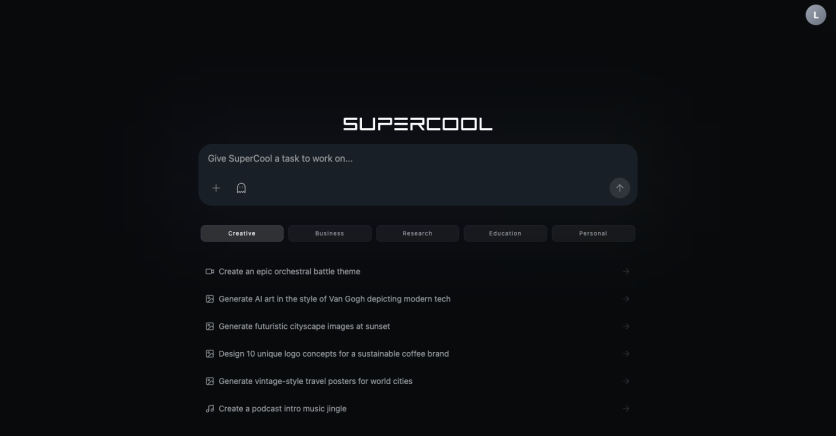
Supercool
Replacing the Creative Stack
In practice, this continuity has led to a notable behavioral change among users. According to feedback shared by the Supercool team, many creators and small teams have begun canceling subscriptions to individual tools they once relied on—copywriting platforms, stock image libraries, video editing software, and even website builders.
The reason is not feature overlap, but workflow consolidation. A single Supercool session can now produce what previously required multiple applications and handoffs. Creative work that once moved across fragmented tools is executed within one continuous process.
The result is not the optimization of a stack, but the removal of it.
From Weeks to Hours
This consolidation has also changed how long creative production takes. Users report producing hundreds of ad variations in under an hour—output volumes that previously required days or weeks of coordination.
In one case, a small business owner needed a custom vehicle wrap on a 2010 Nissan Cube for his pressure washing company. Traditionally, that project would involve multiple freelancers—an illustrator for the logo, a designer for the vehicle wrap layout, and a brand specialist to ensure consistency. The process could stretch across weeks of back-and-forth revisions. Using Supercool, the owner submitted a single prompt along with one reference image. Within minutes, he received a complete, cohesive wrap design aligned with his brand.
The same system is now used internally by the Supercool team for their own creative production. Rather than outsourcing or coordinating across multiple tools, the team relies on the platform to generate and deploy marketing assets in a single session. In that sense, the product is not only external-facing; it has become core infrastructure for its own builders.
As production time compresses, a new constraint emerges. The bottleneck shifts away from creation and toward selection. Deciding what to release becomes harder than producing it.
This inversion is significant. It suggests that execution is no longer the limiting factor in creative work. Judgment is.
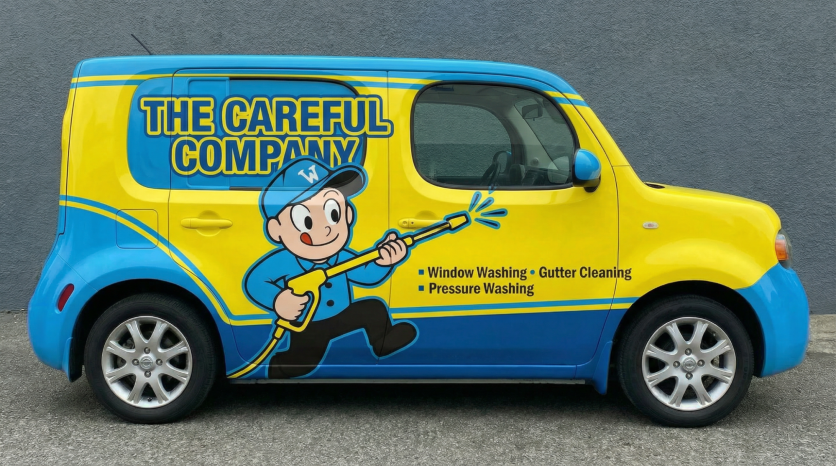
AI-generated photo created using Supercool, provided by user
When Creatives Stop Being Technicians
Another consequence of agentic execution is a quiet change in how creative roles are experienced. Much of the work creatives have historically disliked—resizing assets, formatting documents, syncing audio and video, preparing files for different platforms—begins to disappear. At the same time, speed increases. Ideas can be tested and refined in rapid cycles. Instead of spending hours assembling deliverables, creatives can iterate quickly, compare variations, and improve output in real time.
In the vehicle wrap example, the business owner did not spend days coordinating illustrators and layout revisions. He chose a direction and evaluated the result. The system handled the rest. The shift was not in creativity, but in who carried the procedural burden.
What remains is direction. Creatives decide what should exist, which variation best represents the brand, and whether the output aligns with intent. They no longer assemble the work manually.
This distinction matters because it reframes the value of human input. Taste, editorial judgment, and clarity of intent become central. Mechanical production recedes.
Why This Matters Now
The timing of this shift is not accidental. Solo founders and small teams have been among the fastest adopters of Supercool, in part because they feel execution gaps most acutely. Limited resources magnify friction. Every extra step carries a cost.
Agentic AI reduces that friction by allowing small teams to operate with output capacity once reserved for much larger organizations. Execution becomes scalable without additional headcount.
This same execution-first philosophy also underpins Famous.ai, another platform developed by Famous Labs. While Famous.ai focuses on deploying applications, websites, and operational tools rather than creative assets, both products share the same underlying principle: work should move from intent to deployment without unnecessary interruption.
A New Expectation for AI Tools
The emergence of agentic AI does not eliminate human involvement. It concentrates it. As execution becomes continuous, human effort shifts toward decision-making rather than coordination.
In this context, intelligence is measured less by how articulate a system appears and more by what exists at the end of the process. Drafts become incidental. Finished outcomes matter.
Platforms like Supercool point toward a future in which AI is no longer judged by how well it suggests the next step, but by whether it completes the one already chosen. When AI keeps working after the prompt ends, the definition of productivity changes—and so does the structure of creative work.

-
 C114 Communication Network
 -
 Communication Home
