
 Search

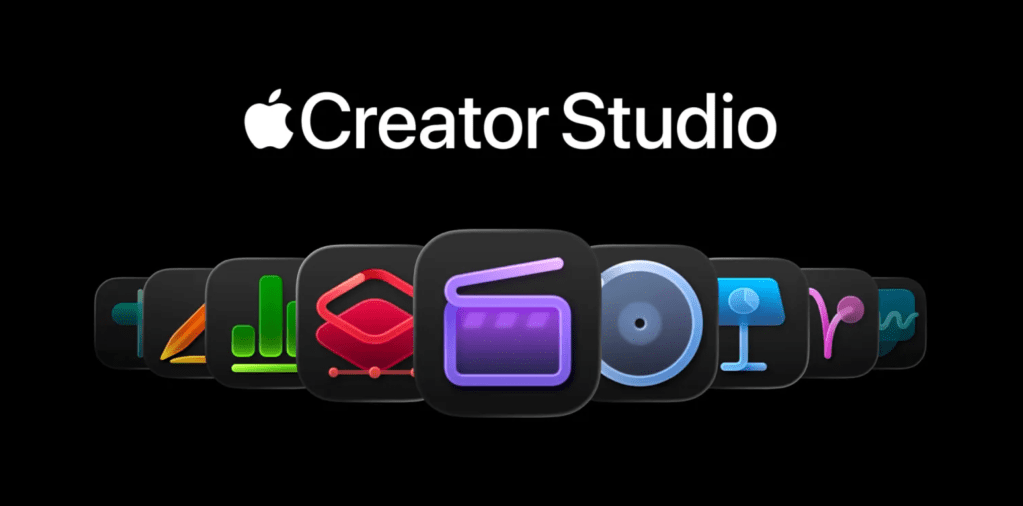
Image Credits:Apple
Generative AI apps that can create photos, videos, songs, and more are growing in popularity. But with the release of Apple’s new Creator Studio Pro suite, available to the public on Wednesday, the tech giant has approached the addition of AI as a tool that aids in the creator process, but doesn’t attempt to replace it.
Instead, Apple lays out a vision that suggests the productivity suite of the future is the one that focuses on the needs of creators — whether that’s filmmakers, musicians, artists, or anyone else enmeshed in a creative industry of some kind — and empowers them to be more efficient using AI.
It’s tricky to bring AI into the world of creativity, given the backlash and even legal action from creators who are angry about AI models training on their works, then reproducing similar art or creative content in the AI systems’ output.

Apple, however, sees AI as a tool that handles more of the basics and tedious tasks — like generating a slideshow for you to edit from your notes, extracting chord information from a song, searching across hours of video footage for the clip you need, changing the camera angle on your images, and more.
The tools in Creator Studio Pro are not new, but they’ve never been packaged as a subscription product, which is now available at $12.99 per month or $129 per year.

Included in the subscription are Final Cut Pro, Motion, and Compressor for video editing; Logic Pro and Mainstage for music creation; image editing tool Pixelmator Pro; and a set of exclusive features in Keynote, Pages, Numbers, and Freeform. The suite also includes the newly launched Pixelmator Pro app for iPad.
While Apple’s traditional productivity software applications haven’t caught up to those from Google and Microsoft, the tech giant has always found more success in the creative fields. And with the addition of AI features, the company likely sees the possibility of making its creative software more accessible to those who aren’t fully professionals – like an indie musician or artist who wants to improve their marketing and sales, those who quickly compile video footage to post on social media, or those who want to create music or art and edit the output.
Disrupt 2026 Tickets: One-time offer
Tickets are live! Save up to $680 while these rates last, and be among the first 500 registrants to get 50% off your +1 pass. TechCrunch Disrupt brings top leaders from Google Cloud, Netflix, Microsoft, Box, a16z, Hugging Face, and more to 250+ sessions designed to fuel growth and sharpen your edge. Connect with hundreds of innovative startups and join curated networking that drives deals, insights, and inspiration.
Disrupt 2026 Tickets: One-time offer
Tickets are live! Save up to $680 while these rates last, and be among the first 500 registrants to get 50% off your +1 pass. TechCrunch Disrupt brings top leaders from Google Cloud, Netflix, Microsoft, Box, a16z, Hugging Face, and more to 250+ sessions designed to fuel growth and sharpen your edge. Connect with hundreds of innovative startups and join curated networking that drives deals, insights, and inspiration.
Whether Apple’s tools are the right ones for the job compared with Adobe products will depend on the user’s specific needs and their familiarity with professional creative tools.
Each tool in the suite has received its own series of upgrades timed with this launch, both AI and otherwise. Notable additions include:
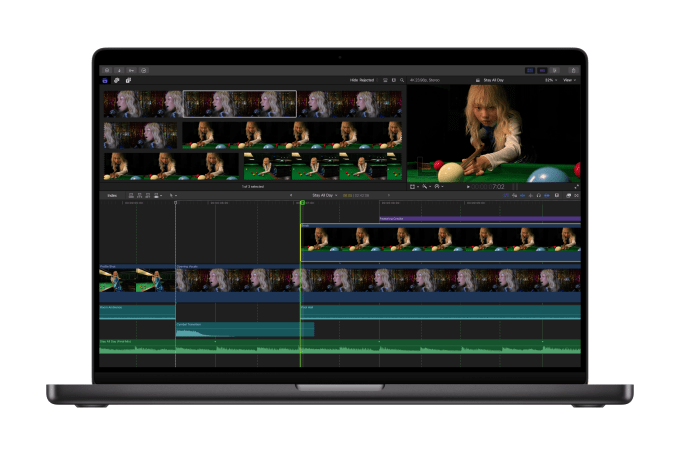
- Final Cut Pro: AI-powered transcript search for finding the right soundbite across hours of footage; AI-powered visual search assistant, allowing users to search for an object or action to add to their timeline; beat detection to edit to the rhythm of music, which uses an AI model to analyze music tracks; a new Montage Maker on iPad for easily making highlight videos from footage; multiple selection support for batch edits, background export, and external monitor playback on iPad; access to content to enhance videos, like graphics, dynamic titles and more.
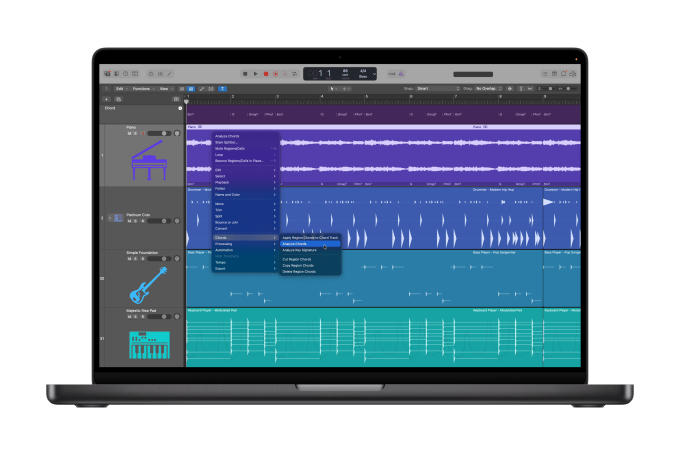
- Logic Pro: A new synth player feature, built from performances, adds a virtual Session Player that can play synth keyboard and bass parts; Chord ID, which uses AI to analyze audio to extract chord information; sound packs and producer packs come to the Mac with the expansion of the Sound Library; the iPad app also gets new features like Quick Swipe Comping to assemble recordings in different ways than were captured, and an AI-powered understanding of the loop library for finding the right sound.
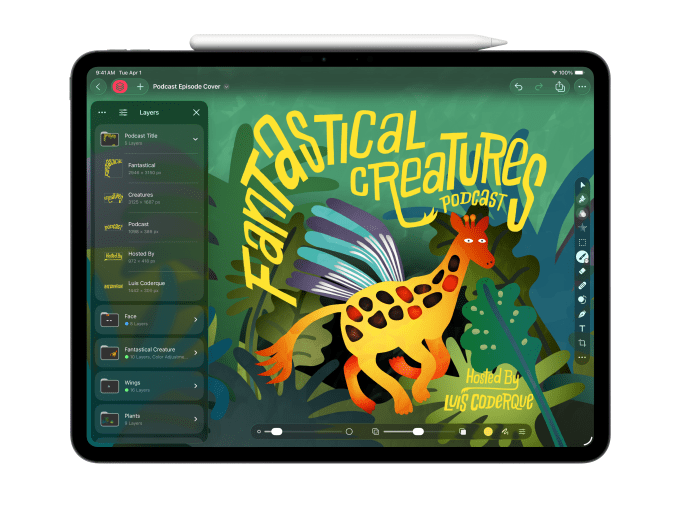
- Pixelmator Pro for Mac and iPad: The app, which is now available on iPad, already offers a number of AI features like those to upscale images (Super Resolution), offer composition suggestions (Auto Crop), remove artifacts, retouch, and more. With the Creator Suite launch, the app gets a new Liquid Glass design to match the rest of Apple’s software, a new Warp tool for reshaping layers, and Warp-powered mockups to preview designs for apparel or other products in real-world imagery.
- Keynote, Pages, Numbers, and Freeform: These general-purpose productivity apps are gaining new features for Creator Studio subscribers, including new premium templates and themes in Keynote, Pages, and Numbers, and an image and graphic library across all four apps, dubbed the Content Hub; an AI-powered image generation and remixing feature lets creators pick from prebuilt configuration options to change the style, orientation, or camera angle for their photos, graphics, icons, or other visual concept; other AI tools can enhance images (using the Super Resolution feature) or make composition suggestions.

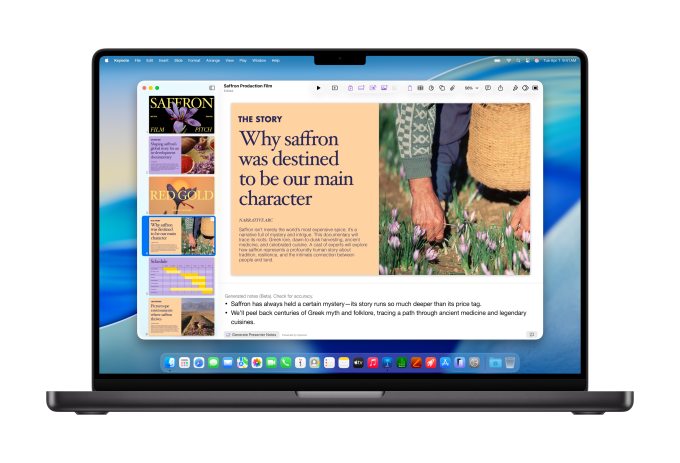
- Keynote, specifically, adds several AI features, including a new tool that uses your text notes as a starting point to create a slideshow from scratch; AI can also generate your presenter notes and clean up your slide content.
- Numbers, meanwhile, can use AI to analyze patterns in your spreadsheet data and make suggestions for table contents (Magic Fill). It can also generate a formula to describe what it generated, so you can learn how it works.
Apple says it will continue to offer its creativity apps as standalone downloads, and existing users will still get updates, including these new features. Meanwhile, Keynote, Pages, Numbers, and Freeform will remain free apps, but the new, premium features will be locked behind the subscription. It’s an interesting choice to allow users to choose to purchase apps outright, as before, as that differentiates Apple’s offering from others, like Adobe.
In addition, Apple lets users share their apps through Family Sharing with up to five family members, which Adobe doesn’t offer. Users can also cancel their subscription at any time, without penalty. However, Adobe remains a fierce competitor with its expansive and detailed tools, which also run on iOS.
Some of the AI features are powered by Apple Intelligence, like the visual and transcript search in Final Cut Pro, which runs locally on the device. Others involve the use of third parties, like OpenAI, which powers things like advanced image generation, Keynote slides, and presenter notes. Creator Studio’s AI features either are processed on the device or use a private relay to anonymize the traffic. Apple says these protections mean users’ content is kept private and never used for AI training.

-
 C114 Communication Network
 -
 Communication Home
