
 Search

Joby Aviation
Joby Aviation has pulled off a milestone that no company had managed before, sending an aircraft across the entire country without a single hands-on control input.
The achievement puts a spotlight on how far autonomous flight technology has come and hints at where it could be headed next.
Joby Aviation Completes First-Ever Fully Autonomous Flight
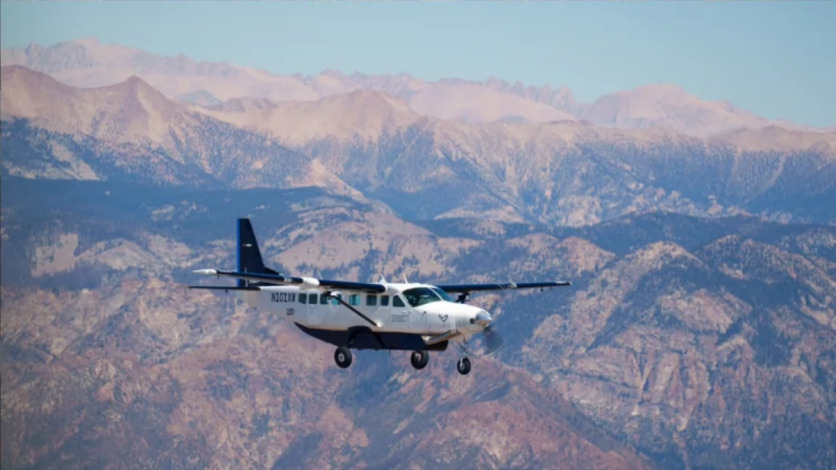
Joby Aviation announced that an aircraft equipped with its autonomy technology completed the first-ever fully autonomous flight across the United States, wrapping up the eastbound leg of its journey in North Carolina's Outer Banks.
The aircraft, a converted Cessna Caravan, handled every part of the trip on its own, including taxiing, takeoff, route navigation, and landing, all without a single control input from the safety pilot on board.
Joby founder and CEO JoeBen Bevirt said the cross-country journey offers a glimpse into a new era of aviation. He added that autonomy has an important role to play in the future of flight since it can help connect remote communities, deliver critical supplies, respond faster to disasters, support military operations, and keep pilots out of harm's way.
Joby Aviation Traveled This Distance With Autonomy
The aircraft covered a total of 3,199 miles during its transcontinental run. The flight departed from Concord, California, and made several stops along the way, including Phoenix, Fort Worth, and Shaw Air Force Base in South Carolina. It then finished at Dare County Regional Airport in North Carolina.
Throughout the trip, the aircraft was supervised remotely from Joby's Autonomy Headquarters in California and from Shaw Air Force Base, at times operating from as far as 2,323 miles away from its human overseers.
As a tribute to aviation history, the aircraft performed a low pass near the First Flight Monument in Kitty Hawk, honoring the spot where Orville and Wilbur Wright achieved the first powered flight back in 1903, before continuing to its final landing.
Autonomous Flight Technology from Joby Aviation
Joby's autonomy system is built on a stack acquired from Xwing Autonomy back in 2024, and the technology has now logged more than 400 flights and roughly 800 automated flight hours across both controlled and uncontrolled airspace.
During the cross-country trip, the aircraft also proved capable of integrating into busy general aviation traffic at Phoenix Deer Valley Airport, one of the busiest in the country. The aircraft was able to reroute around severe weather in real time without any prior familiarity with the airspace.
The system has been tested in military settings, including the Air Force's Agile Flag readiness exercise, where it delivered replacement parts a full 24 hours faster than conventional logistics methods. It has also been tested in the REFORPAC exercise, where aircraft based in Hawaii were remotely operated from Guam, nearly 4,000 miles away.
Application for Joby Aviation's Autonomous Tech
Joby said the milestone demonstrates real-world operational maturity, safety, and dual-use utility for its autonomy technology, pointing to applications across commercial freight, medical transport, disaster response, and defense logistics.
In North Carolina, the flights supported the state's eLIFT-NC initiative for statewide healthcare logistics, while stops out west contributed to a multi-state coalition studying how autonomous aircraft can safely operate in high-altitude, extreme-environment airspace.
By building its autonomy system onto an aircraft already certified for flight, Joby is positioning the technology as a scalable path toward broader autonomous air logistics, rather than something limited to a single test platform.
The aircraft is now beginning its return journey westward, with additional stops planned in cities including Raleigh, Louisville, and Salt Lake City along the way.

-
 C114 Communication Network
 -
 Communication Home
