
 Search

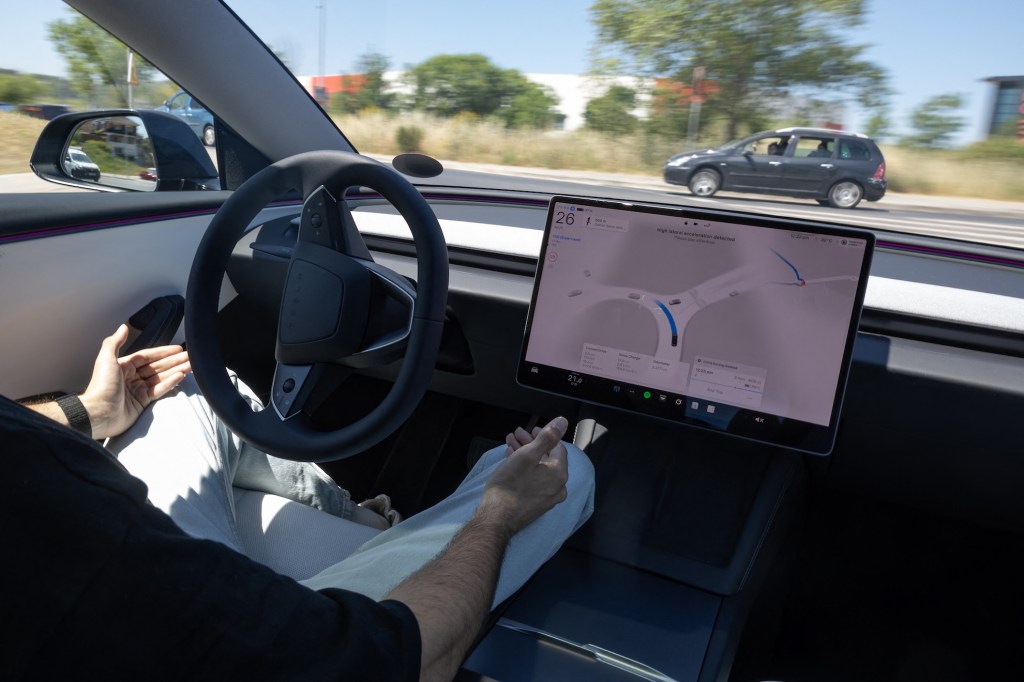
Image Credits:Josep LAGO/AFP / Getty Images
Tesla has changed the name of its advanced driver assistance system in Europe after pushback from Germany’s transportation ministry. It’s now called “Tesla Assisted Driving,” instead of “Full Self-Driving (Supervised).”
It’s a big capitulation from Tesla, which has been using the “Full Self-Driving (Supervised)” name for years despite the system requiring humans to pay attention to the road and take over when necessary. But the name change could help Tesla achieve its goal of wider adoption on the continent, which could unlock a potentially massive new revenue stream for the company.
Germany’s transport minister, Steffen Bilger, said earlier this month that calling the software “Full Self-Driving” was somewhat misleading because it doesn’t perform the entire task of driving. He spoke with Tesla last month, and the company suggested the name change, according to an official release from the ministry. Bilger said he will now advocate for approval of Tesla Assisted Driving across Europe ahead of an EU-wide vote that could happen later this year. Tesla CEO Elon Musk thanked Bilger on X this week.
Musk has spent years agitating for Full Self-Driving (Supervised), or FSD, to be approved in Europe. “FSD in Europe will save lives of people in the car, as well as vulnerable road users like pedestrians, cyclists, and pets,” he wrote on X in June 2025. “Please let your government know that you want approval.”
In March of this year, he wrote that the “extreme regulatory burden” of the EU “stifles innovation in Europe,” adding that Europe “will love Tesla self-driving!”
Just a few weeks later, the Netherlands became the first European country to approve FSD (Supervised). On Wednesday, Reuters reported that Tesla’s campaign for European approval has been “built on faulty company safety research” and “flawed studies.” The outlet also reported that the Dutch vehicle safety regulator, RDW, faced fierce pressure from Tesla and its legion of online supporters.
Tesla’s software has certainly become more capable over the years. What used to be little more than a mix of lane centering and adaptive cruise control is now a driver assistance system that some owners use for nearly 100% of their daily driving. FSD can pull in and out of parking spots and navigate surface streets and highways. Tesla is so confident in the technology that it recently made it possible for FSD to intervene in a human driver’s control of the vehicle if it senses an oncoming collision — even if FSD is not active.
But FSD has been at the center of federal investigations and civil lawsuits over crashes in which it was allegedly in use. Its less capable predecessor, Autopilot, has been associated with dozens of fatalities. Tesla discontinued Autopilot earlier this year after a judge ruled Tesla had engaged in deceptive marketing about the system’s capabilities.

-
 C114 Communication Network
 -
 Communication Home
