
 Search

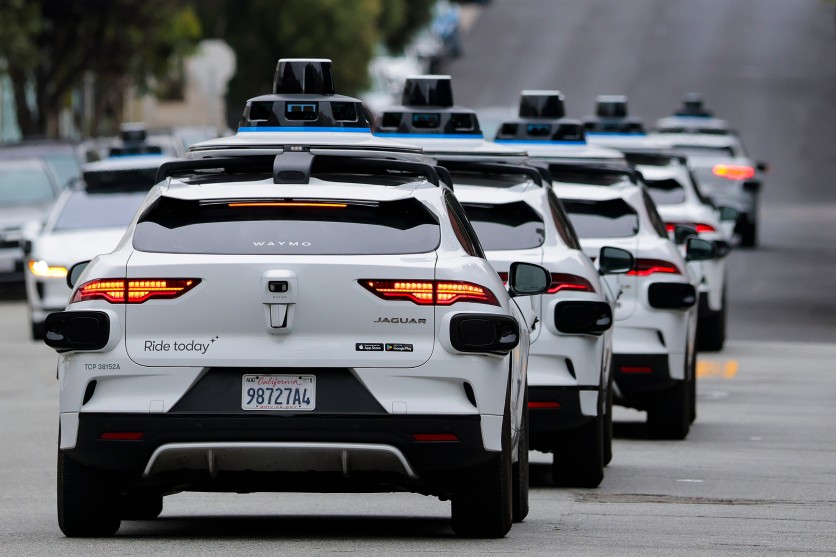
A line of Waymo robotaxis drives through North Beach on July 07, 2026 in San Francisco, California. Getty Images/Heather Diehl
Waymo returned to Phoenix freeways on July 29 after a 72-day suspension — and chose that same week to describe its autonomous fleet as substantially safer than human drivers, according to its safety impact data. What Waymo did not address in its freeway-return announcement is an independent study released ten days earlier that challenges the benchmark behind that claim. Researchers at the Sam Schwartz Transportation Research Program at Hunter College found that Waymo's rate of crashes resulting in serious injuries or deaths is 1.5 times higher per million miles than New York City's professional for-hire vehicle fleet — the Uber and Lyft drivers whose urban market robotaxis are actually built to replace.
In the San Francisco Bay Area — Waymo's largest and most established urban market — that rate is more than three times higher than the city's professional for-hire drivers. The study, conducted with advocacy group Open Plans and published July 20, compares Waymo's own NHTSA filings against data from New York City's Taxi and Limousine Commission and Department of Transportation dating back to 2020.
Waymo has disputed the methodology. "Any meaningful safety analysis should compare apples-to-apples data, based on best practices. We caution against comparisons that extrapolate Waymo's safety performance from one place to another," spokesperson Ethan Teicher said. The company's standard safety statistic — that it produces 94% fewer serious injury and fatal crashes than human drivers — draws its benchmark from the full population of US drivers, including impaired, distracted, and inexperienced ones.
The distinction matters for a rider making a decision today about whether to use a Waymo for an airport trip: a professional Lyft driver is roughly 14 times safer than the average American motorist, according to the Hunter College study. If that is the correct comparison — and reasonable researchers disagree on this — then the safety premium Waymo offers over its actual competition is far smaller than the 94% figure implies, and in the most serious crash categories, it may currently run in the other direction.
What the Freeway Return Actually Fixed — and What It Did Not
Waymo resumed freeway rides in Phoenix after the company verified a software fix "through a rigorous combination of structured testing, simulation, and real-world driving with safety specialists present," according to a company statement. Los Angeles, the San Francisco Bay Area, Miami, and Austin are expected to follow in the coming days. Riders in those cities who want early access can express interest through the Waymo app; until freeway routing is restored, trips that would normally use highways are rerouted on surface streets.
The fix addressed a specific and technically interesting failure. Waymo's fifth-generation Automated Driving System uses LiDAR capable of detecting objects at 300 meters (984 feet) and cameras seeing to 500 meters (1,640 feet). The sensors almost certainly detected construction zone boundaries — the closure signs, the cones, the flashing amber lights. What failed was the behavioral decision layer above the sensor stack: a priority weighting that determines what the vehicle does when two competing safety signals appear simultaneously. When oncoming freeway traffic and a zone-closure boundary were both present, the system consistently chose traffic-avoidance and drove through the closure.
The National Highway Traffic Safety Administration's recall documents state the root cause directly: under certain conditions, the 5th Generation system "may enter and drive at speed in freeway construction zones due to inappropriately prioritizing the avoidance of other freeway hazards and/or failing to recognize the construction zone," according to NHTSA's recall filing.
An over-the-air patch can reconfigure that weighting — and that is what Waymo deployed between June 16 and 29. The 13 incidents that triggered the recall — six in Phoenix on April 11 and 19, seven in the San Francisco Bay Area on May 18 — did not produce injuries or collisions, but one passenger, Elliot Slade, described his Waymo driving between cones marking an active construction section of Highway 101 before a California Highway Patrol officer began pursuit; the vehicle eventually exited to a residential neighborhood.
What the patch does not address — and what remains an open regulatory question — is the broader category of emergency-scene responses. NHTSA Administrator Jonathan Morrison issued a letter on July 8 formally declaring that the industry's inability to recognize and respond to emergency scenes constitutes a "functional insufficiency," not an edge case. The construction zone fix resolves a behavioral priority conflict. Emergency scenes — with smoke degrading LiDAR returns, emergency vehicle lights producing sensor artifacts, and irregularly placed cones — represent a harder perceptual problem that a behavioral weighting patch does not address.
Read more: Waymo Freeway Recall Grounds 3,871 Robotaxis: Hazard Software Missed Work Zones
What "94% Safer" Actually Measures — and Why Researchers Dispute It
Waymo's central safety statistic compares its serious-injury and fatal crash rate against a national benchmark of all US drivers. That benchmark includes impaired drivers, distracted drivers, and drivers with no professional experience. It is also the population most likely to cause the crash types Waymo avoids best — rear-end collisions, intersection failures, and low-speed inattention errors.
The Hunter College study argues that the correct comparison, when evaluating whether a robotaxi service makes urban streets safer, is the professional for-hire driver it actually replaces — a population that is already 14 times safer than the average American motorist. Against that benchmark, Waymo's record is different. Nationwide, three Waymo vehicles were involved in crashes causing serious injuries or deaths over the full data period since 2020; New York's for-hire vehicles drive vastly more miles, making the per-mile rate comparison unfavorable to Waymo in the most severe crash category.
"All of the claims made by Waymo, by robotaxi enthusiasts, are thin because they just haven't driven enough," Kelly McGuinness, director of the Sam Schwartz Transportation Research Program at Roosevelt House at Hunter College, said. "There is no solid evidence as of yet to make such a claim compared to the for-hire vehicles already serving this city," Sam Schwartz, the program's founder and former New York City traffic commissioner, said at the study's release.
Waymo's response — that researchers should compare "apples-to-apples" using established best practices and should not extrapolate from one market to another — is technically defensible. The company's 94% figure uses NHTSA's Standing General Order methodology, and the Hunter College analysis draws comparisons across different geographic markets and time periods. But Waymo has not published a direct comparison of its serious-injury rate against professional for-hire driver populations using its own data. The methodological dispute remains open.
The overall crash rate picture is less contested. When looking at all crashes rather than only serious-injury or fatal ones, Waymo vehicles are involved in approximately 67% fewer injury-causing crashes per million miles than New York City's for-hire fleet. The inversion — better overall, potentially worse at the most serious end — is what the study's authors flag as the critical finding for regulators and riders.
Six Recalls in Two Years: What the Pattern Shows
The construction zone recall was Waymo's sixth software recall since February 2024. The sequence covers robotaxis entering flooded roads (May 2026), whose interim patch subsequently failed in Atlanta before Waymo acknowledged it lacked a permanent fix; illegal behavior around school buses in Austin — documented in at least 24 instances — still under NHTSA investigation; low-speed collisions with parking gates and barriers; and a collision with a towed pickup truck in Phoenix.
Each recall has been filed voluntarily, and Waymo has defended the pattern as evidence that its self-regulatory process works: the company identifies problems, discloses them to regulators, and deploys fixes without waiting for an enforcement order. That defense holds in some cases. The construction zone behavioral fix was deployed to all 3,871 affected vehicles via OTA update within six weeks of filing, and freeway service was restored after the fix was validated, according to NHTSA's recall documentation.
The flood recall complicates that argument. The interim patch failed in Atlanta within two weeks; Waymo acknowledged it still has no permanent fix for rain-related navigation failures. Two federal investigations — one by NHTSA and a parallel one by the National Transportation Safety Board — into a January 23, 2026, collision in which a Waymo robotaxi struck a child near Grant Elementary School in Santa Monica remain open. The Austin school bus recall, which covered at least 24 illegal passes of stopped buses, is also still under federal review.
None of these outstanding investigations affect whether Waymo's construction zone fix works. But they are part of the context in which the company is returning to freeways and reasserting its safety claims. Waymo has driven 220.6 million rider-only miles through March 2026, achieving substantially fewer serious or fatal injury crashes than human drivers across the same conditions in its operating cities, according to its own NHTSA-based Safety Impact data. That aggregate record is real. Whether it holds up against the narrower professional-driver comparison that the Hunter College study demands is the question riders and regulators now have public data to evaluate.
Read more: DC Robotaxi Bill Omits Wheelchair Access While Waymo and Uber Clash Over Rules
Is Riding a Waymo to the Airport Safe Right Now?
For riders making a practical decision: in Phoenix, freeway routing to and from Phoenix Sky Harbor International Airport is active as of July 29, according to AZFamily reporting. The construction zone behavioral fix has been validated by Waymo and has not produced any documented incidents since the patch was deployed June 16–29. In Los Angeles, the San Francisco Bay Area, Miami, and Austin, freeway routing is not yet restored — airport trips that require freeway segments are currently routed on surface streets.
The Hunter College study's findings do not change the practical picture for individual riders weighing a specific trip. Its contribution is methodological: it identifies what population Waymo's safety claims are measured against, argues that population is the wrong one for urban robotaxi evaluation, and provides data that regulators and city governments can use to set policy. The study's authors cautioned lawmakers against rushing to approve new legislation allowing robotaxi operations before the safety comparison against professional for-hire drivers is more firmly established.
The NHTSA deadline for autonomous vehicle companies to submit emergency-response solutions will expire July 31 — tomorrow. Whether Waymo's submission addresses the specific scenarios — smoke-filled intersections, emergency vehicles with flashing lights, first responders manually directing traffic — that the agency has flagged as a functional insufficiency is not yet known. The construction zone fix is separate from and does not address the emergency-scene gap.
Frequently Asked Questions
Is Waymo actually safer than other cars on the road?
The answer depends heavily on which comparison you use. Waymo's standard safety claim — that it causes 94% fewer serious injury and fatal crashes than human drivers — is based on comparing its rate against all US drivers, including impaired and inexperienced ones. A Hunter College study published July 20, 2026, found that compared to professional for-hire drivers (Uber, Lyft, taxi), Waymo's rate of crashes resulting in serious injuries or deaths is 1.5 times higher per million miles driven nationwide, and more than three times higher in the San Francisco Bay Area. Waymo disputes the methodology, arguing the comparison should use established best practices and not extrapolate between markets. For overall crashes (not just serious ones), Waymo performs substantially better than for-hire vehicles — 67% fewer per million miles. The inversion at the serious end is what researchers say regulators should examine before broader deployment.
What was the actual software problem that took Waymo off freeways for 72 days?
The problem was not sensor failure — Waymo's fifth-generation Automated Driving System almost certainly detected construction zone boundaries using its LiDAR (300-meter range) and cameras (500-meter range). The failure was in the behavioral decision layer: a priority weighting that determines what the vehicle does when two competing safety signals appear simultaneously. When oncoming freeway traffic and a zone-closure boundary were both present, the system consistently prioritized traffic-avoidance and drove through the closure. NHTSA's recall documents (Recall No. 26E035) describe the root cause as the system "inappropriately prioritizing the avoidance of other freeway hazards" over recognizing the construction zone. An over-the-air software patch can reconfigure that priority weighting, which is what Waymo deployed between June 16 and 29, 2026.
Does the freeway fix also address the emergency-scene problem NHTSA raised?
No. These are structurally different problems. Construction zones are heavily signaled with standardized cues — closure signs, cones in consistent patterns, amber flashing lights — and the failure there was in how competing signals were prioritized, not in whether the sensors could detect them. Emergency scenes involve smoke degrading LiDAR returns, emergency vehicle lights producing sensor artifacts, and irregularly placed cones mixed with visual noise. Patching a behavioral priority weighting for construction zones does not change how the sensor stack processes a smoke-filled intersection. NHTSA has given autonomous vehicle companies until July 31 to submit solutions to the emergency-scene problem. The Mullin Act, introduced July 28 by Rep. Kevin Mullin (D-Calif.), would address this through geofencing — giving first responders the ability to issue real-time exclusion zones before AV sensors ever have to classify the scene, as TechCrunch reported.
Where can I still use Waymo for airport trips?
As of July 30, 2026, freeway routing to Phoenix Sky Harbor International Airport is active, according to AZFamily. Waymo says Los Angeles, the San Francisco Bay Area, Miami, and Austin will follow in the coming days. Until freeway routing is restored in a given market, trips that would normally use highways are routed on surface streets — adding travel time for cross-city and airport-bound rides. Express interest through the Waymo app for earlier access when freeway routing resumes in your city.

-
 C114 Communication Network
 -
 Communication Home
