
 Search

Hyundai.com
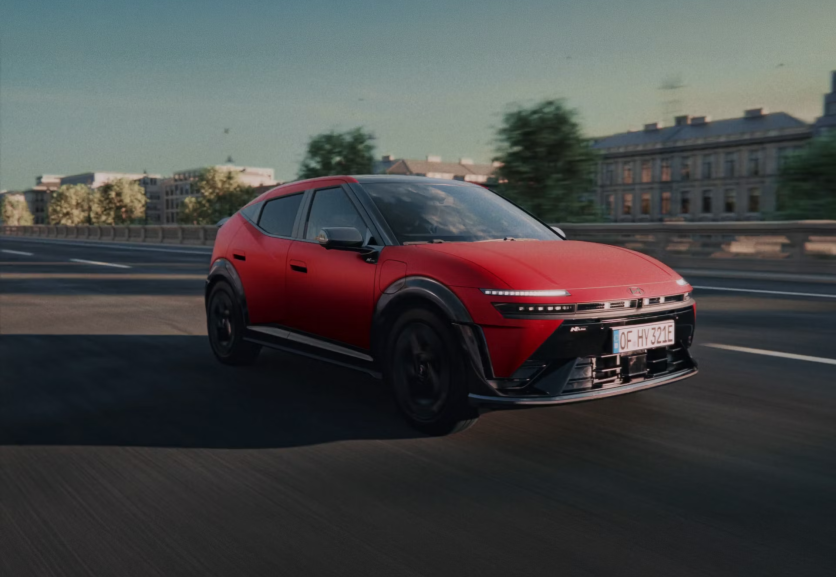
Hyundai opened pre-orders for the Ioniq 3 across the UK and Netherlands on July 29, 2026, revealing UK pricing starting at £22,245 (approximately $29,675 USD — exchange rate as of July 30, 2026; conversions are approximate) — roughly £13,000 below the Ioniq 5's European entry point and, Hyundai says, the highest pre-launch customer interest ever recorded for any Hyundai model in its history, including petrol, hybrid, and electric vehicles. The number that makes this possible is less remarkable than what makes the number possible: a purpose-built Turkish manufacturing base that sidesteps EU import tariffs, paired with Samsung SDI prismatic cells supplied from Hungary under a seven-year supply contract running through 2032.
The car lands at a moment when Hyundai had a documented European problem. The automaker's European registrations fell 8.7% in the first half of 2026, and Hyundai's own Vice President of Finance, Lee Seung-jo, identified the cause plainly on the company's second-quarter earnings call: "The offensive from Chinese EVs has been quite aggressive, and we lacked a B-segment small EV to counter it" as reported by BigGo Finance. BYD's European sales surged 145.5% in the same period, overtaking Tesla as Europe's largest EV brand by volume. The Ioniq 3 is the direct answer.
Pricing That Undercuts Expectations
Four trims are available in the UK across two battery sizes. The entry Advance with the 42.2 kWh standard battery starts at £22,245 (approximately $29,675 USD). The Advance with the 61 kWh long-range battery rises to £25,745 (approximately $34,344 USD). A Premium variant with the long-range pack costs £27,445 (approximately $36,612 USD), while the Ultimate trim lands at £29,945 (approximately $39,947 USD). A performance-oriented N-Line Evo version tops the range at £31,945 (approximately $42,614 USD), with a dedicated Ioniq 3 N hot hatch variant confirmed for a later date.
In the Netherlands, pre-orders opened simultaneously at €27,995 (approximately $32,101 USD), with six trim levels — Select, Trend, Vision, N-Line, Prime, and N-Line Evo — available across the same two battery configurations.
Ashley Andrew, President of Hyundai Motor UK, said the Ioniq 3 will "open up electric driving to a whole new group of customers," adding that the brand is "already seeing record levels of interest before it's even gone on sale."
Read more: Hyundai's IONIQ 3 Supports Apple CarPlay Ultra, Says New Report
Why Turkey Is the Factory That Makes This Price Work
The Ioniq 3 is built at Hyundai's İzmit facility in Turkey — the same plant that currently produces the i10, i20, and Bayon for European markets, and which has manufactured more than 3.3 million vehicles since opening in 1997. Two factors make Turkey the correct choice for a sub-£25,000 European EV.
First, Turkey's Customs Union agreement with the European Union, which dates to 1995, covers industrial goods including passenger vehicles. Hyundais assembled at İzmit and exported to EU member states are not subject to the 10% base import duty that applies to Korean-assembled vehicles. Second — and more significant for 2026 — those vehicles are entirely outside the scope of the additional EU tariffs on Chinese-manufactured EVs, which currently reach as high as 35.3% above the base rate for some manufacturers.
The tariff math compounds quickly. A Korean-assembled Hyundai arriving in Germany pays 10% import duty before any country-level taxes. A hypothetical Chinese-assembled equivalent would pay up to 45% in combined levies. A Turkey-assembled Hyundai pays neither. That structural gap — not any single engineering decision — is what puts the Ioniq 3 into the sub-£25,000 band.
Hyundai confirmed in June 2026 that it is investing €55 million (approximately $63 million USD) in a new battery system assembly plant within the İzmit facility, where Hyundai Mobis will handle integration and packaging of cells arriving from Samsung SDI's Göd plant in Hungary. Hyundai Motor Turkey General Manager Murat Berkel confirmed that all battery production processes except cell manufacturing itself will take place at İzmit. Production is scheduled to begin in August 2026, with approximately 27,000 units planned for the remainder of this year and more than 40,000 annually from 2027.
What 400 Volts Actually Means for Charging
The Ioniq 3 uses a 400V electrical architecture rather than the 800V system found in the Ioniq 5, Ioniq 6, and Ioniq 9. Hyundai's E-GMP platform supports both voltage levels from the same underlying design, making the 400V choice a deliberate cost-optimization rather than a platform limitation.
The practical difference matters less than the spec sheet implies. With DC fast charging, the standard 42.2 kWh battery can recharge from 10% to 80% in approximately 29 minutes; the 61 kWh long-range version takes around 30 minutes. Those are competitive figures — but only if you can find a fast charger delivering more than 150 kW will you see the full speed advantage of an 800V architecture. Most CCS charging infrastructure currently deployed across Europe operates at 50 to 100 kW, a range where 400V and 800V vehicles perform at effectively equivalent real-world speeds.
At home or at public AC stations, the Ioniq 3 supports up to 22 kW — the same rate as a typical three-phase AC charger used at public car parks and supermarkets across Europe, and matching what most 800V rivals offer on the same infrastructure.
The Ioniq 3 is 4,155 mm (163.5 inches) long, 1,800 mm (70.9 inches) wide, and 1,505 mm (59.3 inches) tall, with a wheelbase of 2,680 mm (105.5 inches). That makes it slightly smaller than both the current Chevrolet Bolt EV and the Kia EV3. Despite its footprint, Hyundai claims a 441-liter boot capacity and Megabox underfloor storage, with the company describing the cargo space as poised to "benchmark the segment" — a superlative that independent testing will eventually confirm or trim.
The car's "Aero Hatch" silhouette achieves a drag coefficient of 0.263 — a figure Hyundai claims is best-in-class, pending independent verification.
Pleos Connect: Hyundai's Software Platform Arrives in Europe
The most strategically significant thing about the Ioniq 3 may not be its battery or its range — it is the software. The Ioniq 3 is the first Hyundai sold in Europe to run Pleos Connect OS, the automaker's next-generation infotainment system built on Android Automotive OS.
Android Automotive OS is not the same as Android Auto, which simply mirrors a connected phone onto a car's screen. AAOS is a standalone operating system that runs natively on the vehicle's hardware — apps such as Spotify, YouTube, and navigation services execute directly on the car's processor without requiring a paired phone. Hyundai has adopted a zonal controller architecture to support Pleos: instead of distributing dozens of small electronic control units throughout the car, functions are grouped by zone, reducing wiring complexity and creating a platform that accepts over-the-air software updates throughout the vehicle's lifetime.
At launch, the Pleos App Market will offer around ten third-party applications, with more than 30 expected to be available by the end of 2026. Hyundai's target — confirmed at the Pleos 25 developer conference — is to deploy the system across more than 20 million vehicles by 2030, spanning Hyundai, Kia, and Genesis.
Integrated within Pleos Connect is Gleo AI, Hyundai's generative AI voice assistant built on a large language model. Unlike prior Hyundai voice systems, Gleo AI processes multi-step natural language commands, searches the web, and controls vehicle functions — navigation, climate, and media — conversationally. Jongho Lee, team lead of the Gleo AI Group at 42dot, Hyundai's software subsidiary, described the assistant as "an intelligent AI agent that engages in natural conversation like a companion in the passenger seat, understanding user intent and making holistic, context-aware judgments."
Hyundai restored physical buttons for climate control and frequently used audio functions — positioned below the main screen and on the steering wheel — a deliberate response to the documented driver frustration caused by touch-only interfaces. The screen itself is available in 12.9-inch or 14.6-inch center configurations depending on trim, with an optional slim driver-focused display available at higher specification levels.
Read more: Busan Mobility Show 2026: Hyundai Reveals 2027 Elantra as BYD Enters Korea
Where Does It Fit — and Where Will It Not Go?
The Ioniq 3 fills the gap in Hyundai's European lineup between the compact Inster city car and the mid-size Ioniq 5 crossover. Its closest European rivals are the Volkswagen ID. Polo, the Renault 4 E-Tech, and a growing cohort of BYD entrants into the same B-segment price bracket.
Hyundai's Ioniq 3 made its first public UK road appearance at the Goodwood Festival of Speed earlier this month, drawing attention before a single order had officially been taken.
The Ioniq 3 is not coming to the United States. It was designed and engineered specifically for European dimensions, road conditions, and buyer preferences. The Trump administration's import tariffs would significantly erode its price advantage even if Hyundai wanted to bring it over — and Hyundai has stated directly that it has no current plans to sell the car in North America. The local manufacturing logic that makes the Ioniq 3 viable in Europe does not exist for the US market, where Hyundai's Metaplant in Savannah, Georgia produces the Ioniq 5 domestically.
The Ioniq 3 also represents the first commercial vehicle produced under Hyundai's battery supply alliance with Samsung SDI. The two companies signed a seven-year contract in 2023 under which Samsung SDI's Göd plant in Hungary supplies prismatic cells for European-market Hyundai EVs through 2032. The Ioniq 3's short-range variant also sources LFP battery packs from China, a point worth noting for buyers interested in battery chemistry differences, though that sourcing does not affect the car's tariff-free status since the vehicle itself is assembled in Turkey.
Customer deliveries across Europe are scheduled to begin in late September 2026.
Currency conversions throughout this article are approximate, based on exchange rates as of July 30, 2026, and are subject to change.
Frequently Asked Questions
Is the Hyundai Ioniq 3 coming to the United States?
No. Hyundai has confirmed there are currently no plans to sell the Ioniq 3 in the US. The car was designed specifically for European tastes and dimensions. Even if Hyundai wanted to export it, the Trump administration's import tariffs would eliminate the price advantage that defines the model's competitive position — and US buyers tend to favor larger vehicles than the compact B-segment hatchback class the Ioniq 3 occupies. American shoppers interested in an affordable Hyundai EV should look at the Ioniq 5, which starts at $35,000 and is built domestically at Hyundai's Metaplant facility in Savannah, Georgia.
How long does the Ioniq 3 take to charge?
With DC fast charging, the standard 42.2 kWh battery can recharge from 10% to 80% in approximately 29 minutes; the 61 kWh long-range battery takes around 30 minutes. The Ioniq 3 uses a 400V electrical architecture rather than the 800V system found in the Ioniq 5 and Ioniq 6. That means its peak DC fast-charge rate is lower than its pricier siblings — but the practical gap at the 50 to 100 kW chargers that constitute most of Europe's public CCS infrastructure is minimal. On AC, the car supports up to 22 kW, matching most public AC charging points.
What is Pleos Connect, and how is it different from what Hyundai had before?
Pleos Connect is Hyundai Motor Group's new infotainment platform, built on Android Automotive OS — the standalone automotive operating system from Google, not the phone-mirroring Android Auto. It runs natively on the vehicle's hardware, which means apps like Spotify and YouTube work without a connected phone. The key difference from prior Hyundai infotainment is continuous over-the-air software updates: the car can receive new features and improvements after purchase, the same way a smartphone does. Pleos also integrates Gleo AI, a large language model-based voice assistant that handles multi-step natural language commands.
Will the Ioniq 3 charge as fast as the Ioniq 5 at a rapid charger?
No — at very high-power stations (above 150 kW), the Ioniq 5's 800V architecture will outperform the Ioniq 3. But at the 50 to 100 kW CCS chargers that still make up the majority of European public rapid-charging infrastructure, the real-world difference in charging time is small. The Ioniq 3's 29-minute 10-to-80% charge time on the standard battery is competitive with other 400V peers in its class, and the payoff is a vehicle that costs roughly £13,000 less to buy than the entry Ioniq 5.

-
 C114 Communication Network
 -
 Communication Home
