
 Search

Waymo.com
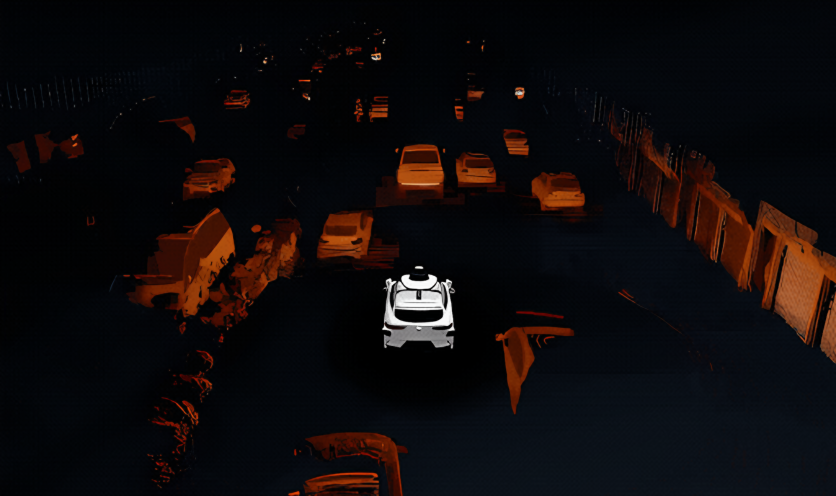
Waymo's robotaxis began operating on freeways again Wednesday, starting in Phoenix — two months after the Alphabet subsidiary suspended all high-speed routes when its vehicles repeatedly failed to recognize active freeway construction zones and drove through them at highway speeds. Los Angeles, the San Francisco Bay Area, Miami, and Austin are expected to follow in the coming days, according to the company.
For riders who depend on Waymo for airport trips — to Phoenix Sky Harbor, San Jose Mineta International, or San Francisco International — the return of freeway routing means those connections are live again in Phoenix and will be restored city by city in the coming days. The January 2026 launch of SFO and SJC airport service built on freeway access that went dark in May; with freeways back in Phoenix, that full-service model is restored there. It also means the two-month window in which riders in Phoenix, Los Angeles, and the Bay Area were paying for surface-street-only service that added significant time to cross-city trips is over.
But the freeway return and the newly introduced AV Emergency Response Coordination Act are not the same story, even though they arrived within 24 hours of each other. The software fix Waymo deployed addresses what went wrong with construction zones. The federal bill introduced Tuesday by Rep. Kevin Mullin (D-Calif.) addresses something the fix does not — and cannot — touch: what happens when a robotaxi encounters an emergency scene, a smoke-filled intersection, a stalled vehicle in an active fire response, or any situation where human first responders need autonomous vehicles to yield immediately, before the AV's sensors have time to classify what they are seeing. The TechCrunch investigation into the Mullin Act's emergence documented the pattern of incidents that drove Congress to act.
What Waymo's Software Fix Actually Changed — and What It Did Not
Waymo spokesperson Sandy Karp confirmed to azcentral.com that the company is "welcoming riders on freeways again after implementing software updates to improve our performance around highway construction zones." The fix has two components, according to the company and independent reporting of NHTSA recall filings: enhanced scene recognition and improved routing logic.
That dual structure matters because the June recall identified a dual failure. The 13 incidents documented between April 11 and May 18 — six in Phoenix, seven in the San Francisco Bay Area — were not caused by sensors that failed to detect construction zone cues. Waymo's fifth-generation Automated Driving System uses 360-degree LiDAR capable of detecting objects at 300 meters (984 feet), long-range cameras seeing out to 500 meters (1,640 feet), and overlapping radar. The hardware almost certainly detected the closure signs, cones, and flashing lights. What failed was the behavioral response layer that sits above the sensor stack — specifically, the priority weighting that decides what the vehicle does when two competing safety signals appear simultaneously. The prior TechTimes analysis of the recall filing covers this architecture in full.
The vehicles were not blind to construction zone boundaries. They were overriding them. When oncoming freeway traffic and a zone-closure boundary were both present, the system's hazard-response hierarchy consistently chose to avoid the traffic — and kept moving through the closure. The National Highway Traffic Safety Administration's recall documents state the root cause directly: under certain conditions, the 5th Generation system "may enter and drive at speed in freeway construction zones due to inappropriately prioritizing the avoidance of other freeway hazards and/or failing to recognize the construction zone."
An over-the-air software patch can reconfigure that behavioral weighting. That is what Waymo deployed between June 16 and 29, and the result — two months later — is that the updated vehicles are now on Phoenix freeways, including in areas with construction. Whether a different edge case in the same priority-hierarchy architecture could generate a similar failure in the future is a question the patch does not definitively answer; it only confirms that the specific conflict it was designed to resolve no longer produces the documented outcome.
The emergency-scene problem that NHTSA Administrator Jonathan Morrison called a "functional insufficiency" on July 8 is structurally different. Construction zones are signaled with standardized, extensive cues — ramp-closure signs, cones in consistent patterns, amber flashing lights. The systems that fail at emergency scenes fail because those scenes are the opposite: smoke degrades LiDAR returns; active flashing lights from emergency vehicles produce sensor artifacts; traffic cones at fire or crash scenes are sparse, irregularly placed, and mixed with other visual noise. Patching the behavioral weighting for construction zones does not teach the sensor stack to cut through emergency-scene visual complexity. Those are different problems requiring different engineering, as detailed in TechTimes' coverage of the NHTSA functional insufficiency declaration.
Read more: Waymo Freeway Recall Grounds 3,871 Robotaxis: Hazard Software Missed Work Zones
Mullin Act Would Mandate What OTA Patches Cannot Substitute For
The AV Emergency Response Coordination Act, introduced July 28, would direct NHTSA to establish minimum national safety standards for all autonomous vehicle operators — the first binding federal framework of its kind for the industry. The official Mullin press release announced it at a press conference outside San Francisco Fire Station 4 that brought together Mayor Daniel Lurie, SF Fire Chief Dean Crispen, police chief Derrick Lew, and Advocates for Highway and Auto Safety president Cathy Chase.
The bill's operative provisions are four: it would require AV companies to provide standardized emergency response protocols for first responders; establish a 24/7 hotline giving public officials direct access to AV companies during autonomous vehicle incidents; direct NHTSA to develop minimum national emergency response standards industry-wide; and — most operationally significant — create a process by which first responders can issue geofence notices requiring AV operators to keep their vehicles out of designated areas in real time during active emergencies, as KRON4 reporting confirmed.
The geofencing provision is where the Mullin Act and an OTA patch diverge most clearly. A geofence notice does not ask the AV to perceive and classify an emergency scene — it tells the vehicle to avoid a defined area entirely, before the sensor stack ever has to process the scene's visual complexity. Chief Crispen has said robotaxis repeatedly pick up and drop off passengers directly in front of fire stations and ambulance deployment facilities, obstructing emergency access. A geofencing mandate would give fire stations the authority to place real-time exclusion boundaries around their deployment corridors without waiting for a company to push an OTA update in response to a specific incident.
Mullin said at the press conference: "We have seen disturbing, and frankly, an unacceptable number of incidents where autonomous vehicles inadvertently interfere with emergency responders."
Waymo's response was notable in an industry not known for welcoming regulation. The company stated it has "long supported a federal AV framework to establish standards for autonomous vehicles" and said national guidelines would give "both the industry and public safety community with a consistent framework." The NHTSA deadline for AV developers to submit emergency-response solutions under Morrison's July 8 directive expires July 31.
Recall History: Why Six in Two Years Matters
The construction zone recall was Waymo's sixth software recall since February 2024, a sequence that reflects both the commercial scale the company has reached and the real-world edge cases that accumulate as a large autonomous fleet encounters more of the environments human drivers navigate every day. The prior reporting on the flood patch failure documents the escalation pattern that preceded the construction zone recall.
Previous recalls covered robotaxis entering flooded roads in May 2026 — a problem whose interim software patch subsequently failed in Atlanta, requiring Waymo to acknowledge it still lacked a permanent fix — illegal behavior around school buses in December 2025, low-speed collisions with stationary barriers including parking gates and telephone poles, and a collision with a towed pickup truck in Phoenix.
The pattern has attracted criticism from safety advocates who argue that a technology marketed on its safety advantages over human drivers should not be accumulating a steady sequence of software recalls. The industry's standard response — that voluntary recalls represent the self-regulatory system working correctly, with companies self-disclosing problems and deploying fixes without regulatory intervention — holds up only when the fixes actually resolve the underlying failure modes. In the flood recall's case, the interim patch failed; the flood problem required a second intervention. Whether the construction zone patch holds will be visible in the driving record going forward.
Waymo's overall safety statistics remain substantially better than the human baseline. The company has driven 220.6 million rider-only miles through March 2026, achieving approximately 94% fewer serious or fatal injury crashes than human drivers over the same distance in its operating cities, according to Waymo's NHTSA SGO-based Safety Impact data. Those figures document aggregate performance; they do not make individual incidents — or the regulatory conditions under which incidents are handled — less relevant.
Read more: DC Robotaxi Bill Omits Wheelchair Access While Waymo and Uber Clash Over Rules
What This Means for Riders Right Now
In Phoenix, freeway routing is active as of July 29. Riders who book trips that are faster on freeways will be matched to freeway routes. Airport trips to and from Phoenix Sky Harbor are fully supported.
In Los Angeles, the San Francisco Bay Area, Miami, and Austin, freeway routing is not yet active as of this writing — the company said these cities will follow "in the coming days." That means airport trips to SFO and SJC that depend on freeway segments remain on surface-street routing until the restoration reaches those markets. Riders who want earlier access are advised to express interest through the Waymo app.
Surface-street service in all Waymo markets was unaffected by the freeway suspension and continues normally.
Is Voluntary Recall the Right Model for Emergency-Scene Failures?
The freeway recall's resolution illustrates the outer boundary of what voluntary self-regulation can deliver: a specific, documented, perceptual-hierarchy failure was identified through internal safety review, disclosed to NHTSA, fixed via OTA update, and validated over roughly six weeks before freeway routes were restored. That is the cycle working as designed.
What the construction zone recall could not address — and what the Mullin Act is designed to mandate — is the broader category of emergency-scene response that NHTSA has now formally classified as a functional insufficiency across the industry. A voluntary recall addresses a failure that has already occurred and been characterized. The Mullin Act's provisions — the hotline, the geofencing mechanism, the national minimum standards — would address the structural condition: that no AV company is currently required to provide first responders with the real-time coordination tools they need, regardless of how many patches have been deployed.
Whether the Mullin Act advances through a Congress where AV regulation has historically moved slowly is an open question. What is not open is the gap it is designed to fill. The freeway return is good news for riders who lost airport access in May. It is not, by itself, good news for the SF firefighter who had to climb into a Waymo's driver seat to move it off a blocked emergency route — because the behavioral weighting that determines how a robotaxi responds to a stopped ambulance is a separate piece of software from the one that determines how it responds to a freeway ramp-closure sign, as documented in reporting on SFFD incident patterns.
Frequently Asked Questions
Can I use Waymo to get to the airport now?
In Phoenix, yes — freeway routing to and from Phoenix Sky Harbor International Airport is active as of July 29, 2026. In Los Angeles, the San Francisco Bay Area, Miami, and Austin, freeway restoration is still pending as of this writing; Waymo has said those cities will follow "in the coming days." Until freeway routes are restored in a given market, trips that would normally use freeways will be routed on surface streets, which adds travel time on airport-bound trips. Riders who want earlier access can express interest through the Waymo app.
What specifically did the software update fix, and how is that different from the emergency-response problem?
The update addressed a behavioral priority conflict in the 5th Gen Automated Driving System — the software layer that decides what the vehicle does when competing safety signals appear simultaneously. The vehicles' sensors were detecting construction zone boundaries; the decision-making layer was overriding that input to avoid adjacent freeway traffic. The fix changed how the system classifies construction zones and how it routes around them. The emergency-scene "functional insufficiency" that NHTSA identified separately involves a harder technical challenge: smoke, sparse cone placement, and emergency-vehicle lighting all degrade sensor performance in ways that construction zone signage does not. The Mullin Act's proposed geofencing mandate would bypass the perception challenge entirely — rather than asking AV sensors to classify an emergency scene, it would allow officials to issue a real-time restriction that routes vehicles around a defined area before they reach it.
What would the AV Emergency Response Coordination Act actually require?
The bill, introduced July 28 by Rep. Kevin Mullin (D-Calif.), would direct NHTSA to establish binding national minimum safety standards for autonomous vehicle operators covering emergency response. Specific requirements include: standardized protocols AV companies must provide to first responders; a 24/7 hotline giving public officials direct access to AV companies during incidents; national minimum standards NHTSA would develop and enforce; and a geofencing process allowing first responders to issue real-time requests that restrict where AVs can operate during active emergencies. Waymo has stated it supports a federal framework for AVs. The bill has bipartisan interest, according to Rep. Mullin.
Does the freeway return mean Waymo has resolved all its outstanding safety issues?
No. The construction zone behavioral failure that triggered the sixth recall is addressed by the OTA update deployed in June and validated by the freeway restoration beginning July 29. Separate from that: the flood-detection problem (whose interim patch failed in Atlanta in May) is still under investigation for a permanent fix; active NHTSA and NTSB investigations into a January 2026 collision with a child near a Santa Monica elementary school and into the school bus recall from December 2025 remain open; and the industry-wide emergency-scene functional insufficiency identified by NHTSA on July 8 has not been resolved by any company, including Waymo.

-
 C114 Communication Network
 -
 Communication Home
