
 Search

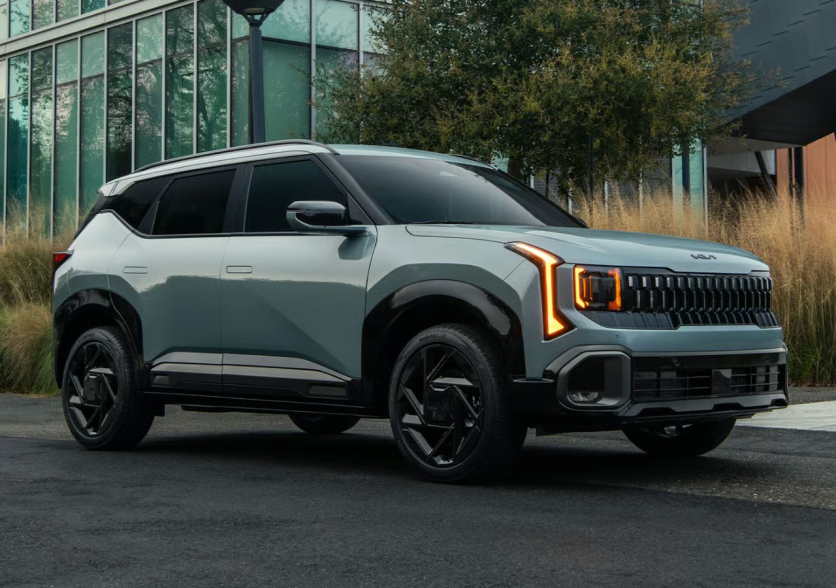
A side view of the 2027 Kia Seltos Hybrid. Kia.com
When Kia announces that its new China-market Celtus crossover will run on Baidu AI, the company is not describing a tech partnership it chose from a menu of options. It is describing a compliance response to Chinese law. On July 28, 2026, Kia confirmed via its official Chinese social media channels that the Celtus — a China-tailored derivative of the newly redesigned global Seltos — will open pre-orders on August 13, 2026. Every foreign automaker selling smart, connected vehicles in China faces the same constraint. The Celtus makes that constraint visible in a production vehicle that will soon be in showrooms.
Chinese Law, Not Consumer Preference, Drove the Baidu Decision
China's Automotive Data Security Provisions, which took effect on October 1, 2021, require that vehicle data processors — including all foreign automakers operating in China — store what the regulations classify as "important data" within China's borders. That category of data encompasses vehicle geographic location records, road and traffic flow data, biometric data collected from passengers, and any data that regulators determine relates to national security or public interest. Cross-border transfer of such data requires a prior security assessment by the Cyberspace Administration of China (CAC).
The regulation sits within a broader legal architecture. China's Cybersecurity Law (2017) requires domestic storage of personal information and important data collected by operators of critical information infrastructure. The Data Security Law (2021) and Personal Information Protection Law (2021) extend those principles to data processors of all kinds, as analyzed by Pillsbury Law in its overview of the regulatory framework.
What this means in practice: a foreign automaker cannot route vehicle data through its own servers in Seoul or Detroit and remain compliant. It must use a Chinese cloud provider. For Kia — which has worked with Baidu since 2014, including the development of voice recognition and navigation connectivity services — that provider is Baidu Smart Cloud.
Baidu Smart Cloud provides Kia with compliant domestic data storage and processing, map and navigation services through MapAuto, and the AI voice and inference layer through Baidu's ERNIE-powered systems. The Celtus's AI cockpit — running Baidu Intelligent System 3.0 — is therefore not an alternative to Kia's global "Hey, Kia" generative AI assistant. It is a parallel architecture built specifically to meet Chinese legal requirements.
There is a further layer that any buyer, analyst, or policymaker should understand. China's National Intelligence Law (2017), Article 7, requires that all organizations and citizens support, assist, and cooperate with national intelligence work. Baidu, as a Chinese company, is subject to that obligation. This is not a risk estimate or a hypothetical: it is a fixed legal condition, one that applies regardless of Baidu's stated data privacy policies or the physical location of any given server. Vehicle data routed through Baidu's infrastructure is data that Chinese government intelligence services can request access to through a legally mandated cooperation obligation. (Exchange rate as of July 29, 2026; conversions are approximate.)
Kia Isn't Alone — Every Foreign Brand Is Doing This
Kia's approach to the Celtus reflects an industry-wide response to the same regulatory pressure. At Auto China 2026, Volkswagen Group announced plans to deploy agentic AI across its entire China-market vehicle portfolio using locally compliant AI providers. BMW has integrated Alibaba and DeepSeek AI models with Huawei's HarmonyOS for its China-market lineup. China requires not just local partners but local AI — trained on local data, processed locally, stored locally.
For Chinese consumers, the result is a smart cockpit ecosystem that outpaces what the same brands offer in Western markets. The Chinese market's definition of an intelligent cockpit extends far beyond navigation or music playback. It encompasses voice agents with memory that persist across sessions, multimodal input combining gesture and voice recognition, control over vehicle functions and connected home devices, integrated passenger monitoring, and end-to-end autonomous driving stacks. Western drivers accustomed to Apple CarPlay or Android Auto are experiencing an automotive software category that has, in China, already moved on by a generation.
The Celtus positions Kia to compete in this environment — and the Baidu integration is the mechanism that makes it legally possible to do so.
What the Celtus Actually Is
The Celtus is the China-market name for Kia's second-generation Seltos, globally unveiled in December 2025. Global production began in December 2025, starting with India and expanding through 2026 to Korea, North America, Europe, and China. The China variant receives a distinct name — Celtus rather than Seltos — and is engineered with China-specific infotainment architecture, following the industry practice of treating China as a product category of its own rather than a geography receiving a global model.
The vehicle is built on Kia's new K3 platform, which enabled a meaningful increase in interior space relative to the outgoing Seltos generation. Body dimensions measure 4,430 mm (174.4 in) in length, 1,830 mm (72.0 in) in width, and 1,600 mm (63.0 in) in height, riding on a 2,690 mm (105.9 in) wheelbase. Cargo volume reaches 536 liters (approximately 18.9 cubic feet), with a folding dual-level cargo shelf included. These figures align with the global second-generation Seltos specification confirmed by Kia.
Exterior design borrows the visual language of Kia's EV5 electric crossover. The front features vertical split headlights with the primary lighting integrated into an enlarged grille, flush door handles on the sides, and a full-width rear light bar. Interior features available on higher trims include a panoramic roof, a head-up display, optional Harman Kardon or Bose audio, and 64-color ambient lighting.
Two powertrain configurations will be offered. A 2.0-liter naturally aspirated four-cylinder produces 147 horsepower (110 kW) and is the efficiency-focused option. A 1.6-liter turbocharged unit delivers between 178 and 190 horsepower (133–142 kW) depending on specification. Transmission choices include a six-speed manual, a seven-speed dual-clutch automated unit, and an eight-speed conventional automatic. All-wheel drive is available, with terrain-specific modes for snow, mud, and sand.
Pricing has not been announced. The pre-existing first-generation China-market Seltos ranged from approximately ¥109,900 to ¥159,900 yuan — at July 29, 2026 exchange rates of approximately 7.2 Chinese yuan per US dollar, that translates to roughly $15,300 to $22,300 for that prior-generation model. The Celtus will be positioned for the current Chinese market and is likely to be priced in a similar segment.
What China's Smart Cockpit Race Means for the Celtus Launch
The Celtus enters a market that has fundamentally redefined what buyers expect from a car's software. Chinese domestic automakers — BYD, Geely, NIO, XPeng, Li Auto — have established a pace of smart cockpit development that no foreign automaker has matched on home territory. Analysts covering Auto China 2026 documented Chinese brands debuting agentic AI assistants powered by locally trained large language models, end-to-end autonomous driving stacks, and centralized computing architectures that consolidate all vehicle software into a single updatable unit.
A large display is, in this context, table stakes rather than a differentiator. What distinguishes competitive Chinese market vehicles is the depth of the software layer behind the hardware. Baidu Intelligent System 3.0 — the Celtus's AI platform — runs on Baidu's ERNIE foundation model, which supports extended conversational memory, multi-turn dialogue, and integration with Baidu Maps and Baidu's broader connected services ecosystem.
Kia's China trajectory provides the context for why this launch matters. In 2016, the brand sold 650,000 vehicles in China, its peak. The deployment of a US Terminal High Altitude Area Defense (THAAD) missile defense system in South Korea triggered a widespread informal Chinese consumer boycott of Korean brands in 2017, and Kia's sales collapsed — the joint venture, Jiangsu Yueda Kia, posted losses for seven consecutive years. A strategic pivot toward using Kia's China facilities as an export hub for other markets helped stabilize the business, and in the third quarter of 2024 the joint venture posted its first operating profit — approximately ₩17.2 billion, or roughly $11.9 million USD — ending the loss streak. For all of 2024, the joint venture sold 220,170 vehicles in China, up 52.9% from the prior year.
The Celtus is the most significant new model Kia has brought to China in the new-model cycle that follows that recovery. The company is betting that technology localization — a distinctly Chinese AI cockpit backed by a Chinese cloud platform, mandated by Chinese law and delivered through a decade-long Chinese partnership — is more important to recovering Chinese buyers than any headline specification.
Pre-orders are scheduled to open August 13, 2026. Pricing has not been announced.
Frequently Asked Questions
What is the Kia Celtus, and how does it differ from the Kia Seltos?
The Kia Celtus is the China-market name for the second-generation Kia Seltos, the same global subcompact crossover SUV that Kia launched worldwide in December 2025. The Celtus carries China-specific branding and a China-specific infotainment architecture built around Baidu AI, replacing the global "Hey, Kia" generative AI system. Mechanically, the Celtus shares dimensions, powertrain options, and K3 platform architecture with the global Seltos. The China variant reflects Kia's established practice of engineering distinct product identities for the Chinese market.
Why does Kia use Baidu AI in its Chinese cars instead of its own AI assistant?
Chinese law requires it. China's Automotive Data Security Provisions, effective since October 2021, mandate that vehicle data collected within China be stored on domestic infrastructure. Foreign automakers cannot route that data through their own international servers. Kia uses Baidu Smart Cloud because it is a compliant Chinese cloud provider, not because Baidu's AI is inherently superior to Kia's global system. Every foreign automaker selling connected vehicles in China — Volkswagen, BMW, General Motors — faces the same requirement and has responded with similar domestic cloud partnerships.
What does China's data law mean for a buyer's privacy if they own a car built for the Chinese market?
All vehicle data collected by a Celtus — location records, navigation queries, voice assistant interactions, and driving behavior data — must be stored within China, on infrastructure operated by a Chinese company. China's National Intelligence Law (2017), Article 7, legally requires all Chinese organizations to cooperate with Chinese government intelligence requests. That obligation applies to Baidu as a Chinese company, regardless of Baidu's stated privacy policies. There is no opt-out from this structural condition. Readers outside China who use China-spec vehicles should be aware that their in-vehicle data may be processed under this legal framework.
When do Kia Celtus pre-orders open, and what will it cost?
Pre-orders are scheduled to open on August 13, 2026. Kia has not announced pricing for the Celtus. The outgoing first-generation China-market Seltos was priced between roughly $15,300 and $22,300, positioning it as a value-competitive option against Chinese domestic crossovers. Whether the Celtus maintains similar pricing will depend on market conditions and final trim configuration at launch.

-
 C114 Communication Network
 -
 Communication Home
