
 Search

Nissanusa.com
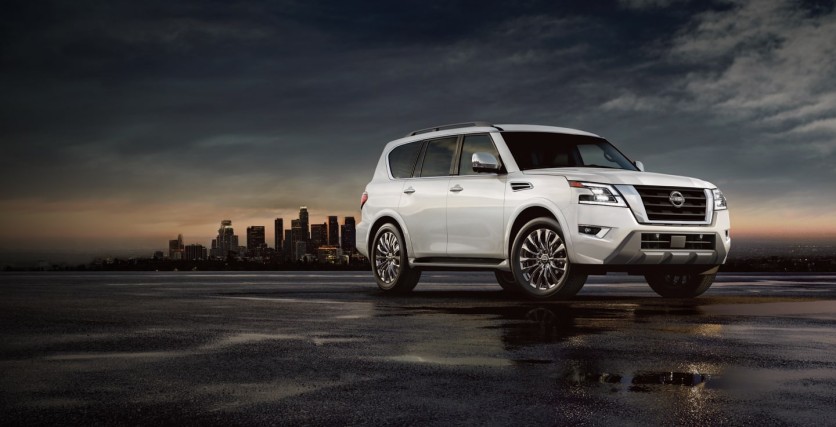
If you bought a Nissan Armada or an Infiniti QX80 or QX56 with the optional 22-inch wheel package, there is a sticker on your driver's door jamb that tells you the wrong number. That number — the per-axle weight limit your tire shop, towing calculator, and cargo planner all rely on — has been incorrect, in some cases, since the QX56 badge existed, according to NHTSA campaign filing 26V455000. NHTSA announced on Tuesday that Nissan is recalling 168,149 vehicles to fix it, Reuters reported Tuesday.
The recall (NHTSA campaign 26V455000) covers three model lines across Nissan and Infiniti: the 2020–2026 Nissan Armada, the 2011–2013 Infiniti QX56, and the 2014–2027 Infiniti QX80. The condition is specific: only vehicles equipped with the optional 22-inch wheel package fall within scope. If your vehicle has a different wheel configuration, you are not affected.
No axle snapped. No mechanical component failed. The recall remedy is a corrected certification label — which Nissan will install free at a dealership, or mail directly to owners so those comfortable with a peel-and-stick repair can handle it without a trip to the shop. Owner notification letters are expected to be mailed beginning September 4, 2026. To check your specific vehicle's status right now, enter your VIN at nhtsa.gov/recalls, or call Nissan customer service at 800-647-7261 or Infiniti at 1-800-662-6200.
What Is GAWR, and Why Does a Wrong Number on a Sticker Create a Safety Risk?
Every vehicle sold in the United States carries a federally required certification label — typically affixed to the driver's door jamb — that lists two distinct weight limits. The more familiar one is the Gross Vehicle Weight Rating (GVWR): the ceiling on how much the fully loaded vehicle can weigh in total, including passengers, cargo, and fuel. The other is the Gross Axle Weight Rating (GAWR): the maximum load a single axle — front or rear — is certified to carry, as defined under 49 CFR Part 567 certification rules.
The GAWR distinction matters because these limits are independent. A family loading a roof rack, three passengers, and a weekend's worth of gear into an Armada or QX80 might remain comfortably under the total GVWR while unknowingly pushing the rear axle beyond its true rated capacity — because all that cargo weight concentrates at the back of the vehicle. This is the rear axle overload risk that makes an incorrect GAWR consequential. Tire shops use GAWR to size replacement tires. Towing calculators reference it to determine safe tongue weight. Cargo planners use it to set payload limits. When the number on the label is wrong — specifically when it overstates what the axle can actually handle — owners who rely on it in good faith are operating on false data.
FMVSS No. 110 axle compliance requires that an accurate GAWR appear on the certification label for every vehicle under 10,000 pounds GVWR. The label's GAWR figure must match the actual engineering limit for the specific wheel and tire configuration on that vehicle. The NHTSA consequence statement on the campaign is unhedged: an incorrect GAWR "may lead to an overloaded vehicle," increasing the risk of a crash.
Read more: Nissan Leaf Seat Belt Recall: Consumer Reports Found the Flaw, Nissan Didn't
22-Inch Wheels Required a Separate Calculation — and Someone Skipped It
The error traces specifically to the optional 22-inch wheel package. When a manufacturer offers different wheel sizes, each configuration requires its own GAWR calculation: larger wheels carry different tires with different load indexes, and the per-axle capacity figure must be independently verified for each, as required by FMVSS No. 110 axle compliance. The certification pipeline works as follows: Nissan calculates GAWR for each axle and wheel combination at the time of initial vehicle certification, prints the figure on the label, and stamps that label on every vehicle with that configuration. What the pipeline does not require — and what federal regulations do not mandate — is automatic re-verification when a new optional equipment package is introduced mid-generation, or when a model is renamed.
That gap is what allowed an incorrect axle weight figure to appear on certification labels across three nameplates and at least 16 model years. According to Yahoo Autos AutoWire reporting, Nissan is tracking the fix under two separate internal codes, R26B1 and R26B2 — a detail suggesting the paperwork error traveled through slightly different channels on the Nissan and Infiniti sides of the shared platform.
This Is Not Nissan's First GAWR Label Error on This Platform
The 2026 recall is not the first time Nissan's certification pipeline has produced an incorrect axle weight rating on this vehicle family. In April 2014, NHTSA campaign 14V129000 covered 468 model year 2014 Infiniti QX80 vehicles equipped with 20-inch wheels. In those vehicles, the certification label incorrectly listed the GAWR as 4,497 pounds instead of the correct 4,343 pounds. The remedy was identical: Nissan mailed corrected certification labels to owners at no charge.
That recall affected fewer than 500 vehicles. The current recall covers more than 168,000. The underlying structural failure — a per-wheel-configuration GAWR calculation that was either wrong from the start or carried forward without re-verification when a new wheel package was introduced — recurred on the same platform twelve years later at a scale more than 350 times larger.
Nissan also issued a separate label recall in 2025 covering 37,003 Nissan Kicks vehicles (NHTSA campaign 25V188000) after their certification labels were printed with incorrect GVWR and GAWR values. The pattern across three separate Nissan label recalls in twelve years — each involving incorrect axle or vehicle weight ratings on federally mandated compliance labels — raises a systemic question about whether the internal certification audit process reliably catches errors specific to optional equipment variants.
An Error That Outlasted a Nameplate
The recall's timeline underscores how durable a paperwork error can be. The oldest affected vehicles are 2011 Infiniti QX56s — a nameplate Infiniti retired at the end of the 2013 model year when it rebranded the vehicle as the QX80 for 2014. The newest vehicles included are 2027 Infiniti QX80s, a model year that has not yet fully arrived on dealer lots, according to the NHTSA filing 26V455000.
In other words, a GAWR figure associated with a particular wheel configuration was apparently carried forward on compliance documentation through a complete nameplate retirement and multiple styling refreshes without anyone verifying it applied correctly to the 22-inch package. The buyers who paid a premium specifically for the largest, most premium wheel option — choosing the 22-inch package as an upgrade — were the ones saddled with inaccurate capacity data.
Part of a Pattern That Crosses Automakers
The Nissan action is not the only GAWR label recall this month. Approximately one week earlier, Subaru disclosed a comparable label recall covering 541,237 Ascent, Forester Hybrid, Forester, and Crosstrek Hybrid vehicles — NHTSA campaign 26V436000, submitted July 7, 2026. Subaru said it became aware of the potential compliance issue in May 2026 after NHTSA notified the company. For the Ascent, according to CBS News Subaru recall report, the GAWR label error spans model years 2019 through 2026 — essentially the vehicle's entire production history.
Taken together, two recalls from unrelated automakers in a single month — covering a combined 709,386 vehicles — point to a structural vulnerability in how GAWR figures are managed across vehicle generations. The rating gets calculated once, tied to a specific axle and hardware configuration, then carried forward on compliance paperwork year after year, as long as nothing about the underlying components appears to change. FMVSS No. 110 axle compliance does not explicitly require a manufacturer to re-verify axle weight ratings when optional equipment packages that change tire specifications are introduced. No injuries reported have been linked to the incorrect labels in either the Nissan or Subaru recalls.
Read more: Honda Recalls 880,514 Pilots, Ridgelines, Passports, MDXs Over Subframe Rust Risk
Affected Vehicles at a Glance
| Model | Model Years Affected | Condition |
|---|---|---|
Nissan Armada | 2020–2026 | 22-inch wheel package only |
Infiniti QX56 | 2011–2013 | 22-inch wheel package only |
Infiniti QX80 | 2014–2027 | 22-inch wheel package only |
Total vehicles recalled: 168,149 NHTSA Campaign: 26V455000 Federal Standard at issue: FMVSS No. 110 (Tire Selection and Rims) / 49 CFR Part 567 (Certification) Remedy: Corrected certification label, installed by dealer or mailed to owner at no charge Owner notification expected: September 4, 2026
How Do I Know if My Nissan or Infiniti Is Affected?
Enter your 17-digit Vehicle Identification Number at nhtsa.gov/recalls. You can also contact Nissan customer service at 800-647-7261, or Infiniti customer service at 1-800-662-6200. The recall covers only vehicles equipped with the optional 22-inch wheel package — confirm this against your vehicle's window sticker or service records if you are uncertain which wheel size your vehicle carries.
Frequently Asked Questions
Is it safe to drive my Nissan Armada or Infiniti QX80 before the recall is fixed?
NHTSA and Nissan have not instructed owners to stop driving affected vehicles. No crashes or injuries have been linked to the label error. The practical risk is that the GAWR figure on your certification label may overstate what your rear axle can carry — meaning load limits you computed from that label may be slightly too generous. Until you receive the corrected label, err on the side of conservative loading: avoid packing the rear of the vehicle to its declared payload limit, and recheck any towing calculations against your owner's manual's axle weight guidance. You can check your vehicle's recall status now at NHTSA recall 26V455000.
What is GAWR, and why does a sticker with the wrong number matter to me?
GAWR, or Gross Axle Weight Rating, is the maximum weight a single axle can safely carry — separate from the total vehicle weight limit (GVWR). Tire shops use it to select appropriate replacement tires. Towing calculators reference it when computing safe tongue weight. Cargo planners use it to set payload limits. If the label overstates your axle weight rating explained, any calculation you base on it could put more load on the axle than its engineering allows — without the vehicle appearing visibly overloaded.
Has Nissan had this type of axle weight label error before, on the same vehicles?
Yes. In April 2014, prior NHTSA campaign 14V129000 covered 468 model year 2014 Infiniti QX80 vehicles equipped with 20-inch wheels whose certification labels listed an incorrect GAWR — 4,497 pounds instead of the correct 4,343 pounds. The remedy was the same: a mailed corrected label at no charge. The current recall covers the same vehicle platform, a different wheel size, and is 360 times larger in scale.
Why did this label error persist across a nameplate change from QX56 to QX80?
FMVSS No. 110 certification rules require an accurate GAWR on the certification label but do not explicitly mandate re-verification of per-configuration axle weight figures when a model is renamed or when new optional wheel packages are introduced. Once a GAWR figure is calculated for a given axle and wheel combination, it can be carried forward on compliance paperwork from model year to model year as long as the underlying components appear unchanged. Neither the QX56-to-QX80 nameplate transition nor the introduction of the 22-inch wheel option as a premium upgrade automatically triggered a fresh calculation. That structural gap — present in FMVSS No. 110 as currently written — is the same gap that allowed a comparable error to persist with Subaru's parallel GAWR recall in the Subaru Ascent from 2019 through 2026.

-
 C114 Communication Network
 -
 Communication Home
