
 Search

rangerover.com
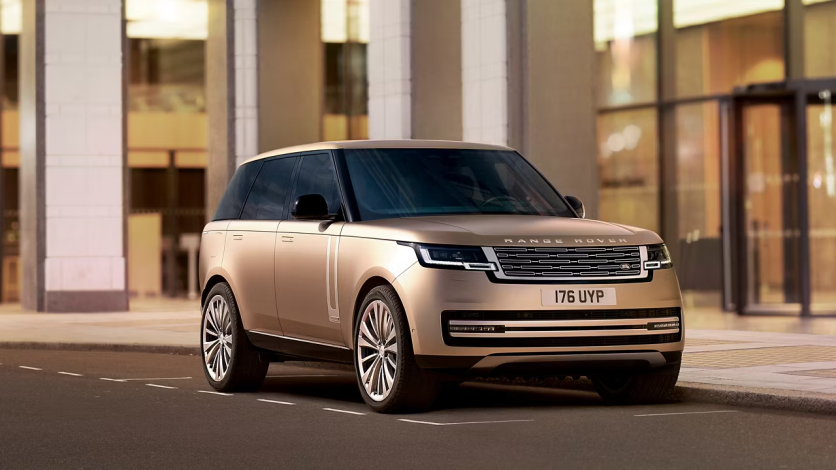
Jaguar Land Rover presented the most consequential product slate in its modern history on Wednesday at its Gaydon Engineering Centre in Warwickshire, UK — confirming that the Range Rover Electric will reach buyers in the second half of FY26/27, that Jaguar will become an entirely battery-electric brand anchored on the new Type 01 grand tourer, and that a new dedicated electric architecture called the Electrified Modular Architecture (EMA) will power the next wave of vehicles from its Halewood plant in Merseyside. The announcements came 10 months after a cyberattack cost the company an estimated £1.9 billion and contributed to a full-year FY26 revenue drop of 20.9% — making Investor Day 2026 as much a recovery presentation as a product launch.
The nearly 77,000 buyers already on the Range Rover Electric waiting list are the clearest measure of what is at stake: JLR is launching its highest-profile vehicle in a generation into a market where it has strong demand, damaged finances, and a 25% US import tariff threatening its second-best-selling model.
Range Rover Electric: Delivery Window, Specs, and What Is Confirmed
The full-size luxury SUV is scheduled for delivery in the second half of FY26/27 — meaning the first customer cars could arrive as early as October 2026, with launch no later than March 2027. It rides on JLR's Modular Longitudinal Architecture, or MLA, the same multi-powertrain backbone that underpins the current petrol and plug-in hybrid Range Rover, which means buyers will have the choice of ICE, hybrid, and fully electric powertrains within the same nameplate family.
The powertrain is confirmed at 542 horsepower and 627 lb-ft of torque from a dual-motor setup, with a towing capacity of more than 7,700 lbs and a wading depth of 33.4 inches — delivering the terrain capability the nameplate requires. JLR's engineering director noted the Range Rover Electric is 40% more efficient than any previous JLR vehicle. Prototypes were driven by global media on frozen lakes in Sweden and at Gaydon, with what JLR described as outstanding results. Production line installation at Solihull is described in the JLR Annual Report 2026 as substantially complete.
A Range Rover Sport Electric will follow, extending the MLA electric lineup into the volume-driving Sport segment.
Jaguar Goes All-Electric: The Type 01 and a Century Closes
JLR formally confirmed at Investor Day that Jaguar will become an entirely battery-electric brand with no further internal combustion engine vehicles. The production version of the Jaguar Type 01 — a four-door luxury grand tourer that evolves from the Type 00 concept first shown in December 2024 and subsequently displayed in Tokyo, Monaco, London, Paris, and Miami — is scheduled to enter production in August 2026. A second all-electric Jaguar follows in December 2027.
That decision closes nearly a century of Jaguar's petrol-engine manufacturing history, from the Le Mans-winning C-Type to the XJ saloon. JLR has already wound down legacy Jaguar ICE production ahead of the Type 01, creating a deliberate revenue gap in the interim period that is visible in FY26's financial results.
EMA Platform: JLR's Next Architecture, and What Changed Today
The more strategically significant announcement from Investor Day was the first product built on JLR's new Electrified Modular Architecture. At today's presentations, JLR also confirmed — in a notable change from its original 2021 roadmap — that EMA will now support full hybrid powertrains in addition to battery-electric vehicles, as reported by Electrive from the Gaydon event.
The first EMA product is a new model from the Range Rover family, understood to be a compact coupe-SUV positioned below the full-size Range Rover, built at Halewood. JLR has invested £500 million to transform that Merseyside site, creating a body shop capable of producing 500 vehicle bodies per day, with production lines that can run EMA-based electric vehicles alongside conventional powertrain models simultaneously.
The technical distinction that matters most for buyers is voltage. The MLA-based Range Rover Electric runs on a 400V electrical architecture that can accept charging power of roughly 150 kW from a DC fast charger. EMA vehicles use an 800V architecture — the same family used by Porsche's Taycan and the Hyundai Ioniq 6 — that can accept 300 kW or more, enabling a 10-to-80% charge in approximately 20 minutes. The practical constraint: that speed requires a compatible ultra-rapid charger. The ultra-rapid public charging network in the UK, EU, and US remains a minority of total public charging infrastructure in 2026, meaning the 800V advantage will not be fully accessible to most buyers until network density catches up.
The efficiency improvement is concrete regardless of charger availability. EMA vehicles achieve 92% drivetrain efficiency, compared with 85% on MLA-based models — a difference that translates to meaningful real-world range gains from the same battery capacity.
EMA vehicles will be powered by Nvidia's DRIVE AGX Orin system-on-chip, a processor delivering up to 254 tera-operations per second of AI compute with ASIL-D functional safety certification. That compute capacity enables hands-free, eyes-on (SAE Level 2+) automated driving at launch, with over-the-air software update capability that allows ADAS features to be improved across the vehicle's service life. Nvidia has confirmed that from 2026, all new Range Rover, Defender, Discovery, and Jaguar vehicles are built on the Nvidia DRIVE AGX platform. JLR has committed to Level 3 conditional automation — eyes off, hands off in defined conditions — on future EMA vehicles, though the regulatory approval pathway for Level 3 driving remains incomplete in both the UK and the US.
The Defender Sport and Discovery EVs on EMA are expected by 2027. The Electric Propulsion Manufacturing Centre in Wolverhampton — the former Ingenium engine plant, now renamed and retooled — is already producing electric drive units and battery packs for both platforms.
Stellantis MoU: What the Tariff Math Means for US Buyers
On May 20, 2026, JLR and Stellantis signed a non-binding memorandum of understanding to explore joint product and technology development targeting the US market. Today's Investor Day reinforced the financial logic of that partnership.
The core problem is structural: North America accounts for roughly 28% of JLR's annual wholesale volumes, but the company has no US manufacturing presence. The 25% tariff on non-domestically assembled vehicles applies in full to the Defender, which is built in Nitra, Slovakia — meaning JLR's highest-demand volume model pays the steepest import penalty. A 2025 US-UK trade arrangement reduced that tariff to 10% for up to 100,000 UK-built units annually, but JLR already exceeded that threshold in 2024, so vehicles above the quota face a combined import burden of 27.5%. JLR paid £410 million in additional tariffs last year as a result. North American wholesale volumes fell 22% year-on-year in the first quarter of FY26.
Stellantis operates assembly facilities across Michigan, Indiana, and Ohio. A manufacturing agreement arising from the MoU would allow JLR vehicles assembled at a Stellantis plant to qualify as domestically produced, eliminating the tariff premium. CEO PB Balaji described the strategic rationale as exploring "complementary capabilities in product and technology development that support our long-term growth plans for the US market," with Stellantis CEO Antonio Filosa adding that such partnerships can "create meaningful benefits for both sides."
The Defender-Wrangler pairing is the most frequently cited candidate for a co-development arrangement, given the vehicles' similar off-road positioning. The higher-price-point Range Rover creates different brand integration questions. Both companies have emphasized the MoU remains non-binding — no confirmed vehicle programs, production timelines, or specific plants have been announced. Analysts have noted that the question of whether US assembly would erode the perceived "Britishness" that is integral to both brands' premium positioning is one both JLR and its previous corporate owners have historically treated as material to the product's value.
Read more: Range Rover is Going Electric with a Midsize SUV Coming in 2025 with $18.7B Budget to Develop
Financial Targets in the Context of JLR's Worst Year in Recent History
The Investor Day product ambition is set against a financial backdrop that makes the targets' scale clear. Full-year FY26 revenue was £22.9 billion — down 20.9% year-on-year from £28.9 billion in FY25, with full-year adjusted EBIT of just 0.7% against 8.5% the prior year.
The primary causes were the August 2025 cyberattack, US tariff headwinds, a soft China market, and the deliberate wind-down of legacy Jaguar models. The cyberattack — attributed to the Scattered Spider criminal group — shut down global systems and halted production across multiple plants for weeks, costing £196 million in the second fiscal quarter alone and driving Q3 wholesales down 43% year-on-year. Full-year retail sales reached 352,300 units, down 17.8% from FY25. Q4 FY26 showed a recovery: £6.9 billion in revenue and £458 million in profit before tax, suggesting that underlying demand for the company's flagship models remained intact through the disruption.
Against that backdrop, JLR set three financial commitments at Investor Day:
A 4% EBIT margin target by FY27, supported by a planned £3.7 billion in investment across new platforms and manufacturing transitions. A separate £1.7 billion in cost savings is intended to reduce the company's breakeven volume to approximately 300,000 units per year, providing more resilience against demand volatility. Both targets sit within the company's larger five-year commitment of £18 billion in investment between FY24 and FY29.
What the Software-Defined Vehicle Bet Means for Charging Networks and Buyers
For EV charging network operators, the Range Rover Electric's arrival — backed by a confirmed waitlist of nearly 77,000 buyers — represents the most significant new premium charging demand in the UK and European market since the Porsche Taycan. This cohort skews heavily toward long-distance use and is disproportionately likely to pay for premium charging services.
The broader JLR EV pipeline amplifies that signal. Once Range Rover Electric, Range Rover Sport Electric, and the first EMA-based vehicles from Halewood are on the road in volume, the combined fleet will generate consistent demand for ultra-rapid charging at 150 kW and above. Network operators who have invested in 300 kW infrastructure ahead of the mass-market curve will see the most immediate return as EMA vehicles arrive.
On the software side, the Nvidia DRIVE AGX Orin architecture positions every new JLR vehicle as a platform for over-the-air feature delivery from day one. JLR has not announced subscription pricing for optional ADAS features, but the compute architecture makes it structurally possible — and precedent from other Nvidia-integrated OEMs points toward hands-free driving capability and enhanced safety features being offered on a recurring basis. For buyers, that means the vehicle purchased in late 2026 will continue to receive meaningful capability improvements, rather than depreciating in software terms relative to later models.
Frequently Asked Questions
When will the Range Rover Electric go on sale?
JLR confirmed at its June 17, 2026 Investor Day that the Range Rover Electric is scheduled for delivery in the second half of FY26/27 — meaning the window opens in October 2026 and closes by March 2027. Production at Solihull is described as substantially complete. The vehicle has already appeared at the 2026 RHS Chelsea Flower Show and at Wimbledon ahead of orders opening.
What is the range of the Range Rover Electric and how much will it cost?
JLR has not released official EPA range figures or confirmed US pricing. Independent reporting points to approximately 270 miles of EPA range and a starting price well above $100,000. The dual-motor powertrain delivers 542 horsepower and 627 lb-ft of torque, with a towing capacity exceeding 7,700 lbs and a wading depth of 33.4 inches — preserving the core capability of the nameplate. JLR sells roughly 70,000 Range Rovers per year at an average transaction price of around £136,000 in the UK, which sets a realistic floor for pricing expectations.
What is JLR's EV strategy and how does EMA differ from MLA?
JLR is building on two distinct platforms. The Modular Longitudinal Architecture underpins the current Range Rover and Range Rover Sport and was adapted to support BEV alongside ICE and hybrid powertrains. The Electrified Modular Architecture is JLR's new dedicated electrified platform, designed around battery-electric propulsion and — as confirmed at today's Investor Day — expanded to include full hybrid capability as well. The key technical difference is voltage: EMA uses an 800V charging system capable of 300 kW or more, enabling a 10-to-80% charge in approximately 20 minutes, versus the roughly 150 kW ceiling of MLA's 400V system. EMA vehicles also achieve 92% drivetrain efficiency versus 85% on MLA. The first EMA product — a compact Range Rover family SUV from Halewood — is due later in 2026, with the Defender Sport and Discovery EVs to follow in 2027.
Does the Stellantis deal mean Range Rovers could be built in the US?
Possibly, but not imminently. The May 20, 2026 memorandum of understanding between JLR and Stellantis is explicitly non-binding, with no confirmed vehicle programs or production facilities attached. If it develops into a manufacturing agreement, it would give JLR access to Stellantis's US assembly plants in Michigan, Indiana, and Ohio, allowing selected models to qualify as domestically produced and avoid the 25% tariff on UK- and Slovakia-built imports. The Defender is the most frequently cited candidate. Any firm production commitment would require years to execute.

-
 C114 Communication Network
 -
 Communication Home
