
 Search

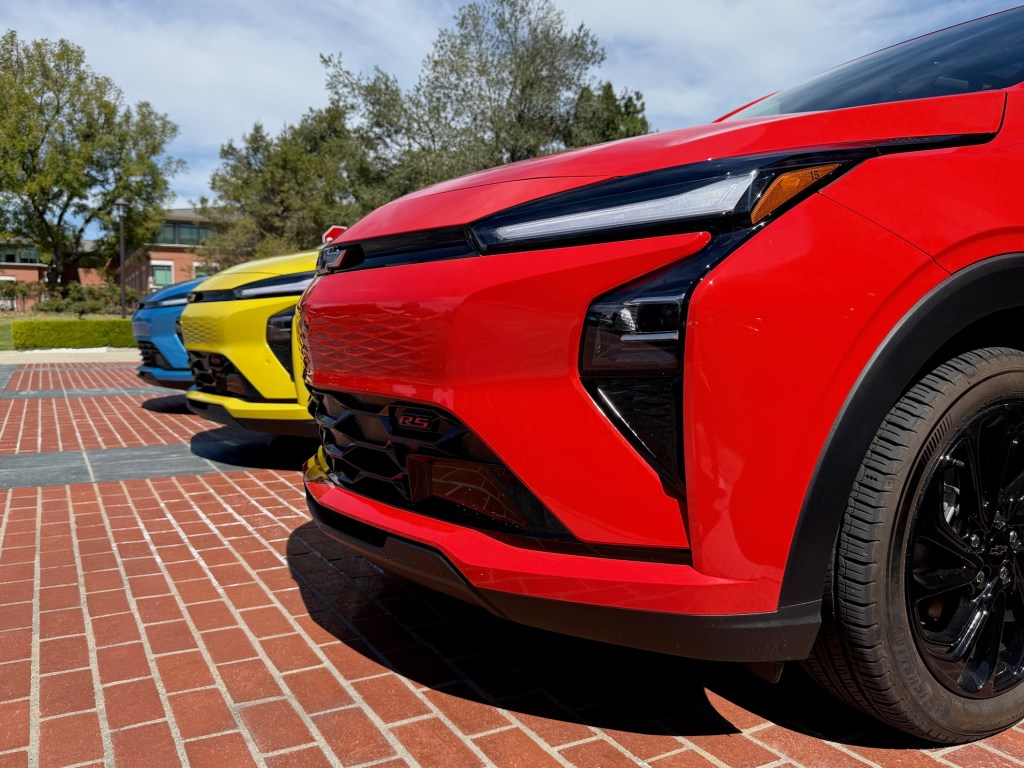
Image Credits:Tim De Chant
Die-hard Chevrolet Bolt fans rejoiced when General Motors announced it was bringing a refreshed version of the EV subcompact back into production.
The GM brand gave a lot of credit to those owners — and to Bolt supporters within General Motors — for the car’s revival. But fandom alone doesn’t restart a multimillion-dollar program. The math has to pencil out in more ways than one.
An examination of GM’s business and market conditions at the time it was approved hints at what compelled the automaker to bring the Bolt back.
It started with GM’s factory capacity. The U.S. automaker had capacity to spare at its Fairfax Assembly Plant in Kansas. The factory previously made the Chevy Malibu, which ended production two years ago, and it isn’t going to start making Chevy Equinox SUVs until mid-2027 or Buick Envisions until 2028. Into that gap went the Bolt.
Perhaps more critical to the Bolt’s comeback was the broader availability of EV-specific parts, which helped bring the costs of the new model down. It’s not built on a flashy new platform, instead relying on incremental improvements to make the final product better.
TechCrunch recently drove the new Bolt. It is compelling enough to suggest it will give GM an EV sales bump in an uncertain U.S. market.
The original 2017 Bolt was GM’s first dedicated EV in 20 years. It was a ground-up effort, which meant the company had to design and build the motor and battery management system while also coordinating with LG Chem (now LG Energy Solution) to make the battery pack. The car got an entirely new chassis that wasn’t a rehashed version of an internal combustion engine platform. None of those items are cheap.
Fast forward to today, and GM sells about a dozen all-electric models in the U.S. across the Chevrolet, Cadillac, and GMC brands. That gave it plenty of parts and experience to draw upon when engineering the new Bolt.
Disrupt 2026: The tech ecosystem, all in one room
Your next round. Your next hire. Your next breakout opportunity. Find it at TechCrunch Disrupt 2026, where 10,000+ founders, investors, and tech leaders gather for three days of 250+ tactical sessions, powerful introductions, and market-defining innovation. Register now to save up to $400.
Save up to $300 or 30% to TechCrunch Founder Summit
1,000+ founders and investors come together at TechCrunch Founder Summit 2026 for a full day focused on growth, execution, and real-world scaling. Learn from founders and investors who have shaped the industry. Connect with peers navigating similar growth stages. Walk away with tactics you can apply immediately
Offer ends March 13.
For drivers, that influence is seen the moment they sit in the car. The large touchscreen runs the Android Automotive operating system, which is kept apprised of the battery’s state of charge. That allows it to recommend chargers along a route and prepare the battery so that it can charge as quickly as possible.
Under the hood, the new Bolt borrows the Chevy Equinox’s front drive motor. At 200 horsepower, it matches the previous generation exactly. But with 169 pound-feet of torque, it would appear to come up significantly short. Yet because of what GM has learned over the years, this new motor spins faster and more efficiently, allowing Chevy to use a shorter gear in the single-speed transmission. At the wheel, the motor produces about as much as before.
The new motor combined with more efficient power electronics means the 2027 Bolt can travel about 15 miles farther than the previous Bolt EUV, the body style on which the new model is based.
GM anticipates that the new Bolt will be profitable, something the old model struggled with.
The EV transition hasn’t been smooth sailing for GM or for many other legacy automakers. The company said in January that it would take $6 billion charge in the wake of slower-than-expected EV adoption. But GM has said it remains committed to producing EVs. And so far, it hasn’t backed off its pledge to phase out fossil fuel vehicles by 2035.
The cynical take on the new Bolt is that it’s a half-measure, a rehashing of an old model to squeeze more out of its most loyal customers.
The new model should perhaps be viewed as a bull case for sharing technology and incremental improvements. A 15-mile range improvement from a new motor and battery management system may not seem like much, but if GM can march forward at a steady pace, the next decade could be transformative for the company and for the EV market. Flashy new platforms make for great headlines, but not every breakthrough requires a multibillion-dollar investment.

-
 C114 Communication Network
 -
 Communication Home
