
 Search

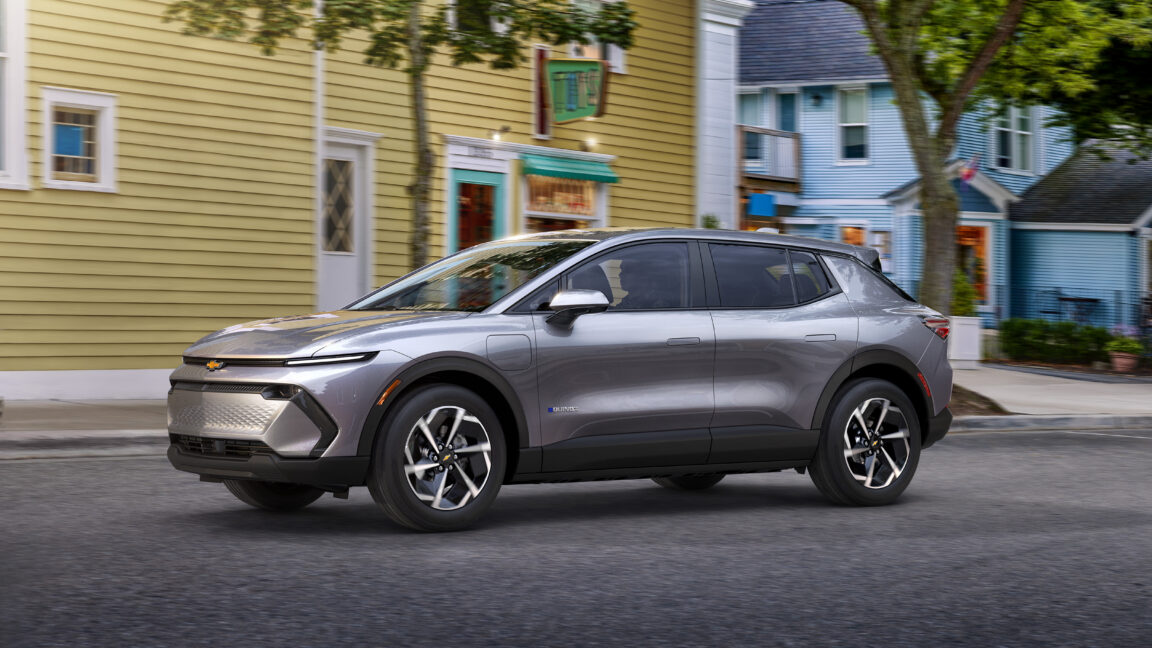
Credit: Chevrolet
There’s a lot of goodwill out there for the Chevrolet Bolt. As maybe the first properly affordable longer-range electric car on the market, the Bolt wasn’t perfect. It didn’t charge very fast, and people found the seats quite uncomfortable. But it could get more than 230 miles on a single charge—a lot in 2017—and you didn’t have to be flush to afford one. Oh, and it was also pretty good to drive. I know I was a fan from the first time I tried a prototype at CES in 2016.
Understandably, Bolt fans were upset when Chevy decided to kill off the car. Yes, it lacked features compared to more modern EVs, but it is also the brand‘s bestselling EV by quite a country mile. “Not to worry,” said the executives, who told us they had something better coming built on the platform they used to call Ultium but don’t anymore. Starting at around the same $35,000 price tag the Bolt launched with, this would be the new Equinox EV.
That $34,995 price tag was perhaps a bit more appealing when the car was eligible for the now-dead $7,500 IRS clean vehicle tax credit. Truth be told, the LT1 spec is a little bare-boned, and you’ll need to step up to the LT2 we tested—which starts at $40,295—if you want things like heated seats or wireless charging for your devices. (The good news here is that people looking for a bargain should know that used Equinox EVs with decent specs are already much cheaper, just a year after the car’s launch.) And let’s not forget, when the Bolt was young, the more expensive trim was almost $42,000.
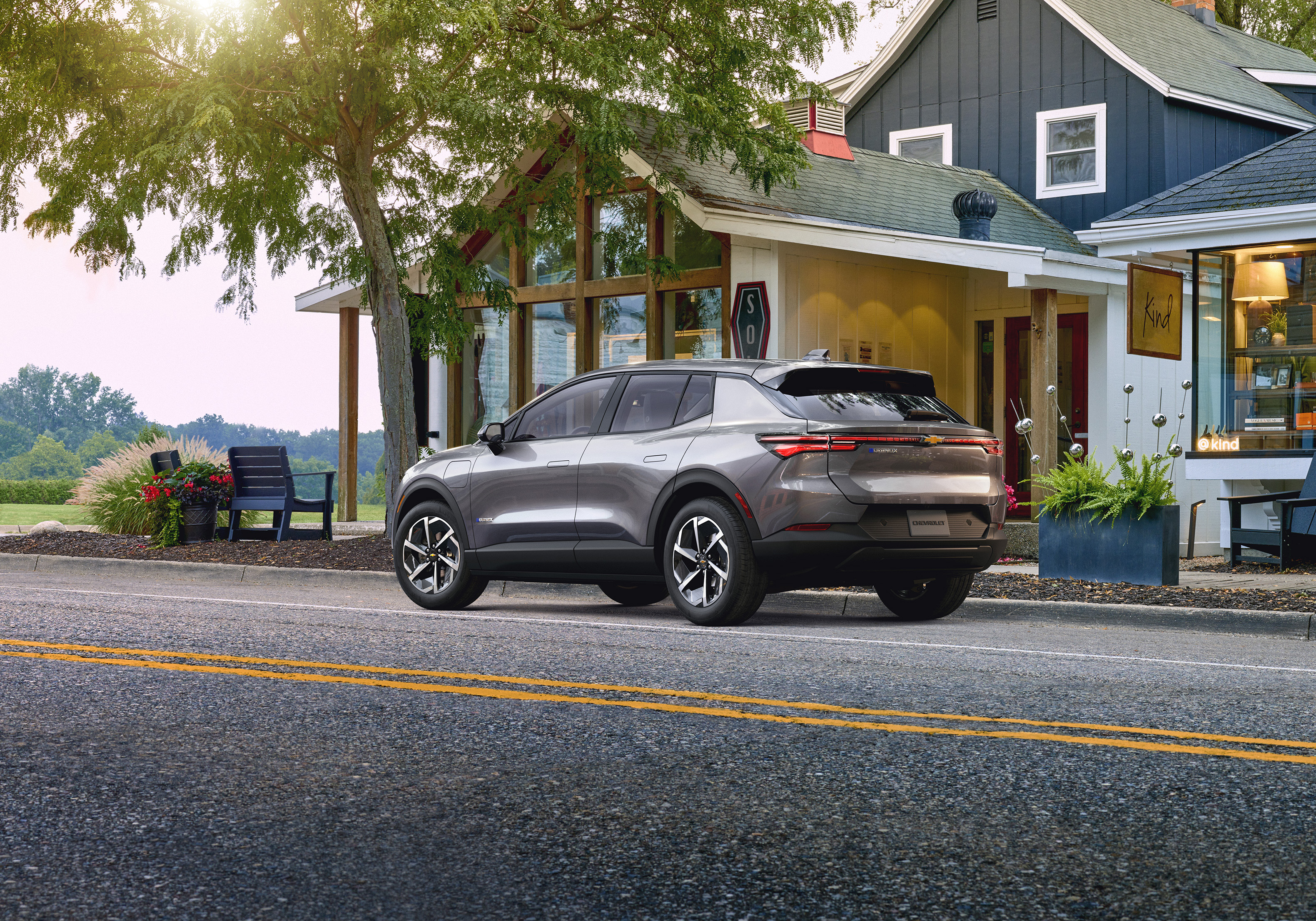
The Equinox EV shares nothing but a name with the gas-powered Equinox crossover. I think the EV version is much nicer to look at.
Credit: Chevrolet
Not too big, but not too small
You get quite a lot more EV for the money in 2025 than you did in 2017. The Equinox EV is a whole vehicle class bigger, at 190.6 inches (4,840 mm) long, 77 inches (1,954 mm) wide, and 64.8 inches (1,646 mm) tall. It’s also a lot more comfortable than the subcompact was. The seats haven’t been pared down to save space and weight, and the suspension does a decent job of insulating you from the potholes that always grow around this time of year. And there’s a useful amount of storage space, with 26.4 cubic feet (748 L) of cargo volume with the rear seats in use or 57.2 cubic feet (1,620 L) with the rear seats down.
At the heart of the car, between the axles, lives the 85 kWh lithium-ion battery pack, which gives the Equinox EV an EPA range of 319 miles (513 km) on a full charge. Unhelpfully, GM quotes charging as “up to 36 miles of range per hour of charging” for AC level 2 charging (at up to 11.5 kW), or “approximately 77 miles of range in 10 minutes” with a DC fast charger of up to 150 kW, but no 0–100 percent time for AC or 10–80 time for DC charging. We fast-charged the car from 34 percent, without preconditioning the battery first. Charging peaked at 75 kW and took about 45 minutes to reach 80 percent. The charge port is CCS1, although Chevrolet will sell you an adapter to use NACS chargers.
On a full charge, in below-freezing weather, the Equinox reported an estimated 311 miles (500 km) of range, and during our week we averaged 3.5 miles/kWh, despite using the car’s heater because there’s enough else going on in the world that we don’t need to shiver in our cars to prove a point.
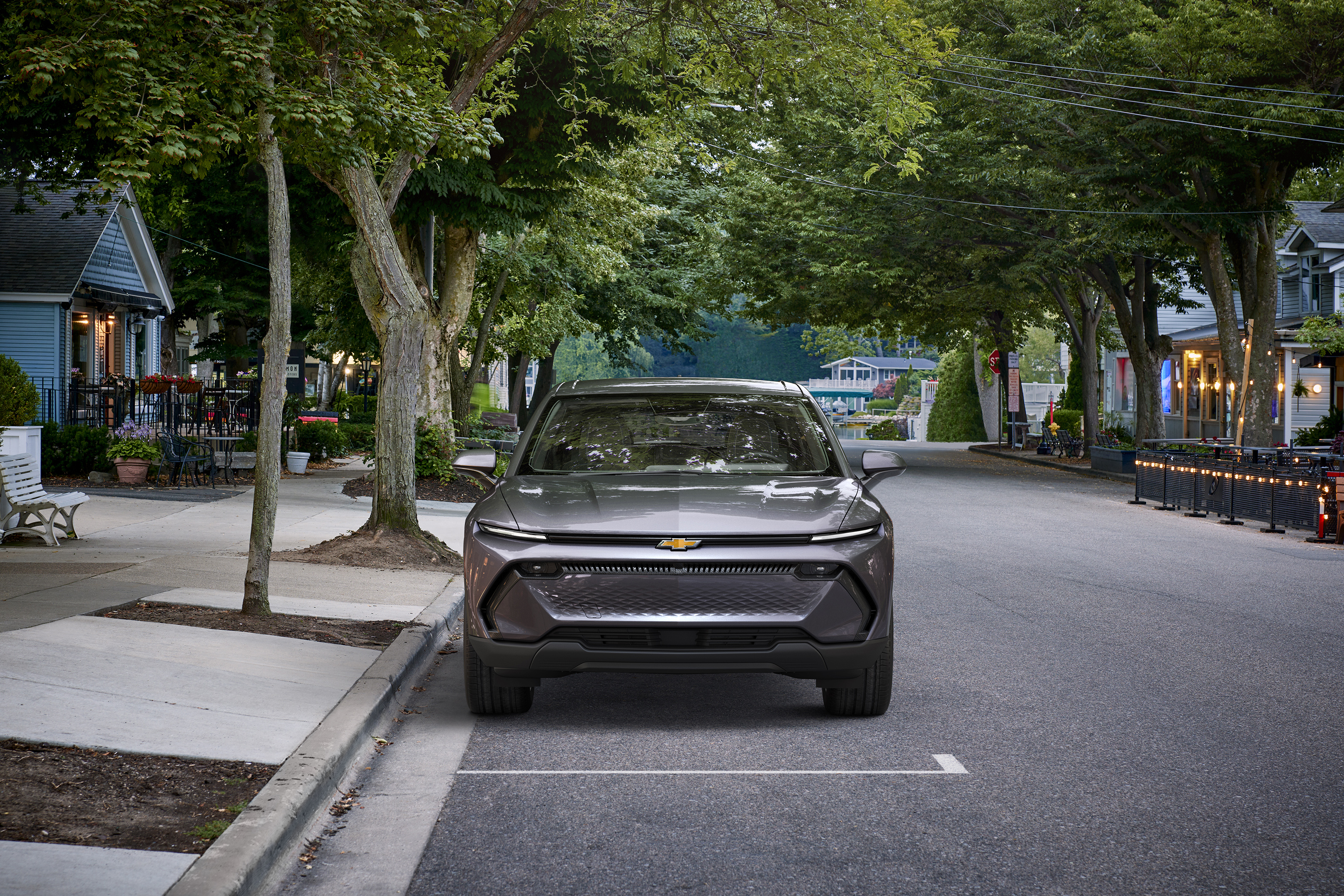
It might be Goldilocks-sized.
Credit: Chevrolet
An all-wheel-drive version is available, but we tested the front-wheel drive Equinox EV. The permanent magnet synchronous motor generates 220 hp (164 kW) and 243 lb-ft (329 Nm), which is enough to keep things feeling peppy. There are two levels of lift-off regenerative braking available for the one-pedal driving mode, which you toggle on or off via a persistent icon on the 17.7-inch infotainment screen, but even when one-pedal driving is set to off, there’s still some degree of lift-off regen, so you can’t coast the Equinox as you might with a European or Korean EV.
The bit that all the comments will talk about
The infotainment screen is bright, legible, and responsive, and the onboard Google Maps navigation works well, particularly with voice inputs. I have to give props to the backup camera, too—one of the crispest and highest resolution I’ve encountered all year. But other voice commands for the Android Automotive OS-based infotainment didn’t always work. And I’ll be frank, I missed being able to use Apple CarPlay, both for listening to my own music and for the messaging integration.
GM has solved the first half of that problem—last week, it started rolling out an Apple Music app to its newer EVs. But the fact remains that removing CarPlay (and Android Auto) was an anti-consumer move by General Motors, which evidently convinced itself that doing so would create the kind of recurring revenue stream that delights stock analysts. Whether those calculations took into account lost sales from customers who won’t buy a car without phone casting remains a question.
Most of the Equinox’s advanced driver assists are standard equipment, including automatic emergency braking (forward, reverse, and rear cross traffic) and lane keeping. But if you want adaptive cruise control you’ll need to spend $3,355 on the Active Safety Package 3, (which comes with three years of OnStar One service, plus an enhanced parking assist), as well as the $3,100 “Convenience Pack II” that adds ventilation and more power adjustment to the front seats, a heads-up display, heated rear seats, dual-zone AC, LED head- and taillights, bigger wheels, and a rear camera mirror.
Although it took a few days, I found myself jelling with the Equinox EV. Even from the perspective of a Bolt fan—for families looking to replace an older Bolt that need something a little larger without being a behemoth, this compact electric crossover makes a compelling case. And those Chevrolet EV fans who need something smaller can take solace in the fact that the Bolt returns next year, with an all-new lithium iron phosphate battery and all-new infotainment.

-
 C114 Communication Network
 -
 Communication Home
